
Are puff embroidery patches UK Right for Your Project? A Decision Guide
Puff embroidery patches UK are suitable for bold logos, short lettering and garments where a raised 3D finish is part of the design. They are less suitable for fine detail, small text, frequent abrasion or smooth flat artwork. The Customized Patches supplies a free digital mockup, usually within 12 hours, with a 5-piece minimum per design.
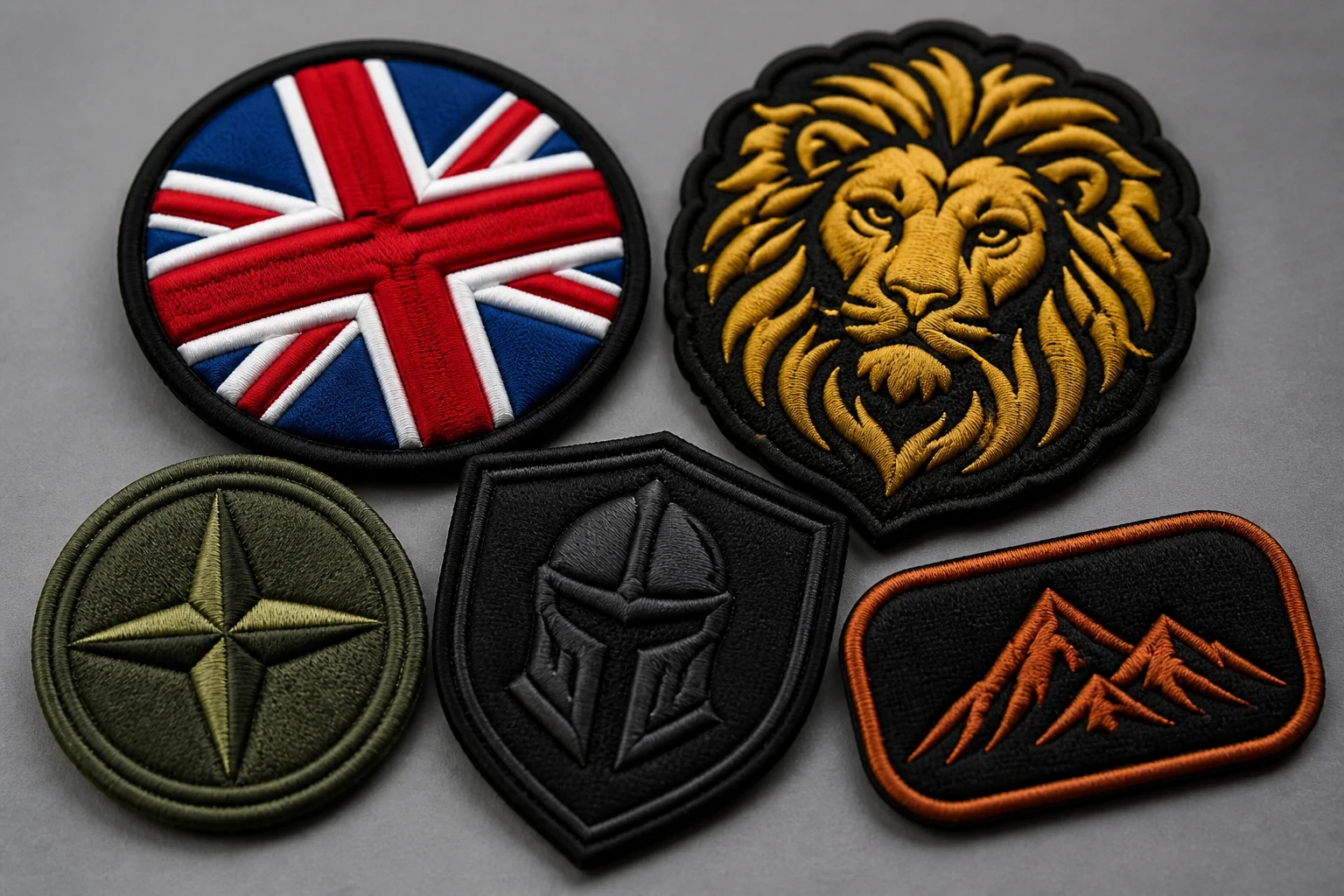
Key takeaways
- Puff embroidery patches UK work best with bold shapes, clear lettering and a design that benefits from visible height.
- Raised foam can hide fine detail, so small text and intricate crests may be better in flat embroidery, woven or printed form.
- The Customized Patches has a 5-piece minimum per design and sends a free digital mockup usually within 12 hours.
- Production starts only after artwork, size, backing and mockup details have been approved.
Puff embroidery patches UK can be the right choice if you want a raised, tactile logo that stands out on a cap, jacket, workwear item or club garment. They are not automatically the best option for every design: small lettering, fine lines and heavily rubbed garments can favour flat embroidery, woven or printed patches instead.
The decision usually comes down to four things: the artwork, the garment, the way the patch will be worn and the finish you want to see at arm's length. The Customized Patches supplies UK customers with a free digital mockup usually within 12 hours, and production starts only after approval. The minimum is 5 pieces per design.
What puff embroidery patches UK actually are
Puff embroidery uses a layer of foam under selected stitched areas. The embroidery machine covers that foam with thread, then the excess is trimmed away around the design. The result is a raised section rather than a completely flat stitched surface. You may also see this called 3D puff embroidery or raised embroidery.
The foam is normally used selectively. A bold word, central symbol or simple outline can be raised while the border and smaller supporting details remain flatter. That contrast is useful on a merchandise badge or team crest because it gives the main feature more presence without turning the entire patch into one thick block.
Puff is different from simply using dense stitching. Flat embroidery builds the image with thread directly on the base material. Puff embroidery adds height beneath the thread, so the light catches the raised surface and the patch feels different under a finger. The height is part of the visual choice, not a replacement for good artwork.
What the finish looks like in practice
A raised football club initial, a large motorcycle emblem or a short brand name can look strong in puff. A long sentence in 6-point lettering usually cannot. The thread still has limits, and the foam can soften narrow gaps or close up small counters inside letters such as A, B, R and P.
Ask to see the actual design at its proposed size rather than judging only from a large screen version. A logo that looks simple at 5 inches wide may become crowded at 2.5 inches. Our guide to the difference between puff and flat embroidered patches gives a closer comparison of surface, detail and use.
When the raised finish is a good fit
Puff embroidery is strongest where the patch needs a focal point. It suits bold initials on caps, a large chest emblem on a bomber jacket, a club badge on a wool coach jacket or a simple mark on branded overshirts. The raised face adds texture without requiring a complicated colour palette.
- Short brand names with wide, uncomplicated letters.
- Sports team initials, mascots and strong geometric symbols.
- Biker and motorcycle club designs with a clear central emblem.
- Streetwear and merchandise where the tactile finish is part of the product.
- Hospitality or event staff garments with a simple, prominent chest mark.
- Caps and beanies where a little height helps the design read from the front.
I have quoted puff work for football clubs wanting a raised initial on training tops, cadet units needing a clear unit mark and small businesses putting a compact logo on work jackets. The common thread is not the sector. It is the artwork: a design with enough open space to let the raised areas remain legible.
It can also suit a limited merchandise run. A raised patch feels more like a finished product detail than a basic label, especially on a heavyweight jacket or cap. If the design is mainly a badge with broad lettering, the extra dimension can justify choosing puff over a flatter method.
When puff embroidery is the wrong choice
Puff is not a fix for an overcrowded logo. Foam cannot create detail that the design does not have room to hold. Fine map lines, tiny sponsor names, intricate heraldic drawings and very narrow outlines may lose clarity once the foam and covering stitches are added.
It is also worth thinking about contact. A patch on the upper chest of a polo has a different job from a patch on the elbow of a work jacket. A raised surface can catch more on seatbelts, kit bags or rough handling than a flatter embroidered or printed face. That does not make puff fragile, but it makes placement and garment choice more relevant.
- Avoid using puff for dense paragraphs, long slogans or very small names.
- Be cautious with narrow serifs, thin outlines and tiny internal gaps.
- Consider flat embroidery for a badge that will be rubbed against equipment every day.
- Use printed patches if photographic shading or very fine tonal detail is central to the artwork.
- Choose woven patches for crisp small lettering that must remain relatively flat.
- Check the patch against the garment rather than approving a design in isolation.
Printed is flatter; that is the point. A printed patch can carry detail that would be difficult to reproduce with raised thread. Woven can also be the sensible answer for small type. The best patch is the one that keeps the important parts of the artwork readable after production, not the one with the most noticeable surface.
| Project requirement | Usually suitable | Why | Main caution |
|---|---|---|---|
| Bold initials on a cap | Puff embroidery | The raised face gives short lettering visual weight. | Allow enough space around each letter. |
| Detailed club crest | Flat embroidered or woven patch | Fine lines and small text are easier to retain. | A very small finished size may still need artwork editing. |
| Photographic artwork | Printed patch | Ink can reproduce tonal changes and fine image detail. | The surface will be flatter and may look less tactile. |
| High-contact workwear elbow | Flat embroidered or PVC patch | A lower or sealed profile may suit repeated rubbing. | The final look differs from traditional thread. |
| Removable name badge | Puff or flat embroidery with Velcro | The back can support regular removal from a compatible panel. | The garment needs the matching loop panel. |
| Large biker back emblem | Puff, flat embroidery or chenille | A broad emblem can support a strong textured finish. | Check weight, size and attachment before ordering. |
For a broader look at alternatives, compare embroidered patches, woven patches, printed patches and PVC patches. Each method has a different surface and production limit. We can show those differences on a mockup before you commit to a batch.
Artwork rules that make puff work better
Good puff artwork is usually bold rather than busy. Broad letter strokes, simple silhouettes and clear colour separation give the foam room to do its job. A designer may need to thicken a narrow line, remove a tiny detail or simplify a small word before the file is ready for production.
Do not rely on a low-resolution screenshot and assume the production team can enlarge it cleanly. A vector file is useful because shapes can be checked at the intended patch size. If you only have a JPEG, send it anyway; the important point is to discuss what can remain, what needs simplifying and how the finished size changes the result.
Lettering and spacing
Lettering needs breathing room. Tight kerning can make adjacent raised letters merge visually, especially in heavy capitals. Rounded letters may need particularly careful checking because small counters can close once covered with thread.
A short word across the front of a cap is often a more reliable puff application than a long company name squeezed into the same space. If every word must remain, consider a wider patch, a flatter secondary line or a separate woven label. The artwork decision should happen before the quote is treated as final.
Not sure whether a raised face or a flatter method will hold your logo best? Send the artwork and intended garment for a free digital mockup usually within 12 hours, then compare the options before production.
GET A FREE MOCKUPBorders, colours and contrast
A merrowed crest border can give a traditional edge, while a clean cut border may suit a modern logo or a shape with internal points. High contrast between the raised thread and the base helps the design read. Similar shades can work, but they will make the texture do more of the visual work.
If your design uses a small shield, star or mascot, decide which part should rise and which part should stay flat. Raising every detail can make the surface look crowded. A strong central symbol with a controlled border is often clearer than a fully raised version of a complex crest.
Our guide on how to design artwork for puff embroidery patches UK covers file preparation, size checks and common artwork changes in more detail.
Choose the garment before choosing the backing
The same patch can behave differently on a nylon shell, a wool coaches jacket, a cotton hoodie and a school blazer. Check the fabric, lining, heat tolerance, seam position and how often the garment will be washed. A patch that looks right on a sample panel may need a different attachment method on the finished item.
Sew-on backing is a dependable choice for many jackets, uniforms and club garments. It allows the patch to be stitched securely through the base fabric, although thick borders and heavy outerwear may require an experienced machinist. Iron-on can be convenient, but an iron-on patch that peels after a dryer cycle creates a poor result even if the front artwork was excellent.
Velcro is practical for removable identifiers and kit systems, provided the garment already has, or can accept, the matching loop panel. It adds thickness and may change how the patch sits. On a nylon shell, heat should be treated carefully; on a wool coach jacket, stitching may be the safer route than relying on adhesive.
| Backing | Good for | Points to check | Typical decision |
|---|---|---|---|
| Sew-on | Jackets, blazers, uniforms and long-term club garments | Access for stitching, garment thickness and border clearance | Often the first choice for permanent placement |
| Iron-on | Suitable cotton or blended garments with a compatible finish | Heat, pressing method, wash care and dryer exposure | Convenient, but test adhesion on the actual fabric |
| Velcro | Removable team, security, cadet or work identifiers | Matching loop panel, added thickness and placement | Best where regular removal has a real purpose |
| Adhesive | Temporary display or selected smooth surfaces | Surface cleanliness, pressure and expected handling | Not the default for heavy or frequently washed garments |
If you are unsure, state the garment type in the enquiry rather than only asking for a price. “Puff patch for jacket” is a starting point; “raised chest patch for a lined nylon shell, sewn on” gives our team something useful to assess. The custom embroidered patches UK sizing and backing guide can help you prepare those details.
Size, placement and wear in UK projects
There is no single correct patch size. A chest badge on a polo may sit around 2.5 to 3.5 inches wide, while a back emblem could be considerably larger. A cap front usually needs a compact shape that follows the available panel. These are starting points, not fixed specifications.
Measure the usable area rather than the whole garment. Leave room around buttons, zips, seams, pockets and curved panels. A patch can be technically the requested width yet look too large once placed beside a shirt placket or too small once centred on a broad jacket back.
- Chest or polo placement: check the placket, pocket and wearer movement.
- Cap placement: check the front panel curve and the available height above the brim.
- Sleeve placement: check seams and whether the arm bends across the patch.
- School blazer placement: check house or club rules and the fabric behind the badge.
- Biker back placement: check the full panel, surrounding rockers and the weight of the finished piece.
- Velcro panel placement: check that the hook and loop surfaces meet fully without overhang.
Think about use, not only appearance. A hospitality polo may be washed every week. A presentation jacket might be worn occasionally but pressed often. A football training top can be pulled, folded and packed into a damp kit bag. The correct choice depends on those conditions as much as on the logo.
For club and motorcycle projects, you may also want to compare the options in our guide to biker and motorcycle club patches. Larger back designs can support raised details, but they should still be reviewed at full intended size before production.
Puff embroidery compared with other patch methods
The most useful comparison is not “which method is best?” It is “which method protects the important part of this design?” Puff protects visual impact and texture for bold artwork. Woven protects small, clean detail. Printed protects image detail and tonal variation. Flat embroidery protects a familiar stitched appearance without the extra foam height.
| Patch type | Surface | Best suited to | Less suitable for |
|---|---|---|---|
| Puff embroidery | Raised thread over foam | Bold logos, short lettering, caps and statement patches | Fine detail, tiny type and high-rub positions |
| Flat embroidery | Thread stitched directly to the base | Traditional crests, uniforms and clear moderate-detail logos | Photographic shading or very fine continuous detail |
| Woven | Flat woven threads | Small lettering, line art and compact labels | A highly raised, tactile finish |
| Printed | Flat printed surface | Gradients, photographs, small tonal details and complex illustrations | Projects where raised texture is the main requirement |
| PVC | Moulded rubber-like surface | Outdoor-style branding, utility garments and bold sealed shapes | Traditional textile appearance or soft thread texture |
| Chenille | Soft, tufted yarn surface | Varsity lettering, large initials and collegiate-style designs | Tiny detail and very compact artwork |
A raised patch is not automatically more durable than every flat option, and a printed patch is not automatically unsuitable for workwear. Durability depends on the materials, backing, placement, attachment and care. If the project needs a traditional soft pile, chenille patches may be a better visual match. If you want a leather look, compare leather patches.
Quantity, pricing and the UK ordering process
The minimum order is 5 pieces per design. That is useful for a small club test, a five-person team, a first merchandise run or a sample batch before a larger order. If you need three colourways, each artwork version is normally treated as its own design, so confirm how the quantity is being counted before approving the quote.
Pricing depends on the finished dimensions, number of colours, stitch coverage, shape, backing, quantity and whether the artwork needs preparation. Puff can require more careful digitising than a simple flat mark because the raised sections, borders and surrounding areas have to be planned together. A small, bold patch may be straightforward; a large detailed crest may require more production work.
A useful enquiry includes the artwork, patch width and height, quantity, garment type, backing preference, colours, delivery postcode and required date. Tell us if the patch will be sewn to a nylon shell, placed on a Velcro panel, fitted to a wool coach jacket or attached to a school blazer. Those details affect the recommendation.
Mockup approval and lead-time planning
The free digital mockup is the point at which you can check the raised areas, wording, proportions, colours, border and backing before production. The Customized Patches usually sends that mockup within 12 hours. It is a digital representation, not a physical sample, so use it to confirm the design and ask practical questions about the garment.
Name sew-on, iron-on or Velcro on the quote and tell us what garment the patch will fit. We will show the proposed finish and backing on a free digital mockup usually within 12 hours; production begins only after you approve it.
GET A FREE MOCKUPProduction starts only after approval. That matters if several people need to review a crest or if a brand manager must sign off the colour. Build time into your UK delivery plan for artwork questions, approval, production and dispatch rather than counting only the final delivery leg.
For a fuller ordering sequence, see A Step-by-Step Guide to Ordering puff embroidery patches UK. For a pre-order check, the puff embroidery patches UK checklist covers the details that are easiest to overlook.
Practical examples
A football club asking for a raised initial on a training top is usually a straightforward puff conversation. The main checks are the size of the chest area, whether the lettering is wide enough and whether the club wants sew-on or a heat-compatible backing. If the badge also contains a detailed sponsor line, we may suggest keeping that part flat or using a separate method.
Cadet units often need identifiers that can be removed or exchanged, so Velcro can matter more than the raised effect. A puff name or unit mark may work if the letters are large enough, but the hook-and-loop panel must be planned into the garment. The patch should not extend so far that its corners lift during normal use.
Hospitality polos are different again. A compact logo may look smart in puff, but the shirt will often be washed repeatedly and may be tumble-dried. A flatter embroidered badge can be the safer visual and practical decision, particularly if staff lean against counters or equipment during a shift.
Biker vests and jackets can support larger, more assertive artwork, including a central raised emblem. The surrounding design still needs checking for rocker text, narrow lettering and placement over seams. A patch may look excellent on a flat artwork board but need adjustment once it is positioned on a curved back panel.
School blazers need a measured approach. The badge must fit the approved area, remain readable at a modest size and attach without damaging the fabric. Puff can work for a simple house initial, but an intricate school crest may be clearer in flat embroidery or woven construction.
A practical decision checklist
Before choosing puff embroidery, look at the project as a complete garment order. The questions below are the ones I would want answered before preparing a final production recommendation.
- Is the main artwork bold enough to benefit from height?
- What is the smallest lettering or line in the design?
- What finished width and height will the patch be?
- Which part of the design should be raised, if not all of it?
- Will the patch sit on a cap, polo, blazer, jacket, nylon shell or Velcro panel?
- How often will the garment be washed, dried, folded or rubbed?
- Is sew-on, iron-on or Velcro the most practical backing?
- Does the chosen backing suit the garment's fabric and lining?
- Does the patch need to match an existing merrowed crest or uniform badge?
- Are the colours and border clear against the garment?
- Is the order quantity at least 5 pieces per design?
- Who will approve the free digital mockup before production?
If several answers are uncertain, do not guess from a product photograph. Send the artwork, intended size, garment details and quantity. A short production conversation can prevent the common problem of ordering a technically attractive patch that does not suit the place it needs to go.
Final verdict: are puff embroidery patches UK right for your project?
Choose puff embroidery if your design is bold, your lettering is large enough, and the raised finish is part of the look you want. It is a strong option for caps, merchandise, club emblems, large initials and selected jacket placements. It is less convincing when the artwork depends on tiny detail, photographic shading or a completely flat surface.
You do not have to decide from a product name alone. The Customized Patches can compare the artwork against flat embroidery, woven, printed, PVC, chenille or leather options and prepare a free digital mockup usually within 12 hours. The order minimum is 5 pieces per design, and production only begins after approval.
For UK-wide projects, include the garment, size, quantity, backing and required date in your enquiry. That gives our team enough information to recommend a finish that looks right on screen and makes sense once the patches are being worn.
Frequently asked questions
Are puff embroidery patches UK suitable for small logos?
They can be suitable for a small logo if the shapes and lettering are bold enough, but size alone does not decide it. Tiny text, narrow gaps and fine outlines may lose clarity with raised foam. A free digital mockup usually within 12 hours can show whether the design needs simplifying or whether flat, woven or printed construction would be clearer.
What is the minimum order for puff embroidery patches?
The minimum order is 5 pieces per design. If you need different artwork versions, confirm how each version will be counted. For example, two separate colourways or two different names may be treated as separate designs.
How quickly can I see a puff embroidery patch mockup in the UK?
The Customized Patches usually provides a free digital mockup within 12 hours. Production does not start automatically. Artwork, size, backing and other details must be approved first, so allow time for any changes and final sign-off before your required date.
Is puff embroidery better than flat embroidery?
Neither is universally better. Puff embroidery adds raised height and suits bold, simple artwork. Flat embroidery is often clearer for detailed crests, smaller text and traditional uniform badges. The right choice depends on the artwork, finished size, garment and expected wear.
Can puff patches be made with sew-on, iron-on or Velcro backing?
Backing options can include sew-on, iron-on or Velcro, subject to the garment and design. Sew-on is commonly considered for permanent placement, iron-on needs a compatible fabric and care routine, and Velcro is useful for removable identifiers. State the garment type and intended use before the backing is confirmed.
Will puff embroidery patches UK work on nylon jackets and wool coaches?
They may work on both, but the attachment method needs checking. Nylon shells can be sensitive to heat, so iron-on should not be assumed suitable. Wool coach jackets may favour sewing, particularly if the patch is large or the garment is lined. The mockup and quote should specify the garment and backing rather than treating every jacket the same.
Ready to produce custom patches for your UK team or brand?
GET A FREE MOCKUP