
What Is a Woven Patch? Definition, Uses and How It Differs From Embroidery
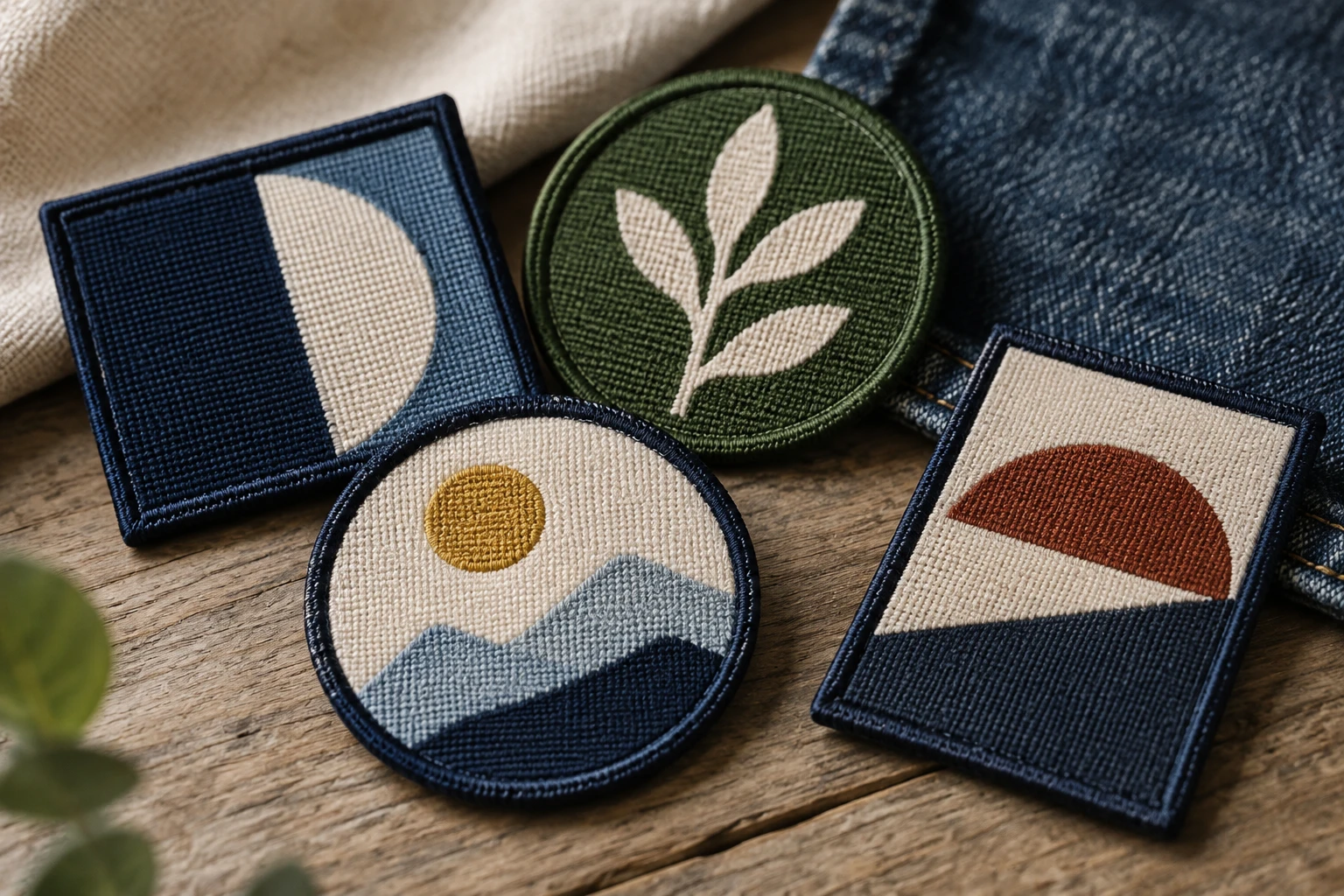
A woven patch is a fabric badge whose design is formed by interlacing fine coloured threads, rather than stitching a design onto a separate fabric base. Its relatively flat surface suits small lettering and detailed logos, although readability still depends on patch size, contrast and the spacing within the artwork.
Key takeaways
- Woven patches form the design within the weave rather than embroidering it onto a fabric base.
- Fine weaving generally holds smaller details than embroidery, but cannot make tiny lettering automatically readable.
- Backing and edge finish affect bulk, attachment and suitability for the garment.
- The Customized Patches has a 5-piece minimum per design and produces only after approval.
What is a woven patch? It is a fabric badge made by interlacing fine coloured threads to form the design, rather than embroidering stitches onto a separate fabric base. The result is a relatively flat patch that suits detailed logos and small lettering, provided the artwork remains readable at its finished size.
Choose woven patches when detail matters more than a raised, textured finish. They can work well on teamwear, club badges and branded clothing, but the garment, border and backing still need checking before you order.
What is a woven patch made from?
Woven patches typically use fine polyester yarns. Lengthwise warp threads and crosswise weft threads interlace to create both the fabric structure and the visible design; the lettering is woven into the badge, not printed on its surface.
The woven material is cut to shape and its edge finished to control fraying. A sew-on patch needs no heat-activated adhesive, while iron-on or hook-and-loop backing adds another layer. That backing can noticeably change the patch's stiffness, even though its face remains relatively flat.
What does it look like, and where does it work best?
Expect a closely textured fabric face rather than embroidery's raised stitch ridges. Woven does not mean glossy or completely smooth: thread texture remains visible, especially close up, and the border may stand higher than the design.
- Team polos: a compact crest with lettering, provided the backing does not make lightweight fabric hang awkwardly.
- Canvas caps and bags: detailed brand marks, with placement checked against curves, seams and straps.
- Club jackets: badges containing dates, symbols or several lines of text that would need simplifying for embroidery.
- Event merchandise: repeatable logo badges with flat colours rather than photographic imagery.
Placement matters as much as material. A wide badge may buckle on a curved cap crown, while stitching through a bag can catch its lining or pocket; see Adding a Patch to a Canvas Bag or Rucksack for attachment checks.
Woven versus embroidered: which should you choose?
The main difference is how the design is formed. Embroidered patches use stitches laid onto a fabric base, giving a more raised surface; woven patches use finer interlaced threads, which generally allow tighter detail.
If your logo sits between fine detail and a textured crest, send the artwork and proposed size. We provide a free digital mockup, usually within 12 hours, to help you review the design before production.
GET A FREE MOCKUP| Feature | Woven patch | Embroidered patch |
|---|---|---|
| Construction | Design formed within the weave | Design stitched onto a fabric base |
| Appearance | Relatively flat, fine texture | Raised stitches with visible direction |
| Small lettering | Generally better detail retention | Fine text can fill in at small sizes |
| Bold crests | Clear, flatter interpretation | Stronger tactile definition |
| Photographs | Limited by thread colours and weave | Limited by thread colours and stitches |
| Finished bulk | Often thinner; backing still matters | Often thicker; stitch coverage matters |
Choose woven for fine outlines and closely spaced elements; choose embroidery when substantial thread texture is part of the look. Neither is automatically more durable in every setting: edge finishing, attachment, abrasion and washing all affect performance.
How small can lettering and details go?
There is no useful universal minimum text size without seeing the font and artwork. For example, a hypothetical 60 mm (2.36 in) badge containing a long club name may need a shorter inscription or larger diameter; fine weaving cannot compensate for crowded letters.
View the design at its actual dimensions, not enlarged on a screen. Keep open spaces inside letters and clear gaps between outlines; Best Fonts for Patch Lettering: Readability at Small Sizes explains what to check.
Allow room for the border
A merrowed border wraps thread around the edge and generally suits simple shapes. A suitable cut-and-sealed edge can follow more intricate outlines, but tiny points remain vulnerable to wear; keep lettering away from the edge rather than treating the entire badge as usable design space.
For photographs or smooth gradients, consider printed patches instead. A digital mockup shows layout and colour intent, not the exact thread texture or a guaranteed screen-to-thread colour match.
Which backing suits the garment?
The patch face does not determine how it should attach. Name the garment fabric and intended washing routine on the quote, because a canvas cap, wool jacket and nylon shell present different risks.
Send your artwork, dimensions, garment and required arrival date through our [free mockup quote](#quote). Your free digital mockup usually arrives within 12 hours, and we produce only after you approve it.
GET A FREE MOCKUP- Sew-on: a dependable permanent attachment on suitable fabric. Lightweight polos may need support to prevent puckering.
- Iron-on: only for fabrics that tolerate the required heat and pressure. Poor bonding or unsuitable hot washing can cause edges to lift.
- Hook-and-loop: useful for removable badges, but adds thickness and needs a compatible receiving panel on the garment.
Do not assume a nylon shell will tolerate an iron. Sewing also punctures waterproof fabric, so consult Patches on Waterproof Jackets: How to Add One Without Leaks before choosing either method.
For care, follow the stricter requirements of the garment and patch attachment. If wet exposure is the deciding factor, PVC vs Woven Patches: Waterproof Rubber Against Fine Weave explains the material difference; a water-resistant badge does not make its attachment waterproof.
What to send when ordering woven patches
The Customized Patches makes patches to order from your artwork, with a 5-piece minimum per design and free shipping across the United Kingdom. Quotes start from £60; request a quote for your particular size, quantity and finish rather than treating that as a fixed woven-patch price.
- Send your artwork. Check Which Artwork File Formats Work for Custom Patches? (AI, EPS, PDF, PNG) if you are unsure which file to supply.
- Specify finished width and height, quantity per design, garment fabric, backing and preferred border.
- Review the mockup for spelling, proportions, colours, edge clearance and attachment details. Request changes before approval.
- Confirm production and delivery timing against your required arrival date before committing to an event deadline.
We provide a free digital mockup, usually within 12 hours, and produce only after approval. The mockup turnaround is not a manufacturing or delivery promise; ask for both timings with your quote.
Frequently asked questions
What is a woven patch compared with a woven label?
Both use interlaced threads. A patch is generally a badge with a finished perimeter for external attachment; a label is often lighter, folded or sewn into a garment seam. Specify the intended placement rather than relying on the name alone.
Can a woven patch show a photograph?
It can interpret an image using thread colours, but photographic detail and smooth gradients are better suited to printed patches. Weaving is usually a stronger choice for defined shapes, lettering and flat-colour logos.
Are woven patches iron-on?
Only if specified with an iron-on backing. Woven describes the face construction, not the attachment method, and the garment must tolerate the heat and pressure needed for bonding.
Will woven patches fray?
Exposed or damaged woven edges can fray. An appropriate border or sealed edge reduces that risk, but abrasion and cutting through the finished edge can still damage the badge.
Are woven patches washable?
They can be washable, but suitable care depends on the backing, attachment and garment. Confirm care instructions for the finished combination rather than assuming every woven patch tolerates hot washing or tumble drying.
What is the minimum order, and when does production start?
The minimum is 5 pieces per design. The Customized Patches provides a free digital mockup, usually within 12 hours, and starts production only after approval. UK shipping is free; confirm manufacturing and delivery timings with your quote.
Ready to produce custom patches for your UK team or brand?
GET A FREE MOCKUP