
Top 10 Uses for chenille patches in 2026
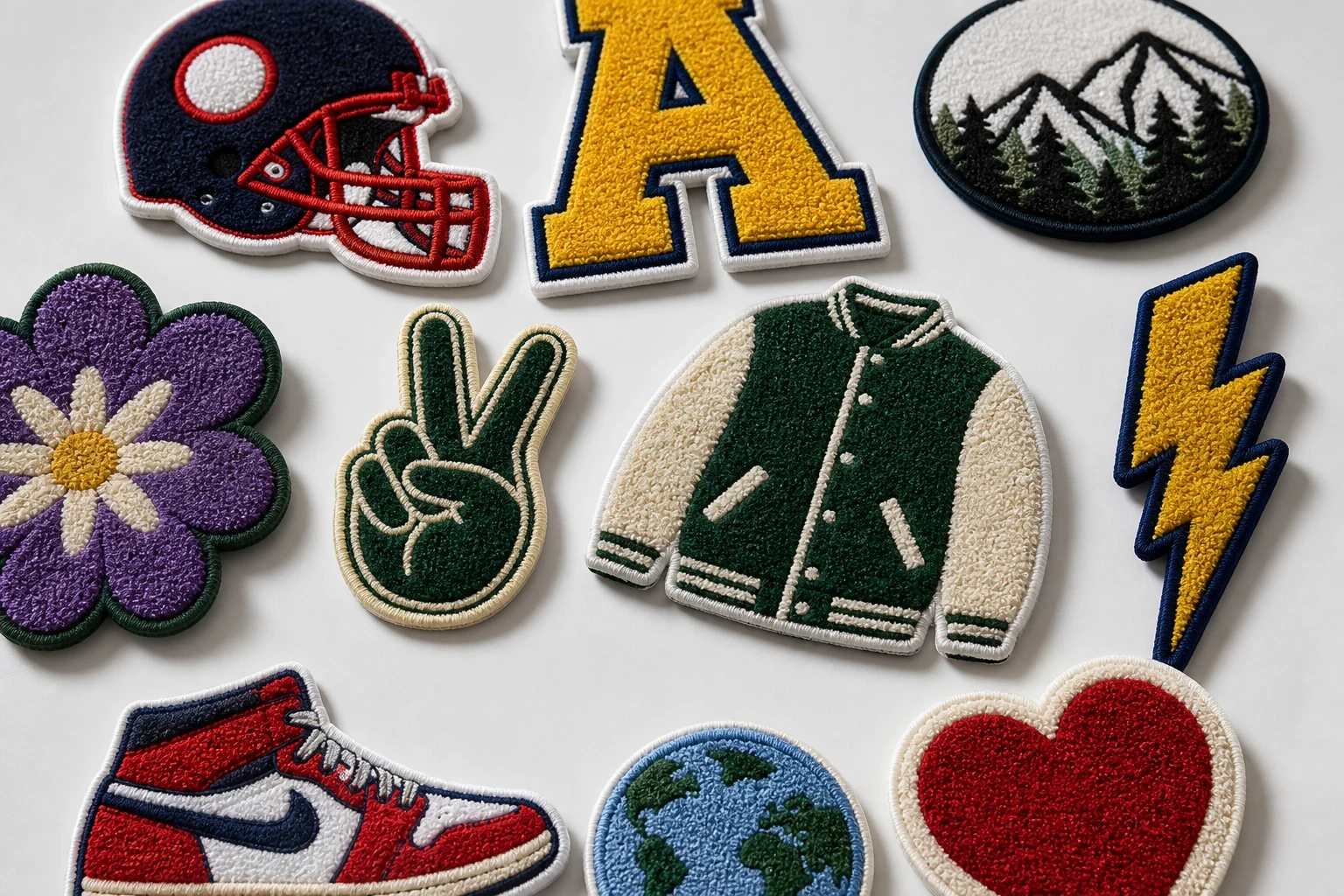
Chenille patches are soft, looped-yarn badges used for varsity lettering, team crests, club identity and bold clothing branding. In 2026, UK teams, schools, hospitality businesses and lifestyle brands use them on jackets, polos, bags and Velcro panels. The best results come from simple artwork, a suitable backing and realistic sizing.
Key takeaways
- Chenille patches work best for bold lettering, simple crests and designs where a soft raised surface is part of the appeal.
- Football clubs, schools, cadet units, hospitality teams and lifestyle brands can all use chenille badges, but garment choice and backing matter.
- A 5-piece minimum applies per design, and a free digital mockup is usually supplied within 12 hours before production.
- Printed patches are flatter and better for fine detail; chenille is more tactile and better suited to strong, uncomplicated shapes.
Chenille patches are used for team crests, varsity lettering, school and college identity, club clothing, hospitality uniforms and bold brand applications. They are particularly effective on jackets, wool coaches, sweatshirts, polos, bags and removable Velcro panels where a soft raised texture adds something a flat print cannot.
For UK buyers in 2026, the practical choice is not simply chenille or no chenille. It is a question of artwork, garment, size, backing and wear. The Customized Patches has a 5-piece minimum per design, supplies a free digital mockup usually within 12 hours, and produces only after approval.
What makes chenille patches different?
Chenille is made with looped yarn that creates a soft, textured surface. That surface is the reason a chenille letter or crest looks at home on a varsity jacket, football training top or wool coach jacket. It catches the light differently from flat thread and gives large shapes a noticeable physical presence.
The trade-off is detail. Tiny text, narrow outlines and photographic shading do not suit chenille as well as they suit printed or finely embroidered work. A good chenille design usually uses bold letters, a clear border and a limited number of colours. If your artwork has small wording, a woven patch or printed patch may retain it more clearly.
| Patch type | Surface and appearance | Best suited to | Main limitation |
|---|---|---|---|
| Chenille | Soft, looped and raised | Varsity letters, team crests, club identity and bold motifs | Fine detail and very small text need simplifying |
| Flat embroidered | Thread-based with visible stitch texture | Crests, uniforms, workwear and general garment branding | Very small detail can still become crowded |
| Woven | Flat, tightly woven surface | Small lettering, detailed logos and clean outlines | Less raised and tactile than chenille |
| Printed | Flat ink or printed surface | Gradients, photographs, fine artwork and large colour areas | Can look less dimensional and may need careful care |
| PVC | Raised rubber-like surface | Outdoor clubs, utility clothing and weather-exposed applications | A different visual style from traditional fabric badges |
1. Football, rugby and other UK sports clubs
Sports clubs are one of the clearest uses for chenille patches. A large initial, founding year or simplified club crest can turn a plain travel jacket into recognisable team clothing. Football clubs, rugby sides, boxing gyms and university sports societies often want something more substantial than a printed sponsor mark.
For a match-day jacket, place the main crest on the left chest or upper sleeve and keep the size proportionate to the garment. A chenille badge that looks strong at 4 inches can dominate a child’s tracksuit top, while a 2-inch version may disappear on an adult coach jacket. Check the actual garment panel before approving the size.
Sportswear also brings practical questions. Nylon shells can be slippery and heat-sensitive, so an iron-on backing should not be selected without checking the manufacturer’s care label. Sew-on backing is often the safer choice for hard-used outerwear, while Velcro is useful for squads that share jackets or change role tabs.
2. School, college and university clothing
Chenille patches suit school and university clothing because the style naturally connects with varsity and collegiate design. A school initial, house letter, year group or activity badge can sit on a blazer, rugby shirt, hoodie or sports jacket. Large, confident shapes tend to look better than a complicated shield packed with tiny wording.
For a school blazer, confirm the patch position with the uniform supplier or school office first. Wool and wool-blend garments can accept sewing well, but the badge should not cover a pocket, buttonhole or existing woven crest. A merrowed crest gives the edge a finished border, although the border also adds visual weight, so leave enough space around the central design.
School orders can include several designs, such as a main crest, a house letter and a prefect badge. Each design is treated separately for the 5-piece minimum. If you need five of one house badge and five of another, send the artwork as clearly named files so the quotation and mockup match the intended quantities.
3. Varsity jackets and American-style lettering
Varsity lettering remains one of the strongest applications for chenille patches. A large single initial across the chest, a curved club name on the back or a small graduation year on the sleeve can create the familiar collegiate look without covering the entire garment in decoration.
Letter spacing matters more than many first-time buyers expect. Narrow gaps between looped letters can visually close up, especially in dark yarn on a dark jacket. We normally recommend reviewing the lettering at the intended finished size rather than judging only from a large screen version of the artwork.
For layered designs, decide which element should be read first. A large chenille letter can sit behind a smaller embroidered star or year badge, but too many raised components can make the front of a jacket feel heavy. If you want height only on selected parts, compare chenille with 3D embroidered patches before settling on the final construction.
4. Cadet units, scouts and youth organisations
Cadet units, scouts, guides and youth organisations use patches to mark group identity, camps, activities and achievements. Chenille works well for a bold unit initial or event emblem, particularly on fleece, sweatshirts, canvas bags and outdoor club jackets.
The garment may be used outdoors, but that does not make every backing suitable for every item. A sew-on patch is dependable on a heavy cotton jacket or canvas bag. A Velcro-backed badge is useful when the same jacket carries a changing activity patch. Iron-on can be convenient on suitable cotton garments, but an iron-on that peels after a dryer cycle is a common avoidable failure.
Keep the badge easy to identify from a short distance. A unit number, place name or event year should be large enough to read without relying on tiny stitched characters. If the design contains a detailed campsite illustration, consider using chenille for the main shape and a separate embroidered patch for the finer supporting detail.
5. Biker, motorcycle and riding clubs
Biker and motorcycle clubs often need a badge that holds its shape on a substantial garment. Chenille can suit a large back panel or bold chest mark on a denim jacket, riding vest or heavy overshirt, particularly where the club wants a traditional fabric badge rather than a flat transfer.
Placement needs care because biker garments often already have a back panel, rocker text or several smaller badges. Measure the available area in inches and check how the garment sits when worn. A badge that fits a jacket laid flat may reach the seams or collar once the jacket is on a person.
For club garments, sew-on is usually the first backing to discuss because denim, leather and heavy canvas vary in how they accept heat. If you are comparing options for a motorcycle group, our guide to biker and motorcycle club patches covers placement and construction questions in more detail. Leather is also worth considering if the club wants a flatter, material-led appearance; see leather patches.
Not sure whether chenille, flat embroidery or leather will suit the jacket? Send the artwork and garment details to The Customized Patches for a free digital mockup, usually within 12 hours, so you can compare the proportion before producing.
GET A FREE MOCKUP6. Hospitality, cafés and independent food brands
Hospitality businesses are using more characterful uniform details, especially independent cafés, street-food traders, breweries, restaurants and event caterers. A chenille letter on a polo, overshirt, apron or staff jacket can make a simple uniform feel connected to the business without printing a large logo across the front.
The right use depends on laundering and the garment. Polos worn every day need a backing and edge that can cope with regular washing. A textured badge can collect more lint than a flat printed mark, so the care instructions should be considered before ordering. On thin hospitality polos, an oversized patch may also pull at the fabric; a smaller chest badge is usually more balanced.
Chenille is strongest when the identity is simple: an initial, short word, mascot or compact emblem. If your restaurant logo includes a fine handwritten script or several small lines of text, printed patches may be the more faithful option. Printed is flatter; that is the point when a smooth wipe-clean look or detailed reproduction matters more than texture.
7. Fashion labels and streetwear collections
Small fashion labels and streetwear brands use chenille patches as a product detail, not just a logo badge. A tonal initial on a heavyweight hoodie, a contrasting emblem on a coach jacket or a limited-run back patch can give a garment a clear focal point.
The main decision is how the patch will sit within the collection. A badge with a thick border can look deliberate on a workwear-style overshirt but over-finished on a lightweight fashion shirt. Ask for the mockup on the actual garment colour where possible. Navy thread on black fabric may look subtle on screen but nearly disappear under shop lighting.
For a premium clothing run, use the same artwork proportions across colourways so production stays consistent. Do not assume a design that works at 5 inches will work at 2.5 inches. Text may need changing, borders may need widening and small internal spaces may need removing before the final approval.
8. Corporate teams, workwear and promotional clothing
Businesses can use chenille patches to give internal teams a more relaxed identity than a standard logo embroidery. They suit warehouse teams, creative agencies, event crews, sports retailers and independent trades where a branded jacket or sweatshirt is part of the working kit.
A business badge should be checked at the distance customers will see it. If the logo must be read across a reception desk or event floor, do not squeeze a long company name into a small badge. A short mark or initials may communicate more effectively. For formal uniforms, compare chenille with standard embroidered patches because the flatter stitch structure may suit a sharper corporate appearance.
Workwear also exposes weak attachment choices. A nylon shell, fleece, softshell jacket and cotton sweatshirt do not behave the same way under heat or repeated movement. Include the garment fabric in the quote request and say if the patch will be removed, replaced or washed frequently.
9. Events, campaigns and limited-run merchandise
Chenille patches can make useful event merchandise for festivals, university balls, club anniversaries, charity challenges and brand activations. A date, event initial or mascot can be designed as a collectible badge for jackets, tote bags and sweatshirts.
The 5-piece minimum per design makes small test runs possible, but quantity still affects the commercial sense of the order. For an event, decide whether the patch is included with a garment, sold separately or used by staff only. That decision affects the size, backing and the amount of handling the badge must withstand.
A limited-run badge should be approved against a clear colour reference. Screen colours are not a reliable substitute for a physical textile comparison, especially with dark garments. The digital mockup is useful for layout, proportions and placement, but it should not be treated as a promise that a screen will display thread colour exactly.
10. Bags, accessories and removable Velcro panels
The tenth use is broader than clothing. Chenille patches can be applied to backpacks, kit bags, canvas totes, laptop sleeves and removable Velcro panels. This is useful for sports clubs and businesses that want one standard badge to move between a jacket, bag or equipment case.
Bag fabric can be thick, coated or heavily structured, which makes sewing more involved than attaching a badge to a sweatshirt. Check that the chosen position can be reached from the inside and that the patch will not interfere with a zip, pocket or shoulder strap. On a removable panel, confirm the loop side is already present or specify the required backing.
A Velcro solution is practical, but it changes the overall thickness and may catch on other garments. Sew-on remains the cleaner permanent option for a canvas tote that will not need badge changes. The intended use should be stated at quotation stage rather than added after the artwork has been approved.
How to choose size, edge and backing
Start with the garment, not just the artwork. Measure the usable panel in inches, including the space needed around the patch. A left-chest badge often works between 2.5 and 4 inches wide, while a back design may be considerably larger, but the correct size depends on the wearer, garment cut and amount of surrounding decoration.
The edge gives the badge its boundary. A merrowed edge creates a raised, wrapped finish and is familiar on club and varsity badges. A cut edge can suit certain shapes and tight spaces. Neither edge fixes artwork that is too detailed, so simplify the logo before choosing the finish.
- Use bold lettering and avoid narrow gaps that may close when the design is reduced.
- Keep the main shape readable before adding a border, year, slogan or secondary detail.
- Tell us if the garment is nylon, wool, denim, leather, fleece, cotton or a coated technical fabric.
- Choose sew-on for many heavy garments, iron-on only where the garment and care instructions support it, and Velcro when the badge must be changed.
- Check the finished patch against the wearer and garment, not only against a flat artwork file.
Name sew-on, iron-on or Velcro on the quote and include the garment fabric. The Customized Patches will show the proposed construction on a free digital mockup, usually within 12 hours, and production will only begin after approval.
GET A FREE MOCKUPIf you are still weighing chenille against another construction, our guide to Chenille patches vs embroidered patches: Which Is Right for Your Project? compares surface, detail and practical use. The How to Choose the Right chenille patches for Your Brand guide is also useful for brands deciding how much texture their identity needs.
Ordering chenille patches in the UK
A useful quote request includes the artwork, finished size, quantity, garment type, preferred backing, edge preference and delivery postcode. If you are ordering several designs, label each file with the design name and quantity. That avoids confusion between a main crest, sleeve badge and event version.
The Customized Patches supplies across the United Kingdom. There is a 5-piece minimum per design, rather than a five-piece total spread across unrelated designs. A free digital mockup is usually provided within 12 hours, showing the proposed shape, size and placement information available from your brief.
Production starts only after you approve the mockup. That approval stage is where you should check spelling, colours, proportions, border width, backing and the position of any lettering. Once production has begun, changes are no longer a simple artwork adjustment, so take time to compare the mockup with the real garment.
Lead time depends on the design, quantity, backing, current production schedule and delivery destination. A straightforward repeat design may be easier to prepare than a new multi-part crest, while a large order needs more checking and packing. Ask for the expected schedule with the quote if the badges are needed for a fixture, launch, school term or event date.
Common mistakes to avoid
The most common problem is approving artwork that was designed for a screen rather than for a patch. A long logo may become unreadable at chest size, a thin outline may disappear, and a detailed mascot may turn into a block of colour. Simplifying the design is not a loss of identity; it is how the identity survives at the chosen size.
The second mistake is choosing the backing after buying the garments. A heat-sensitive nylon shell, wool coach jacket and cotton hoodie each present different attachment questions. Iron-on that works on one sweatshirt may peel after a dryer cycle on another garment, while sewing through a structured bag may need access from the inside.
- Do not judge the final size from a large monitor image alone.
- Do not put tiny wording into a chenille design without checking a production-sized mockup.
- Do not assume all dark fabrics show the same thread colour.
- Do not mix several designs together when checking the 5-piece minimum.
- Do not approve before checking spelling, garment position and backing.
- Do not promise customers a delivery date until the production schedule has been confirmed.
Care instructions matter after delivery. Follow the garment manufacturer’s washing guidance, avoid unnecessary high heat and allow the badge to dry as directed. A well-made patch can still be damaged by harsh washing, unsuitable ironing or repeated tumble-dryer heat.
Are chenille patches right for your project in 2026?
Choose chenille when the raised, soft surface is part of the design and the artwork is bold enough to read clearly. It is a strong option for sports clubs, schools, varsity jackets, cadet groups, motorcycle clubs, independent hospitality businesses and streetwear collections.
Choose another construction when the design depends on small text, photographic detail, smooth gradients or a very flat finish. Woven patches can preserve compact lettering, printed patches can reproduce more complex artwork and PVC patches can suit some outdoor or utility garments.
There is no useful reason to force every logo into chenille. The strongest orders match the material to the job, provide the real garment information and use the approval stage properly. Send the proposed design, quantity and garment details, then compare the mockup before deciding.
Frequently asked questions
What are chenille patches used for?
Chenille patches are used for football and rugby club crests, varsity lettering, school and university clothing, cadet and scout badges, biker club garments, hospitality uniforms, streetwear, workwear, event merchandise, bags and Velcro panels. They are best for bold shapes and lettering where a soft raised surface is wanted.
What is the minimum order for chenille patches?
The minimum is 5 pieces per design. Different designs are counted separately, so five football crests and five sleeve badges would be treated as two designs. Include each design name and quantity in your quote request so the order can be checked accurately.
How quickly can I see a chenille patch mockup in the UK?
The Customized Patches usually provides a free digital mockup within 12 hours. The mockup is for checking the proposed size, shape, artwork and layout. Production starts only after you approve it, so check spelling, colours, backing and garment placement before confirming.
Are chenille patches suitable for nylon jackets?
They can be suitable, but nylon needs care because it may be heat-sensitive or slippery. Do not assume iron-on is appropriate. Tell the manufacturer the jacket fabric and care instructions; sew-on or another attachment method may be safer for a hard-used nylon shell.
Are chenille patches better than embroidered patches?
Neither is better for every project. Chenille is softer, more raised and well suited to bold varsity lettering and simple crests. Flat embroidery offers a different stitch texture and can suit standard uniforms or detailed logos. The garment, artwork, size and intended care routine should decide the construction.
Can chenille patches be made with Velcro backing?
Yes, Velcro backing can be considered for jackets, kit bags and removable panels where the badge needs to change. Confirm whether the garment or panel already has the matching loop surface. Velcro adds thickness, so check the available space around zips, pockets, straps and other badges.
Ready to produce custom patches for your UK team or brand?
GET A FREE MOCKUP