
How to Sew On a Custom Patch (UK Jackets, Hats, and Vests)
Key takeaways
- Pin the patch, stitch around the merrow with polyester thread, and knot on the inside.
- Sew-on is the lasting finish on jackets, uniforms, caps, and leather vests.
- Do not iron a sew-on patch. Heat film is a different backing — order it if you need it.
- Name sew-on on the quote so the free 12-hour mockup matches the garment.
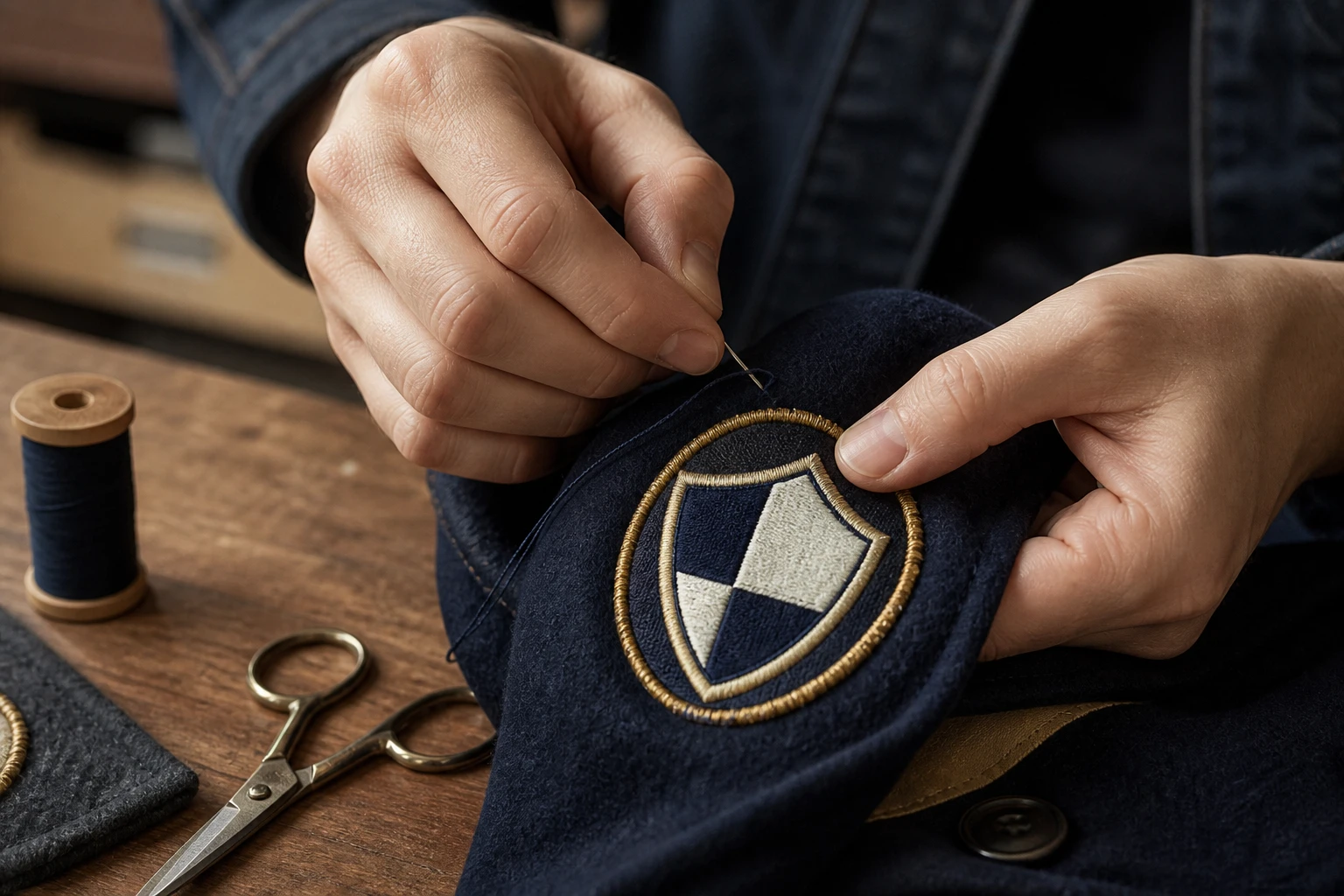
To sew on a custom patch, pin it in place, stitch around the merrowed border with polyester thread, and knot on the inside of the garment. That is the method we recommend for UK jackets, uniforms, hats, and leather vests. Iron-on is faster on some cottons; it is the wrong spec on leather, nylon, and waterproof shells. At The Customized Patches, sew-on is a backing you name on the quote — not a last-minute household fix.
This is the application page. Choose the back first: sew-on vs iron-on vs Velcro, the backing types roundup, and the iron-on UK guide if you are still deciding. Jacket sizes and fabrics: custom patches for jackets. After it is sewn, how to wash custom patches. Order embroidered or printed patches with sew-on specified so you are not trying to stitch through heat film.
What you need
- The patch, ordered as sew-on (5-piece minimum per design).
- Polyester thread close to the border colour — cotton fuzzes and snaps sooner.
- A sharp hand needle, or a machine with a denim or leather needle if the fabric is heavy.
- Pins or clips. Clips are kinder on leather than pins.
- About 15–25 minutes for a 3-inch chest patch. Larger backs take longer.
Step-by-step: sew a merrowed patch
- Confirm the back is sew-on. If you see shiny heat film, this is the wrong method.
- Lay the garment flat. Place the patch. Check seams, pockets, and cap centre lines.
- Pin through the raised merrow, or clip the edge on leather and thick wool.
- Knot on the inside, then whip or run stitches around the full border, 2–3 mm apart.
- Keep stitches in the merrow, not across the logo fill, so the face stays clean.
- Tie off on the inside, trim, and avoid a hot iron on the patch face.
Name sew-on on the quote. We show the correct back on a free 12-hour mockup so you are not stitching through the wrong finish.
Get a free mockupA few corner tacks look finished until the first wash. Full-circumference stitching is what actually lasts. That is why we tell workwear and club buyers to spec sew-on on the mockup, then stitch properly — workwear and uniforms, biker club colours.
Hats, leather, and machines
| Garment | How to sew | Watch-out |
|---|---|---|
| Cotton jacket / polo | Hand or machine around the merrow | Do not stretch the fabric while you stitch |
| Wool letterman | Hand stitch; dense wool eats a machine foot | Do not iron the chenille or the merrow |
| Structured cap | Hand stitch; open the sweatband if you can | Avoid the plastic visor insert |
| Leather vest | Hand stitch with a leather needle; clips not pins | Iron-on will not bond — do not try |
| Hi-vis / coated shell | Hand stitch if the fabric accepts a needle | If it will not take a needle, this is the wrong garment for a sew-on fabric patch |
When you should not sew
Loop-panel gear wants hook Velcro, not a needle through a dry bag. PVC morale patches are usually hook-backed for that reason. Thin performance tees can pucker under a dense embroidered disc — test or use a smaller size. If the patch is iron-on only, heat-apply on compatible cotton, then add a few insurance stitches if it will hit a dryer. Do not put a household iron on leather or nylon and call it done.
Ready to spec the run? Open the quote form for a free 12-hour mockup and UK-wide shipping after approval.
GET A FREE MOCKUPOrder the back you will actually stitch
Write “sew-on” on the quote with the garment: “3-inch embroidered, sew-on, cotton coach jacket.” We do not produce until you approve the free mockup. After approval, typical production plus UK-wide shipping is 7–12 business days. File checklist: how to order custom patches.
Frequently asked questions
Can I sew on an iron-on patch?
You can stitch through some iron-on patches as extra hold, but heat film is still there. If you only want thread, order sew-on. Do not iron a sew-on patch expecting it to bond.
What stitch is best for a merrowed patch?
A tight whip stitch or running stitch around the full merrow, about 2–3 mm apart, in polyester thread matched to the border.
Can I sew a patch on a leather motorcycle vest?
Yes — that is the durable method. Use a leather needle and clips. Iron-on will not bond to hide. See our biker club patches guide.
Will sewing damage a waterproof jacket?
Needle holes can leak on coated shells. If the garment is a dry bag or taped waterproof, use a Velcro panel or a different mount. Ask on the quote with the fabric name.
Do you sew patches onto garments for me?
We manufacture the patches. Application is usually done by you, a tailor, or your embroidery shop. Spec sew-on so the back is stitchable.
Is sew-on available on a 5-piece order?
Yes. Minimum is 5 patches per design, including sew-on embroidered and printed patches.
Ready to produce custom patches for your UK team or brand?
GET A FREE MOCKUP