
How Much Do woven patches Cost in the UK?
Woven patches in the UK do not have one fixed price. Your quote depends mainly on patch size, order quantity, shape, thread colours, border, backing and delivery. The Customized Patches has a 5-piece minimum per design, provides a free digital mockup usually within 12 hours, and produces only after approval.
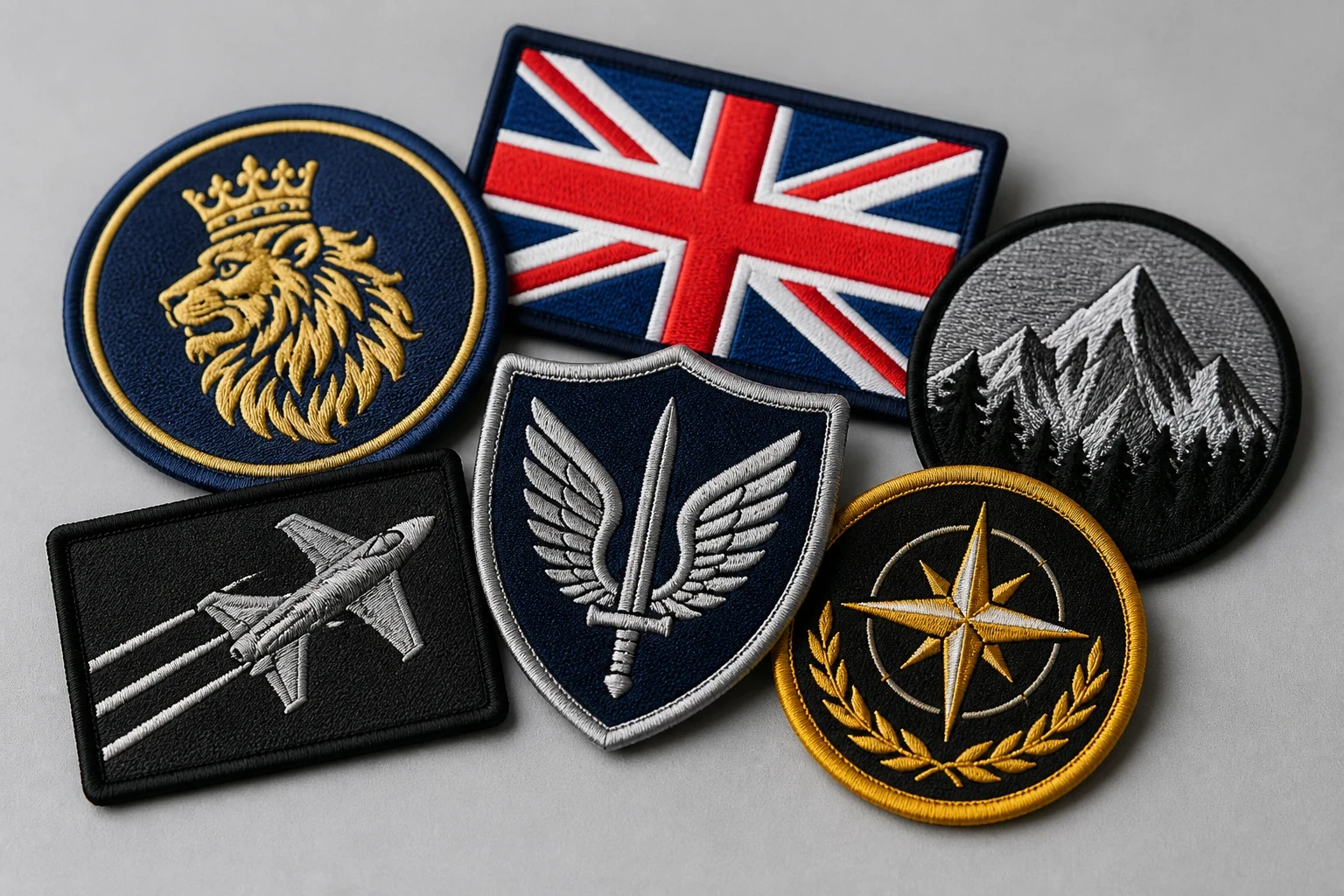
Key takeaways
- Woven patches are priced by the complete specification, not just by the number of patches.
- The Customized Patches has a 5-piece minimum per design for UK orders.
- A free digital mockup is usually supplied within 12 hours, and production starts only after approval.
- A larger order often reduces the per-patch cost, but size, backing, shape and artwork still affect the total.
Woven patches in the UK are usually priced from the full specification rather than from one fixed price. Size, quantity, shape, colours, border, backing and delivery all affect the quote. For a useful figure, send the artwork and tell us how many you need; The Customized Patches has a 5-piece minimum per design.
The practical part is the approval stage. We usually send a free digital mockup within 12 hours, so you can check the lettering and proportions before anything is made. We produce only after approval, which matters when a patch is going on a full run of football shirts, school blazers or branded workwear.
What affects the cost of woven patches?
A small woven badge can take less material than a large back patch, but the artwork may still take similar care to set up. A compact crest with tiny lettering often needs more checking than a simple one-colour symbol. That is why two patches with the same outside dimensions can receive different quotes.
The main pricing points are below. They apply whether you are ordering for a UK football club, a fashion label, a cadet unit, a hospitality team or a business sending branded jackets to staff.
- Finished size: a 2-inch badge normally uses fewer materials than a 4-inch badge and takes less room in production.
- Quantity: larger runs commonly reduce the cost per patch because the fixed preparation work is spread across more pieces.
- Shape: a basic circle, square or rectangle is generally simpler than a detailed custom outline with several internal points.
- Colours: extra thread colours can affect the specification, particularly where the design uses close shades or gradients that need simplifying.
- Border: a merrowed edge gives a traditional raised outline, while a clean cut edge may suit a detailed shape better.
- Backing: sew-on is straightforward; iron-on and hook-and-loop options need the correct adhesive or fastener for the intended garment.
- Artwork: clean vector artwork is easier to interpret than a compressed screenshot with blurred lettering.
- Delivery: UK-wide shipping, the destination and the required timescale can change the final amount.
Typical UK quantity planning
There is no honest single price that covers every woven patch order. A team ordering six 2-inch names, a brand ordering 100 swing-tag patches and a biker club ordering 25 large back pieces are asking for different products. The right comparison is the total cost for the same design and specification, then the cost per piece.
As a planning rule, small batches have a higher per-patch cost because the artwork preparation and production setup are spread across fewer pieces. Larger quantities can improve the unit price, but do not assume that doubling the quantity will halve the quote. A wider patch, a new colourway or a different backing may alter the calculation.
| Order situation | What usually happens to the quote | Useful UK example |
|---|---|---|
| 5–14 patches of one design | The per-piece cost is often higher because it is a small batch. This meets the 5-piece minimum per design. | A new club crest for a small committee or a trial run for a clothing label. |
| 15–49 patches of one design | The quantity may give a better unit cost than a very small batch, subject to size and specification. | Staff badges for a restaurant group or team patches for a school year. |
| 50–99 patches of one design | A larger run can spread preparation work more widely and may make the unit cost more practical. | A branded workwear order or a club placing stock for a season. |
| 100 or more patches of one design | This is often the point where quantity becomes a major part of the saving, although large dimensions and special backing still matter. | Retail stock, event merchandise or several teams using the same badge. |
| Several different designs | Each design needs its own review and production specification. The total number of patches does not automatically make every design the same price. | Five names, three locations or several separate club crests. |
Treat those bands as planning guidance, not a promise of a particular price. A useful quote should state the design quantity, finished dimensions, backing, delivery and any agreed artwork changes. If a price is given without those details, ask what has and has not been included.
Woven patches or embroidered patches: which gives better value?
Woven patches use a flatter, tighter surface that is good for small lettering, fine outlines and a printed-looking logo. Embroidered patches use raised thread and can give a more textured, traditional crest. Neither is automatically better value; the useful question is whether the surface suits the garment and the artwork.
Printed is flatter; that is the point. If your design includes a photograph, a soft colour blend or very fine detail, printed patches may be the more sensible choice. If you want a classic merrowed crest for a polo, jacket or blazer, compare the finish with embroidered patches before deciding.
| Feature | Woven patches | Embroidered patches | What it means for the quote |
|---|---|---|---|
| Surface | Flat and closely woven | Raised thread with more texture | The chosen finish changes the product, so compare like with like. |
| Fine lettering | Often suitable for smaller text when the size is realistic | Small text may become less clear as the stitching builds up | Artwork simplification can save time and prevent an unusable result. |
| Bold club crest | Clean and neat | Traditional and tactile | The cheapest option is not useful if it does not look right on the kit. |
| Photographic or tonal artwork | Limited by woven colour blocks | Limited by thread colour and stitch direction | A printed option may be more suitable for detailed artwork. |
| Jacket or uniform use | Works on many smooth fabric surfaces | Works well where a more substantial badge is wanted | Backing and garment fabric still need checking. |
For a wider material comparison, see Woven patches vs embroidered patches: Which Is Right for Your Project?. If the brief is a motorcycle or club garment, look at biker and motorcycle club patches as well, because large back designs and rocker shapes need different planning from a small chest badge.
Size, shape and border choices
Measure in inches and describe where the patch will sit. A 2.5-inch chest badge may work on a polo, while a blazer pocket, sleeve or Velcro panel may need a different proportion. A patch that looks balanced on a screen can appear cramped once it is placed above a pocket or beside a zip.
Why size changes more than material use
Increasing the width also increases the area available for background, border and thread. It can make small text easier to read, but it may add production time and postage weight. A large patch can also need a stronger attachment method, especially on a moving nylon shell or a heavy wool coaches jacket.
Simple and irregular shapes
A circle, shield or rectangle is easy to measure. A jagged outline, tab, rocker or cut-out shape needs a clear artwork boundary. Tell us whether the coloured edge is part of the design or the border; otherwise the mockup may show a different finished size from the one you had in mind.
Not sure whether woven or embroidered thread will hold your logo, or which backing suits the garment? Send the artwork and the item it will go on. We provide a free digital mockup usually within 12 hours so you can compare the specification before production.
GET A FREE MOCKUPMerrowed crests have a stitched edge that suits traditional sports and uniform badges. They are not the right answer for every outline. A very detailed shape may be cleaner with a cut edge, and a small patch with a thick merrow can lose room for the actual logo.
Backing options and the real cost of attachment
Backing is part of the product, not an afterthought. Sew-on is dependable for many garments and is usually the first choice for a patch that will be washed regularly. Iron-on is convenient for quick application, but it needs a compatible fabric, correct heat and firm pressure.
It is common to see iron-on patches peel after a dryer cycle, particularly where the garment was not pressed as instructed or the fabric was heat-sensitive. Nylon shells, waterproof finishes and some technical fabrics can resist adhesive. A sewn edge is often safer for those garments, even if it takes a little longer to apply.
- Sew-on: a practical choice for football shirts, school blazers, denim, wool coaches jackets and workwear that will be washed often.
- Iron-on: useful where a clean application is wanted and the fabric can accept the heat and pressure required.
- Hook-and-loop: suitable for removable badges on tactical kit, bags and Velcro panels, but the patch and receiving panel must be sized to match.
- Adhesive-only application: ask about the garment before choosing it; a smooth cotton surface is not the same as coated nylon.
- Combination attachment: stitching around an iron-on patch can add security on garments that receive heavy use.
Include the backing in the first quote request. Changing from sew-on to hook-and-loop after approval can affect the finished thickness, the overall dimensions and how the badge sits on the garment. The free digital mockup is the right time to confirm the attachment, not after production has started.
Artwork can raise or reduce the final cost
Artwork does not need to be created by a designer to receive a quote. A clear PNG, JPG, PDF or vector file is useful, and a rough sketch can still start the conversation. What causes trouble is not the file type by itself; it is unclear text, missing colour references and a logo that is too detailed for the finished size.
Consider a hospitality polo with a company name only 1.5 inches wide. At that size, a thin script may close up in thread. Changing it to a heavier sans-serif font could make the badge clearer without changing the overall idea. That small decision can avoid a second mockup and a disappointing production result.
- Use large enough lettering for the finished patch, not for the artwork on your monitor.
- Mark the important colours and say if a close brand match matters.
- Remove unnecessary shadows, gradients and tiny internal gaps unless they are essential.
- Keep separate names or numbers in a list if every patch is different.
- Check spelling, punctuation and dates before approval.
- Tell the manufacturer if the patch must match an existing badge or uniform.
A digital mockup is not just a sales picture. It is the point where the artwork is translated into a production-ready patch plan. Read How to Choose the Right woven patches for Your Brand for more help with size, colour and style decisions, and review Common Mistakes to Avoid When Ordering woven patches before approving.
What should be included in a UK woven patch quote?
A quote should be easy to check. If the email simply says “custom badges” with a total, you may not know whether the figure covers one design or several, which backing is included, or whether delivery and VAT have been considered. Ask for the specification in writing so the order can be compared fairly.
| Quote detail | Question to check | Why it matters |
|---|---|---|
| Design count | Is the quantity for one design or several? | The 5-piece minimum applies per design, and separate artwork needs separate checking. |
| Finished dimensions | What are the width and height in inches? | A different size changes the material area, proportions and likely appearance. |
| Patch shape and border | Is it merrowed, cut edge, round, shield, rocker or another outline? | The outside edge is part of the finished product and its price. |
| Backing | Is it sew-on, iron-on or hook-and-loop? | The wrong backing can fail on a nylon shell, blazer or technical garment. |
| Artwork and mockup | Are changes shown before production? | The approval stage catches spelling, colour and proportion errors. |
| Delivery | Is UK-wide shipping included and what is the timescale? | A low product figure may not be the final delivered total. |
| VAT | Is the quoted amount inclusive or exclusive of VAT? | Businesses and clubs need a clear figure for budgeting and records. |
At The Customized Patches, we work from the approved specification rather than making assumptions. That is especially useful for schools and clubs ordering several sizes, or for a brand sending patches to different UK cities. You can also browse the UK city pages if you need location-specific ordering information.
Ordering times, approval and delivery
The mockup is usually the quickest part: a free digital mockup is normally provided within 12 hours. That does not mean the finished patches arrive within 12 hours. Production and delivery depend on the approved design, quantity, backing, stock planning and the delivery requirement for your UK address.
Build in time for one proper review. A football club may need the badges before its first fixture, while a business may have a launch date printed on its event plan. Approving quickly helps, but rushing through the spelling of a sponsor name or the size of a sleeve badge creates a much larger problem.
- Send the artwork, quantity, size and garment details.
- Receive the quote and check that the specification matches the request.
- Review the free digital mockup, usually within 12 hours.
- Confirm any changes to text, colours, border, shape or backing.
- Approve the final mockup in writing.
- Production begins only after approval.
- Check the finished patches against the approved design when they arrive.
If you are comparing suppliers, compare the same brief and ask about the same delivery point. A five-inch sew-on back patch cannot be fairly compared with a two-inch iron-on chest patch simply because both are described as woven. For background, The Complete Guide to Woven patches in 2026 covers the wider buying process.
Practical examples
A football club usually wants a badge that remains recognisable on a shirt, tracksuit or kit bag. The club may need a modest first run, then more patches when new players join. Keeping the crest, size and backing consistent makes the second order easier to quote, but a new sponsor line or colourway should be treated as a new design detail.
Name sew-on, iron-on or hook-and-loop on the quote request and tell us what the patch is going on. We show the correct backing and proportions on a free digital mockup usually within 12 hours, and production starts only after you approve it.
GET A FREE MOCKUPCadet units often need clear lettering, practical attachment and a patch that can move between garments or bags. A hook-and-loop panel can be useful, but it has to match the panel already fitted to the item. A sew-on badge may be better for a fixed blazer or formal uniform.
Hospitality polos need a different balance. A logo that is too wide can fold around the chest, while one that is too small may be unreadable from a normal distance. Woven fabric can give a neat flat mark, but the thread colours and backing still need to suit repeated washing.
Biker vests and jackets often involve large back pieces, rocker text and a strong outer border. The surface can be denim, leather or a heavy wool jacket, so the attachment method matters. For leather-specific options, compare leather patches rather than assuming a standard textile backing will be suitable.
School blazers bring their own constraints. A badge may need to sit beside an existing school emblem, and iron-on that peels after a dryer cycle is not a useful saving. In that setting, a tidy sew-on finish and a realistic size usually matter more than choosing the lowest initial figure.
How to keep the quote under control without harming the result
The safest savings come from making the brief clearer, not from removing the parts that make the patch usable. Combine quantities only when the design really is the same. Do not order a large batch of a mockup you have not checked.
- Use one approved design across as many garments as possible.
- Choose a sensible finished size before asking for a final quote.
- Avoid tiny text that will need repeated artwork changes.
- Order the realistic quantity rather than guessing from the cheapest unit price.
- Choose sew-on, iron-on or hook-and-loop based on the garment, not convenience alone.
- Ask whether delivery and VAT are included in the figure.
- Keep the approved mockup with your order records for future repeats.
- If you have several related designs, label each file clearly.
Do not remove the border, backing or colour detail without checking the effect on the finished patch. A small apparent saving can be lost if the badge frays, peels or cannot be attached securely. The most economical patch is the one that remains usable on the garment it was ordered for.
Final answer: how much should you budget?
Budget by specification, not by a headline unit price. Start with the number of patches per design, then confirm size in inches, shape, colours, border, backing, delivery and VAT. Small runs will normally cost more per patch than larger runs, while detailed artwork and specialist attachment can move the quote in either direction.
The Customized Patches can quote the actual job from your artwork and garment information. The minimum is 5 pieces per design. You receive a free digital mockup usually within 12 hours, and we produce only after approval, giving UK teams, brands, clubs and businesses a clear point to check the order before manufacture.
If you are still comparing materials, consider PVC patches for a moulded finish, 3D embroidered patches for raised thread, or chenille patches for a soft varsity surface. The right choice is the one that matches the artwork, garment, washing routine and intended use.
Frequently asked questions
How much do woven patches cost in the UK?
There is no single UK price because woven patches vary by size, quantity, shape, colours, border, backing and delivery. Small orders usually have a higher cost per patch than larger runs. The fairest way to price them is to quote the complete specification for each design.
What is the minimum order for woven patches?
The Customized Patches has a 5-piece minimum per design. If you need five different designs, each design should be listed separately because the minimum is not automatically met by adding unrelated artwork together.
Do I receive a mockup before paying for production?
The Customized Patches provides a free digital mockup usually within 12 hours. Check the wording, dimensions, colours, border and backing on the mockup. Production takes place only after approval.
Are woven patches cheaper than embroidered patches?
Not automatically. Woven patches can suit small lettering and a flat logo, while embroidered patches give a raised, textured surface. Quantity, size, artwork complexity and backing affect both quotes, so compare the same specification rather than only the material name.
Which backing should I choose for a UK school blazer or football shirt?
Sew-on is often the dependable choice for garments that will be washed regularly, including school blazers and football kit. Iron-on can be convenient but may peel if the fabric, heat or washing method is unsuitable. The right choice depends on the garment and how the patch will be used.
Can woven patches include small text and detailed logos?
They can include fine detail when the finished size allows it, but tiny lettering may become difficult to read. A mockup helps show whether the design needs a heavier font, fewer colours or a larger patch. Send the clearest artwork available and identify the text that must remain exact.
Ready to produce custom patches for your UK team or brand?
GET A FREE MOCKUP