
Custom Patches for School and Club Uniforms in the UK: A Buyer Guide
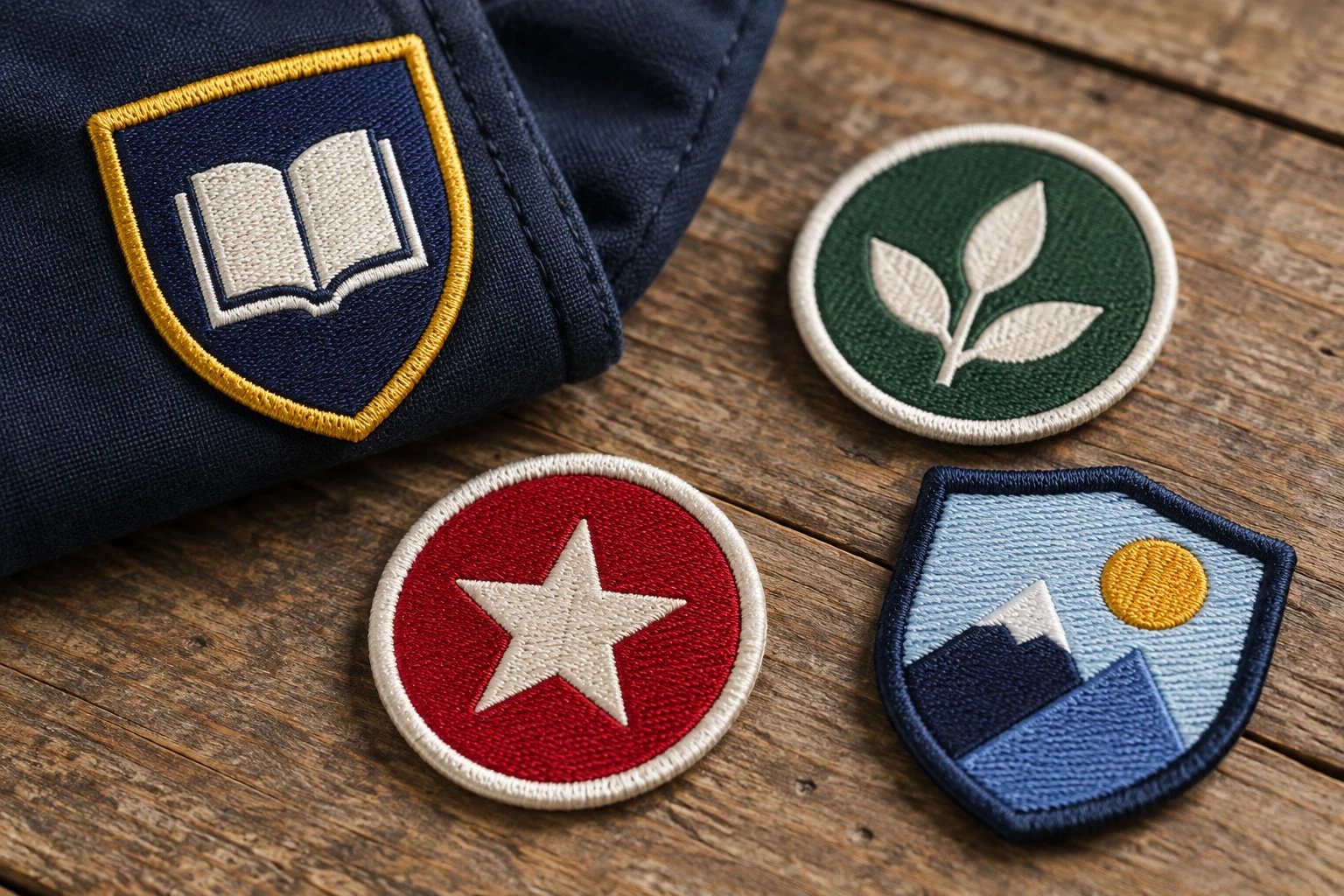
Custom patches for school and club uniforms should be specified around the garment, approved badge design and washing routine. Sew-on embroidery suits many blazer crests, while woven patches can retain finer lettering. Confirm dimensions, backing, placement and quantities per design before approving artwork, and keep the specification for consistent reorders.
Key takeaways
- Match patch construction and backing to the garment’s fabric, care label and intended use.
- Fine crest lettering may need woven construction, a larger badge or simplified artwork.
- The Customized Patches has a 5-piece minimum per design and provides a free digital mockup usually within 12 hours.
- Production starts only after approval; a saved specification helps control later reorders.
Choose custom patches for uniforms UK schools and clubs use by matching the badge to the fabric, washing routine and approved design. Sew-on embroidery is a practical starting point for blazer crests; fine lettering may suit woven construction, while lightweight sports kit needs a lighter badge and careful attachment.
The Customized Patches makes patches to order from your artwork, with a 5-piece minimum per design. We provide a free digital mockup usually within 12 hours and produce only after approval. Shipping is free throughout the United Kingdom.
Which patch type suits a blazer, polo or playing shirt?
School blazers and formal club jackets
Embroidered patches give crests a raised thread finish suited to structured blazers and wool jackets. Small mottos and closely spaced shield details can fill in at badge size, so judge the artwork at its finished dimensions rather than enlarged on screen.
Woven patches use finer yarns and generally retain smaller lettering with a flatter finish. Choose them where preserving crest detail matters more than raised texture. School Badge Patches: Blazer Crests and PE Kit covers these garment differences.
PE kit, sports shirts and club polos
A dense embroidered badge can make thin polyester kit feel stiff or cause lightweight fabric to pucker. Consider a smaller woven badge, or printed patches for gradients and detailed colour artwork. Neither construction automatically makes a patch stretchy: check the complete badge and backing against the shirt.
What size and backing should you specify?
Measure the actual pocket or sleeve on the smallest uniform size, then place a paper cut-out there. For example, a proposed 75 mm (3 in) wide crest may fit an adult blazer but crowd a junior pocket. State width and height, including the border.
Send the artwork, proposed dimensions and garment fabric so the specification can be checked together. Get a free digital mockup, usually within 12 hours, before approving production.
GET A FREE MOCKUPSew-on is often the safer starting point for frequently washed uniforms, provided the garment can be stitched. Iron-on depends on fabric compatibility, adhesive instructions and correct application; excessive wash heat or poor bonding can cause edges to lift. A nylon shell may be heat-sensitive, while stitching can compromise its water resistance.
| Garment or use | Starting specification | Check before approval |
|---|---|---|
| School blazer | Embroidered or woven, sew-on | Pocket access, lining and crest lettering |
| Polyester PE shirt | Lightweight woven or printed | Stretch, puckering and permitted heat |
| Cotton club polo | Embroidered or woven, sew-on | Badge weight and wash routine |
| Cadet overshirt with loop panel | Patch with hook backing | Panel size and authorised position |
| Scout shirt | Sew-on where uniform guidance permits | Approved badge, dimensions and placement |
For hook-and-loop attachment, specify whether you need the hook-backed patch alone or a matching loop piece for the garment. Choose a rounded, bound edge for suitable simple shapes; discuss a cut edge for intricate outlines. Iron-On vs Sew-On Patches: Which Lasts Longer? explains the attachment trade-offs.
Check school, cadet and scout badge rules first
Ask the school or organisation which design, dimensions and placement are permitted before commissioning a replacement crest or activity badge. A custom patch is not automatically an approved uniform badge. Cadet and scout organisations may distinguish official insignia from local event or informal badges.
Use authorised artwork rather than redrawing a crest from a blurred photograph. Confirm left or right as worn, and measure placement from a fixed point such as a pocket edge. When attaching a blazer badge, avoid sewing the pocket shut; the jacket attachment guide covers practical methods.
Specifying custom patches for uniforms UK clubs can reorder
Keep one approved specification for each badge, rather than relying on a committee member’s screenshot. A digital mockup confirms the proposed design, but it cannot prove exact thread colour, texture or performance on a garment. Screens and material batches can differ.
Include your quantities per design and required arrival date with the artwork. We provide a free digital mockup usually within 12 hours, and produce only after your approval.
GET A FREE MOCKUP- Save the artwork version, finished width and height, border style and backing.
- Record colour references and distinguish thread colours from exposed background fabric.
- Keep the approved mockup and, after delivery, a physical reference patch.
- Record placement instructions separately for blazers, polos and playing kit.
On a repeat quote, identify the previous specification and list any changes explicitly. A new year date, team name or altered crest is a design change, not simply extra quantity. If matching existing uniforms closely matters, ask how the saved physical reference can be used before approving another batch.
How many should you order, and when?
Count garments needing badges, not just members: a pupil may need separate blazer and PE badges. Add only the spares you can justify for replacements or new starters, and separate totals by design. The 5-piece minimum applies to each design, not a mixed collection of unrelated badges.
- Send authorised artwork, quantities per design, dimensions, garment fabric and backing preference through our free mockup quote.
- Give the required arrival date and UK delivery address; ask for production and delivery timing before committing to an event.
- Check spelling, colours, border, size and backing on the digital mockup, with one person responsible for final approval.
- Approve only when the specification is correct, then retain the approved files for reordering.
Quotes start from £60; request a quote for your complete specification rather than assuming a fixed per-patch price. The usual 12-hour mockup turnaround is not a production or delivery promise. Production begins only after approval, so allow time for internal sign-off; Ordering Custom Patches Online: What to Expect explains the process.
Frequently asked questions
What is the minimum for custom patches for uniforms UK schools can order?
Our minimum is 5 pieces per design. List different crests, year groups or team-name variants separately so the quote reflects each design and its quantity.
Can the same badge go on a blazer and PE kit?
The artwork can be shared, but the construction, size and backing may need to change. A dense blazer badge can feel heavy on thin, stretchy sports fabric.
Is iron-on suitable for every school uniform?
No. Check the garment care label and patch application instructions. Heat-sensitive fabrics, coatings and some synthetics may be unsuitable; do not assume all polyester garments tolerate the same heat.
Can you make official cadet or scout badges?
We make patches from customer artwork, but this does not establish official approval. Confirm permission, design requirements and uniform placement with the relevant organisation before ordering.
Will a reorder match the first batch exactly?
Exact matching should not be assumed. Keep the approved specification and a physical patch, identify any changes, and discuss colour matching before approving the repeat order.
How should patched uniforms be washed?
Follow both garment and patch care instructions, using the more restrictive requirements. Check edges regularly and repair loose stitching before it spreads. See How to Wash Embroidered Patches Without Damage.
Ready to produce custom patches for your UK team or brand?
GET A FREE MOCKUP