
Custom Patches for Hoodies in the UK: Chest, Sleeve and Back Placement
Custom hoodie patches work best when their size, material and attachment suit the garment. Chest badges suit compact logos, sleeves suit narrow designs, and backs allow larger artwork. Cotton fleece can accept iron-on patches if its care label permits the required heat, but sew-on attachment generally lasts longer through repeated washing.
Key takeaways
- Cotton fleece can accept iron-on patches where the garment permits the application heat; sewing generally lasts longer through repeated washing.
- Check back placement with the hood down and chest placement clear of pockets, drawcords and zips.
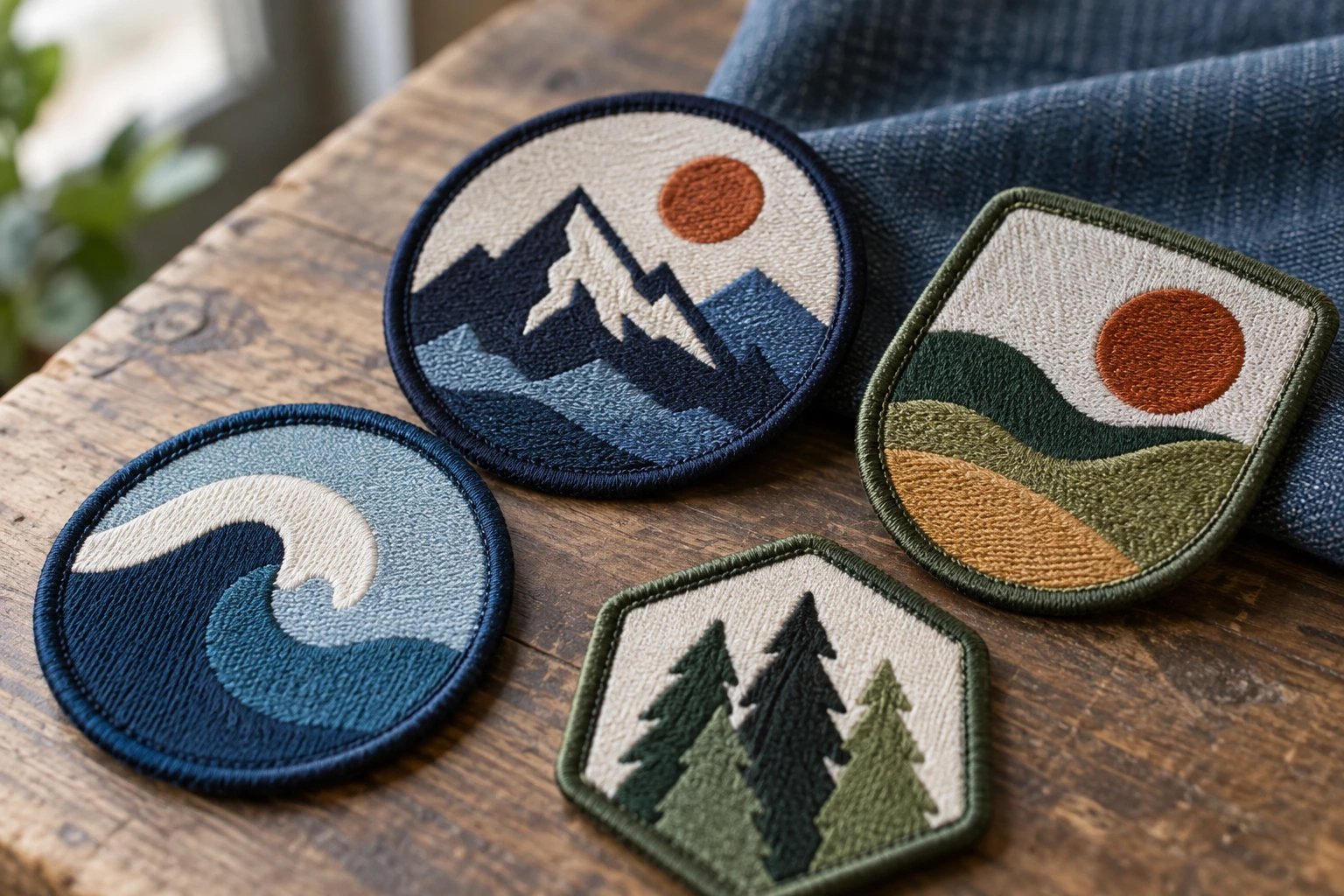
- Embroidery suits bold logos, woven patches suit finer detail, and chenille suits large, simple lettering.
- The Customized Patches has a 5-piece minimum per design and produces only after approval.
For patches for hoodies UK teams can wash regularly, sew-on attachment is generally the better long-term choice. Cotton fleece can also accept iron-on patches if its care label permits the application heat. Choose compact chest badges, narrow sleeve designs or larger back patches, then check their proportions on the actual hoodie.
A hoodie stretches and folds more than a structured jacket, so a large, dense patch can change how it hangs. Before choosing a size, check the fabric composition, the smallest garment in your range and whether the patch will sit near a hood, pocket or zip.
Where should a patch sit on a hoodie?
The chest is a practical position for a team crest or business logo; the sleeve keeps secondary branding away from the front. A back patch gives artwork more room, but the resting hood can cover its upper edge.
These widths are starting points for adult hoodies, not fixed production limits. Cut paper templates to the full patch shape and check both width and height on the smallest and largest garment sizes.
| Position | Starting patch width | Check before ordering |
|---|---|---|
| Left or right chest | 60–90 mm (2.4–3.5 inches) | Keep clear of the zip, pocket opening and hanging drawcords. |
| Upper sleeve | 50–75 mm (2–3 inches) | Check sleeve curvature; a wide badge may wrap out of view. |
| Centre front | 100–180 mm (3.9–7.1 inches) | Use clear fabric above the pouch pocket; do not bridge a zip. |
| Upper or centre back | 180–280 mm (7.1–11 inches) | Check visibility with the hood down and avoid excessive stiffness. |
Record placement from a repeatable reference
Specify the patch centre or top edge relative to a named seam, rather than saying only “left chest”. Confirm that left means the wearer’s left, and check placement while the hoodie is worn: dropped shoulders and oversized cuts can shift the apparent position.
Embroidered, woven or chenille: which suits your design?
Embroidered patches give bold logos a textured, stitched finish. They suit clear lettering and simple shapes, but small text can fill in and dense stitching can make a large badge feel stiff.
- Woven patches use finer yarns to reproduce smaller lettering and more intricate lines with a flatter finish. Tiny detail still needs checking at the final size.
- Chenille patches give large initials and simple shapes a soft, raised pile. Fine text and tightly packed crests are better handled by another construction.
- For gradients or photographic artwork, consider printed patches rather than forcing the image into thread.
Send your artwork, intended patch dimensions and hoodie fabric so the specification reflects the garment. Get a free digital mockup, usually within 12 hours, to review before production.
GET A FREE MOCKUPMatch the construction to the artwork before enlarging the badge. A detailed crest might work as a compact woven chest patch, while a simple initial can justify a larger chenille back patch; our Embroidered vs Woven Patches in the UK: Which Should You Choose? guide explains the detail trade-off.
Will iron-on backing hold on cotton fleece?
Cotton fleece with a smooth outer face can accept iron-on patches, provided the hoodie tolerates the adhesive’s required temperature. Cotton-rich does not mean pure cotton: polyester, elastane, surface treatments and nearby prints can change what heat is safe.
Thick fleece can make firm, even pressure harder to achieve. Pocket seams and zip tape create uneven surfaces, leaving parts of the adhesive poorly bonded; never increase the heat beyond the garment’s limits to compensate.
Sew-on attachment generally lasts longer through regular washing because it does not rely on adhesive alone. Iron-on edges may lift after repeated flexing, hot washing or unsuitable drying; follow the supplied application instructions and our How to Iron On a Patch in the UK: Step-by-Step Guide, rather than using a universal temperature.
How do you attach a patch without puckering the fleece?
Keep the hoodie relaxed, not stretched, during attachment. If the fabric is stretched beneath a firm patch, it can gather around the edge when released.
- Position the patch on a flat, unstretched area and temporarily secure it without distorting the knit.
- Separate the garment layers so stitching does not close a sleeve or catch the back of the hoodie.
- For a machine-sewn patch, test the needle, stitch and tension on comparable fabric first; suitable stabilisation may help prevent distortion.
- Stitch around the patch edge without pulling the garment, then check the inside for caught fabric or uncomfortable thread ends.
Pouch pockets need particular care: stitching through every layer can partly close the pocket. Sleeve access can also be awkward on a finished hoodie, so confirm attachment with whoever will sew the patches before finalising the position.
How should patched hoodies be washed?
Follow whichever care instructions are more restrictive: the hoodie’s or the patch’s. Turning the garment inside out reduces surface rubbing, while avoiding excessive heat helps protect both adhesive and decorative finishes.
Include the hoodie details and required date in our [free mockup quote](#quote) form. We provide a free digital mockup, usually within 12 hours, and produce only after you approve it.
GET A FREE MOCKUPCheck patch edges before washing and repair loose stitching promptly. If an iron-on edge lifts, establish whether the garment can safely be re-pressed or needs stitching instead; see How to Wash Embroidered Patches Without Damage for further care guidance.
Specifying patches for hoodies UK teams will wear
The Customized Patches makes patches to order from your artwork, with a 5-piece minimum per design. Quotes start from £60, and shipping is free across the United Kingdom; request a quote for your actual specification rather than treating that starting price as a fixed package.
- Supply artwork, colours and final width and height in millimetres.
- Name the patch construction, backing and quantity per design.
- Include the hoodie fabric composition, intended position and garment size range.
- Give your delivery postcode and required date, and clarify who will attach the patches.
Our free digital mockup is usually supplied within 12 hours, and we produce only after approval. Check spelling, colours, dimensions, border and backing carefully; a digital image cannot prove how a patch will drape on fleece.
Ask for production and delivery timing on the quote, allowing time for revisions and attachment before your event or launch. The mockup turnaround is not the manufacturing lead time.
Frequently asked questions
Which patches for hoodies UK clubs order are best for regular washing?
Sew-on embroidered or woven patches are practical choices. Sewing generally withstands repeated washing better than adhesive alone, but the patch and hoodie care instructions still apply.
Can I iron a patch onto a polyester-blend hoodie?
Only if the garment permits the heat required by the patch adhesive. Check the fabric composition and care label; choose sew-on if those requirements conflict.
What size should a chest patch be?
A width of 60–90 mm (2.4–3.5 inches) is a useful adult starting range. Test a full-size paper template against the pocket, zip and garment proportions.
Can a back patch sit directly below the neckline?
It can, but the hood may cover it. Check the position with the hood resting naturally, then lower the patch if visibility matters more than neckline alignment.
Is chenille suitable for a detailed team crest?
Chenille suits broad shapes and large lettering rather than fine detail. Woven patches are usually a better option for intricate crests; embroidery suits simplified, bolder versions.
Can I order five patches split across different designs?
The minimum is 5 pieces per design, not five across several designs. Send each artwork with its required quantity so the quote reflects the separate specifications.
Ready to produce custom patches for your UK team or brand?
GET A FREE MOCKUP