
How to Choose the Right fine-detail woven patches UK for Your Brand
Choose fine-detail woven patches UK by checking logo detail, finished size, garment, backing and expected wear. Woven construction suits small text, clean outlines and flatter branding better than raised embroidery. The Customized Patches provides a free digital mockup, usually within 12 hours, and produces only after approval. The minimum is 5 pieces per design.
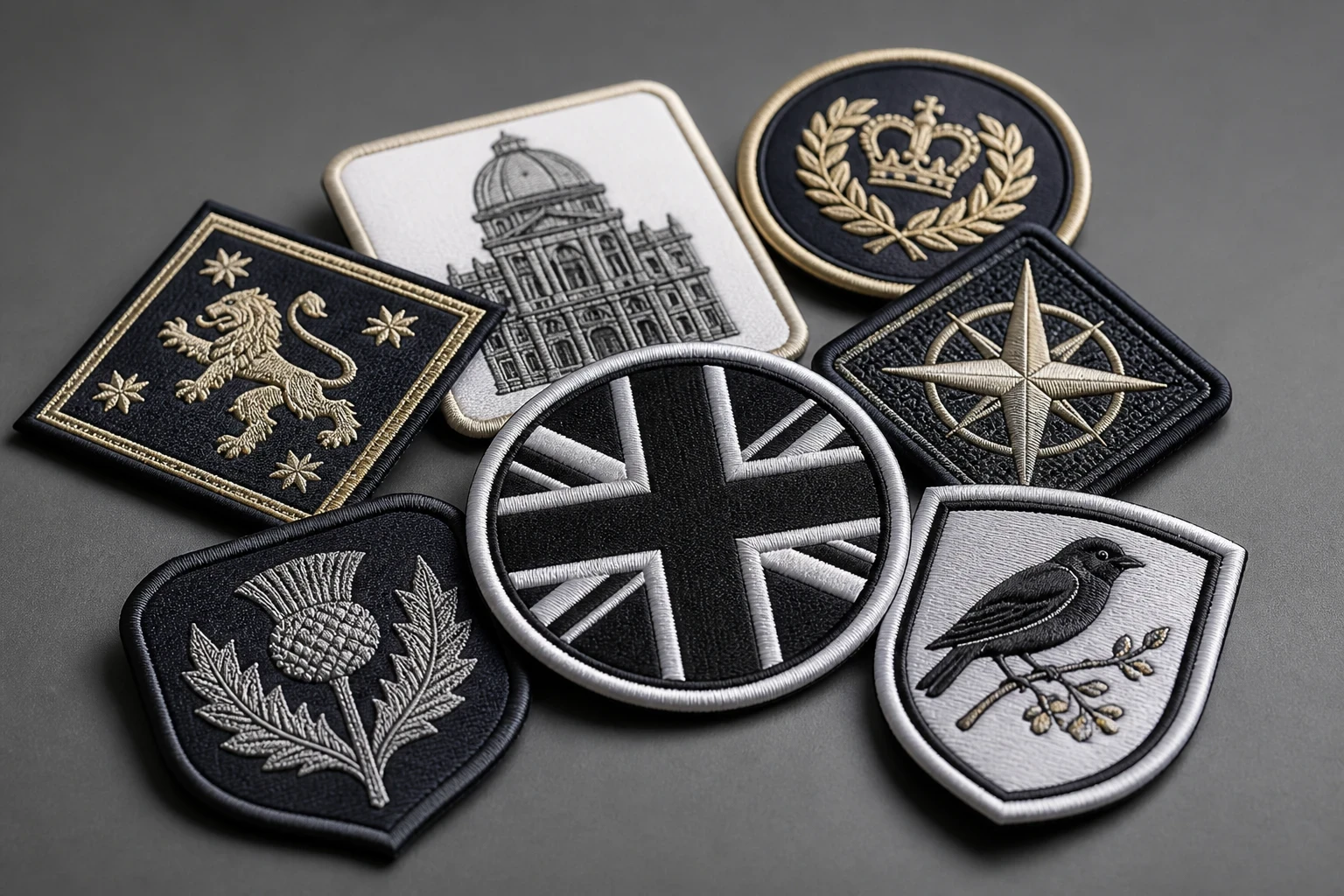
Key takeaways
- Fine-detail woven patches UK are suited to small lettering, crisp outlines and logos that need a flatter surface than traditional embroidery.
- Finished size matters more than the artwork file: text that looks clear on a screen may not remain readable on a 2-inch patch.
- Choose sew-on, iron-on or Velcro backing according to the garment and washing routine, not simply the lowest quoted price.
- The Customized Patches has a 5-piece minimum per design, supplies a free digital mockup usually within 12 hours, and produces only after approval.
The right fine-detail woven patches UK option depends on four things: how small the artwork is, how the patch will be worn, which backing suits the garment, and how much handling it will receive. Woven construction is usually the sensible choice for small lettering, clean outlines and detailed brand marks that need a flatter face than raised embroidery.
The Customized Patches supplies UK teams, brands, clubs and businesses with a 5-piece minimum per design. You can send the artwork and garment details for a free digital mockup, usually within 12 hours. Nothing is produced until you approve the mockup, so size, colour and backing can be checked before the order enters production.
Start with the logo, not the patch type
A logo that works on a website header may not work unchanged on a patch. On screen, the designer can enlarge the artwork and the display can show very fine lines. A patch has a fixed physical size, a thread structure and an edge that must be finished cleanly. The question is not simply whether the file is high resolution. It is whether the important parts of the mark still read at the finished size.
Woven patches are made with tightly arranged threads that create a relatively smooth face. That makes them useful for small words, narrow borders, faces, tools, maps, vehicle details and compact badges. Raised embroidery has more texture and a traditional club look, but small areas can become crowded when several thread fills sit close together. Printed patches are flatter still; that is the point when a photograph, gradient or very fine tonal change matters more than stitched texture.
- Keep short brand names and simple slogans where possible. A long sentence on a small patch becomes a reading problem, not a production triumph.
- Give small letters enough height. If the wearer must hold the patch close to read the wording, ask for a larger finished size or a shorter line.
- Treat fine outlines carefully. A narrow border can disappear into a dark background if there is not enough contrast.
- Separate details with colour or space. Tiny icons packed into one crest are harder to reproduce than the same icons arranged with breathing room.
- Use the original vector logo if available. A PDF, AI, EPS or clear SVG is more useful than a small image copied from social media.
What counts as fine detail?
Fine detail can mean a small line drawing, condensed lettering, a thin internal border or several colour areas within a compact shape. It does not mean every detail should be kept at any size. A production-ready version may need a heavier outline, a simpler icon or a slightly wider letter so the finished patch remains legible after handling and washing.
This is where a digital mockup earns its place. It shows the proposed patch as a product rather than as a flat logo file. If the wording looks too tight or the crest feels crowded, that can be discussed before production. Our woven patches guide also covers the basic construction and common uses, while the artwork guide for woven patches goes further into file preparation.
Match the construction to the garment
The garment changes the decision. A patch on a football warm-up top has a different job from one on a wool coaches jacket. Nylon shells can be slippery and heat-sensitive. A school blazer may need a neat sew-on finish that survives repeated brushing and washing. A Velcro panel on a tactical-style bag needs a hook-compatible backing rather than a permanent adhesive.
Think about movement as well as appearance. A patch on a chest pocket bends and rubs. One on a sleeve catches against doorways and vehicle seats. A large back patch on a biker vest needs a dependable attachment method and a border that suits the heavier garment. For club kit, ask whether members will remove or swap the patch. If they will, removable backing may matter more than the smoothest face.
| Application | Useful patch choice | Why it works | Point to check |
|---|---|---|---|
| Football club training tops | Woven or embroidered, with sew-on or suitable heat-applied backing | Woven handles compact club marks and small sponsor wording with a flatter face | Check the fabric, stretch and washing instructions before choosing heat |
| Cadet unit or uniform shirt | Woven or embroidered sew-on patch | A tidy border and clear lettering suit regular uniform wear | Confirm placement rules and whether the patch may be removed later |
| Hospitality polo shirts | Fine-detail woven patch | Small logos and names can remain crisp without a heavily raised surface | Measure the chest area so the patch does not look oversized |
| Nylon shell or outdoor jacket | Woven patch with a carefully selected sew-on or compatible backing | The smooth face suits technical clothing and compact branding | Heat can damage some nylon fabrics; confirm before pressing |
| Wool coaches jacket | Woven or embroidered sew-on patch | Sewing gives a reliable attachment on thicker material | Allow for the nap and thickness of the wool when setting the size |
| Biker vest or motorcycle club garment | Woven, embroidered or leather patch | The choice can balance detailed artwork, traditional texture and garment character | Check edge finish, placement and how the vest will be cleaned |
| Removable kit or bag panel | Woven patch with Velcro backing | The patch can be changed without stitching each new design to the item | The garment or panel needs the matching loop surface |
There is no universal winner. A merrowed crest can look right on a traditional club blazer, while a clean cut edge may suit a modern technology brand. A large embroidered badge gives a tactile, heritage feel; a woven badge may communicate the same logo more sharply at a smaller size. The difference between woven and embroidered patches explains that choice in more detail.
For alternatives, compare printed patches when the artwork relies on photographs or smooth tonal transitions, PVC patches for a rubber-like finish and outdoor-style branding, and leather patches for a material-led mark on caps, workwear or bags. These are not inferior or superior by default. Each solves a different design and wear problem.
Choose the finished size before judging the detail
Size is the decision that quietly controls almost everything else. A 2-inch-wide patch may be ideal for a hospitality polo, but it may leave a long business name too cramped. A 4-inch crest can hold more detail, yet it may dominate a lightweight shirt. Measure the available space on the actual garment rather than guessing from a logo on a phone screen.
Give the production team three useful measurements: the maximum width, the maximum height and the preferred finished size. If the shape is irregular, measure the widest and tallest points. A shield, oval or custom outline can occupy a different visual area from a rectangle even when both have the same maximum width.
- Chest logos commonly need a restrained size so they sit comfortably beside a zip, pocket or embroidered name.
- Sleeve patches should be checked against seams, cuffs and the way the wearer bends an arm.
- Back patches can carry more detail, but the backing and edge need to suit a larger surface and more contact with chairs or bags.
- Cap patches have limited height and a curved placement, so a wide horizontal design often works better than a tall crest.
- School blazer badges should be checked against the existing pocket, house colours and the blazer's regular cleaning routine.
Small text is usually the first compromise
If a design contains a strapline, ask whether people need to read it from a distance. If the answer is no, it may be better treated as a visual line than as readable copy. If the answer is yes, increase the patch size, shorten the wording or create a second version for larger garments.
This is not a reason to remove all character from the artwork. It is a reason to rank the information. Keep the brand mark, key wording and recognisable shape first. Tiny stars, hairlines and internal decoration can be added back only if the approved mockup shows they remain clear.
Not sure whether woven, embroidered or printed construction will show your logo best? Send the artwork and the garment details. We will prepare a free digital mockup usually within 12 hours, so you can compare the face, size and placement before production.
GET A FREE MOCKUPCompare woven, embroidered and printed finishes
The face of the patch should match the way the brand wants to be seen. Woven is generally flatter and better suited to compact detail. Embroidered patches have visible thread relief and a familiar uniform or club appearance. Printed patches can reproduce very fine artwork and gradients because the image is printed rather than built from thread.
The honest choice may be a mixed approach across a range. A club could use woven name badges on polos, embroidered crests on blazers and printed event patches for a one-off photographic design. A clothing brand might use a small woven chest mark and a larger chenille or embroidered back badge. The embroidered patches hub shows the raised-thread option, while 3D embroidered patches is relevant if the design needs a raised area rather than a flat face.
| Finish | Best suited to | Main visual character | Trade-off |
|---|---|---|---|
| Fine-detail woven | Small text, narrow lines, compact logos and clean badges | Flat to lightly textured face with detailed woven definition | Very small artwork may still need simplifying or enlarging |
| Embroidered | Traditional crests, uniforms, sportswear and bold marks | Raised thread, texture and a familiar stitched appearance | Dense small detail can become busy at a compact size |
| Printed | Gradients, photographs, tonal artwork and very fine image detail | Flatter visual surface with printed colour transitions | It does not provide the same stitched texture as woven or embroidered work |
| Chenille | Varsity lettering, school groups and large tactile emblems | Soft, bold pile with a strong letterman feel | Not the natural choice for tiny wording or intricate linework |
| PVC | Outdoor-inspired branding, bags and designs needing a rubber-like face | Raised moulded appearance with clear solid shapes | Fine visual detail and colour behaviour differ from thread-based patches |
Printed is flatter; that is the point. Woven is more structured than a print and usually gives small branding a stitched product feel without the height of heavy embroidery. The best choice comes from the artwork, garment and use, not from a blanket claim that one finish is always better.
Select the backing for real use
Backing is often left until the end of a quote, even though it affects application and future repairs. Sew-on backing is the dependable choice for many uniforms, jackets, wool garments and long-term club kit. Iron-on backing can be convenient on suitable fabrics, but the application temperature, pressure and cooling time matter.
An iron-on patch that peels after a dryer cycle is not necessarily a poor patch; it may have met an unsuitable fabric, an incorrect press setting or repeated high heat. Nylon shells and some coated technical fabrics are especially worth checking before heat is used. If the garment is valuable, lined, waterproof or difficult to replace, sewing is often the calmer option.
- Choose sew-on for wool coaches, school blazers, denim, biker vests and garments expected to receive frequent wear.
- Choose iron-on only after checking the garment care label and fabric suitability. Follow the application instructions rather than relying on a household iron by feel.
- Choose Velcro when a team, unit or business needs to remove or swap the badge. The garment needs a compatible loop panel.
- Ask about a merrowed edge when a traditional raised border suits the design. A cut edge may look cleaner on some modern shapes and detailed silhouettes.
- Tell the supplier if the patch is going on a seam, pocket, elastic panel or curved surface. Placement can affect both appearance and attachment.
A useful quote request names the garment, placement, intended backing and washing routine. “Patch for jacket” is a starting point. “2.75-inch woven crest for a nylon shell, sleeve placement, removable Velcro, regular outdoor use” gives our team something practical to assess.
Prepare artwork and colours for approval
Send the cleanest version of the logo you have, along with brand colour references. A Pantone reference is useful, but the finished result also depends on the available thread shades and the contrast between adjacent colours. Dark navy beside black may look distinct on a monitor and merge visually on a small patch.
Do not flatten a poor screenshot into a larger file and expect extra detail to appear. A small JPEG enlarged to 3000 pixels is still a small JPEG with softened edges. If the original vector file is unavailable, send the best image you have and explain which parts of the logo must be preserved.
- Send the logo, wording and any brand colour references.
- Mark the preferred width or height in inches and show the intended garment placement.
- State whether the patch is sew-on, iron-on or Velcro, and mention any fabric concerns.
- Review the free digital mockup for spelling, shape, colours, size and backing.
- Request changes before approval if the small text, border or icon is not clear enough.
- Approve the final version only when the production details match the intended garment.
The mockup is not just a sales image. It is the point where artwork and production requirements meet. The Customized Patches produces only after approval, so this is the time to query a line that has disappeared, a colour that feels too close, or a badge that is too large for the pocket.
Order quantities, pricing and UK delivery
The Customized Patches has a 5-piece minimum per design. That suits a small business testing a new mark, a club ordering a handful of committee badges, or a team replacing a few damaged items. If you need several colourways or sizes, treat each distinct design as a separate specification when asking for a quote.
Pricing normally reflects the finished size, construction, number of colours, edge, backing, quantity and any artwork preparation. A larger patch uses more material and production time. A complex shape can require more finishing than a simple rectangle. Quantity can affect the unit cost, but the correct comparison is the cost of a suitable patch that works on the garment rather than the cheapest line on a spreadsheet.
Allow time for artwork approval, production and UK-wide shipping. The free digital mockup is usually supplied within 12 hours, but that is not the same as a promise that the finished order will arrive in 12 hours. Lead time depends on the approved specification, quantity and current production schedule. If the patches are for a match, launch, graduation or event, mention the date at quote stage.
For local context, The Customized Patches supports orders across the United Kingdom, including teams and businesses in England, Scotland, Wales and Northern Ireland. You can also browse the UK city pages for location-specific patch ideas. The ordering process remains the same: send the artwork and requirements, review the mockup, approve it, then allow production to proceed.
Name the garment, finished size, backing and quantity on your quote request. We will show the proposed details on a free digital mockup, usually within 12 hours, and production starts only after you approve it.
GET A FREE MOCKUPCommon mistakes with fine-detail woven patches UK
The most frequent mistake is approving a patch from the artwork alone. A logo can look balanced in a square PDF and too crowded when converted into a narrow sleeve badge. Another is choosing iron-on because it sounds convenient, then applying it to a fabric that cannot take the necessary heat.
We also see buyers specify “as small as possible” when they really mean “subtle”. Those are different instructions. A subtle patch can still have enough size for readable text and a clean edge. A patch made as small as possible may lose the very detail that makes the brand recognisable.
- Do not rely on a low-resolution screenshot when a proper logo file is available.
- Do not compare prices before confirming that all quotes use the same size, backing, edge and quantity.
- Do not put a Velcro-backed patch on a garment with no loop panel and expect it to stay attached.
- Do not assume every iron-on patch belongs on nylon, waterproof fabric or heat-sensitive clothing.
- Do not approve a spelling, colour or size from memory. Check the actual mockup.
- Do not order several designs as one specification if each design has different wording, colours or backing.
- Do not leave an event date until the last line of the order. State it before the quote is prepared.
If you are comparing woven with other patch styles, our patches for biker and motorcycle clubs may help with larger vest designs, and the chenille patches hub is useful for varsity-style lettering. For a broader decision process, read Are woven patches right for your project?.
A straightforward selection checklist
Before requesting a quote, put the information in one message. This avoids a long chain of questions and gives our team a fair basis for a recommendation. A photograph of the garment beside a ruler is often more useful than a description such as “medium size”.
- What is the logo, wording or badge artwork?
- What is the finished width and height in inches?
- Where will the patch go: chest, sleeve, cap, blazer, bag, back or Velcro panel?
- Is the garment cotton, polyester, nylon, wool, denim, coated fabric or a mixed material?
- Will the patch be sewn on, ironed on or removed and replaced?
- How often will the garment be washed or exposed to outdoor wear?
- Does the artwork need small text, narrow lines, a merrowed crest or a custom cut edge?
- How many pieces are required per design? The minimum is 5 pieces.
- Is there an event, launch, fixture, school term or delivery date to work towards?
- Has the final mockup been checked and approved by the person responsible for the order?
That checklist also makes it easier to decide that woven is not the right answer. If the artwork is a full-colour photograph, printed may be more suitable. If the main requirement is a tall raised letter, chenille may carry the idea better. If the mark needs a rubberised outdoor feel, PVC may be worth comparing. Good production advice includes saying so when another construction fits the brief better.
Final decision: choose the patch that survives the brief
Fine-detail woven patches UK are a strong option when your brand needs a compact, relatively flat badge with clear lines and small but important details. They work especially well for hospitality polos, club kit, cadet clothing, branded jackets, caps and business merchandise, provided the finished size gives the artwork enough room.
Choose the construction, size and backing together. Then check the mockup against the real garment rather than judging the logo in isolation. The Customized Patches uses a 5-piece minimum per design, offers a free digital mockup usually within 12 hours, and produces only after approval, giving UK buyers a clear point to confirm the details before manufacture.
For the next step, send your artwork, preferred size, garment, backing and quantity through the free mockup quote. If you are still weighing the options, the woven patches sizing and backing guide covers the practical choices before you commit.
Frequently asked questions
What are fine-detail woven patches UK best used for?
Fine-detail woven patches UK are best used for compact logos, small lettering, narrow outlines and detailed badges that need a flatter face than raised embroidery. Common applications include football club kit, cadet units, hospitality polos, school blazers, branded jackets, caps, bags and business merchandise. The correct size still matters: very small artwork may need simplification.
What is the minimum order for fine-detail woven patches?
The Customized Patches has a minimum of 5 pieces per design. Different logos, colourways, sizes or wording may need to be treated as separate designs, so list each version clearly when requesting a quote. A small minimum can suit a new business, a committee order or a club replacing a limited number of badges.
How quickly can I see a mockup?
The Customized Patches provides a free digital mockup usually within 12 hours. This is the approval stage, not the finished delivery time. Production begins only after you approve the mockup, and the total lead time then depends on the approved size, construction, quantity, backing and current production schedule.
Are woven patches flatter than embroidered patches?
Generally, yes. Woven patches use closely arranged threads to create a smoother, flatter face and are often chosen for small lettering and fine outlines. Embroidered patches have more visible thread relief and a raised stitched appearance. Neither is automatically better: woven suits compact detail, while embroidery may suit bold crests and traditional uniforms.
Should I choose sew-on, iron-on or Velcro backing?
Choose sew-on for long-term attachment to garments such as wool coaches jackets, school blazers, denim and biker vests. Choose iron-on only when the fabric and care instructions suit heat application. Choose Velcro for removable patches, but make sure the garment or panel has compatible loop fabric. Tell the supplier about nylon, coated fabrics, seams and pockets before approving the backing.
Can small text be used on fine-detail woven patches UK?
Small text can be used if the finished patch gives it enough room and the lettering remains readable in the approved mockup. Long wording, condensed fonts and thin strokes are the usual risks. If the text is essential, consider a larger patch, a shorter line or a separate version for larger garments. The questions before ordering woven patches provides further checks.
Ready to produce custom patches for your UK team or brand?
GET A FREE MOCKUP