
How woven patches Can Strengthen Your Brand Identity
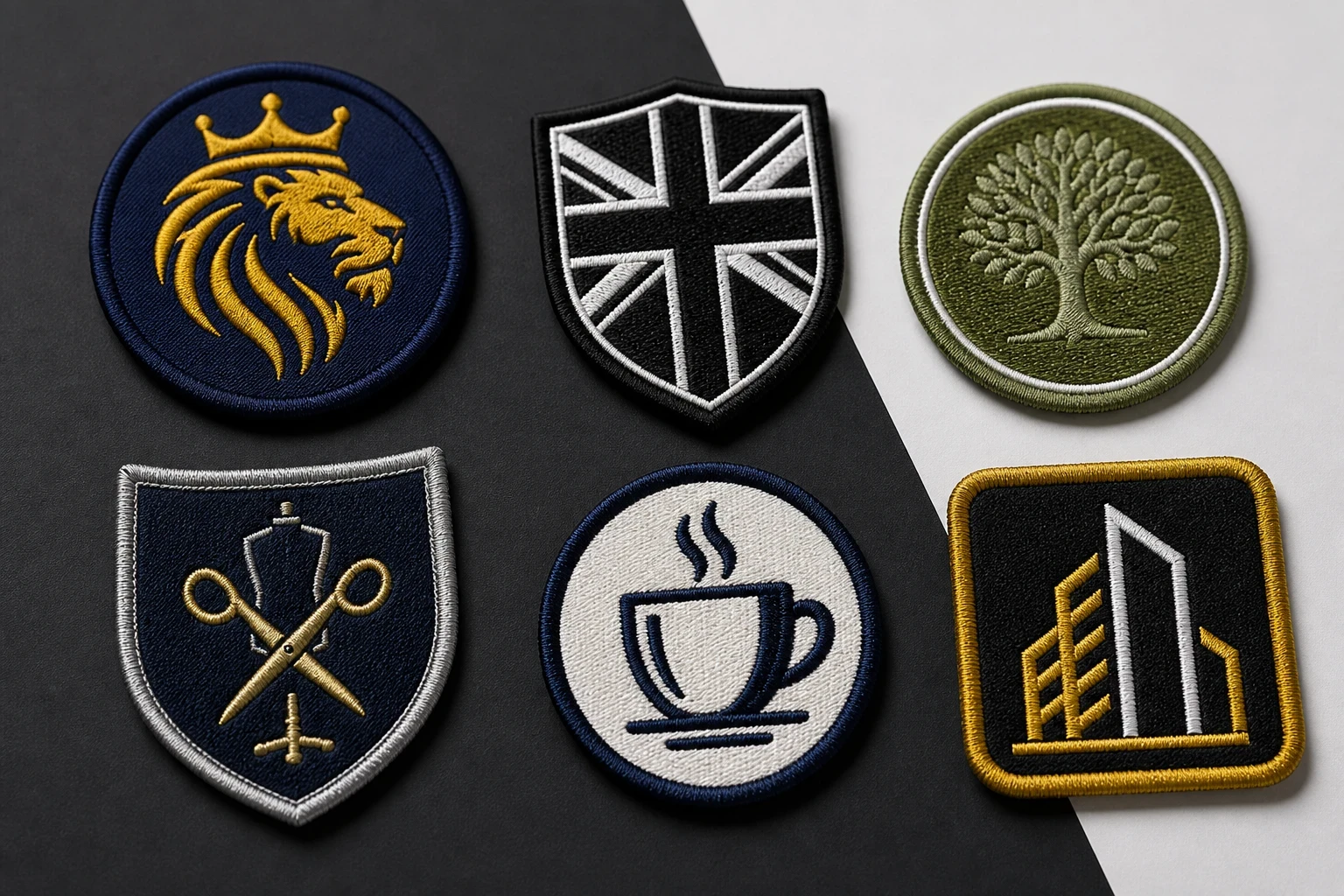
Woven patches strengthen brand identity by putting a clear, repeatable logo or message onto clothing, bags and equipment. Their tightly woven surface suits small lettering and detailed artwork, while consistent colours, shapes and backing choices help teams, clubs and businesses look recognisable across the United Kingdom. The Customized Patches offers a free digital mockup, usually within 12 hours, with a 5-piece minimum per design.
Key takeaways
- Woven patches make logos, names and short messages repeatable across clothing, bags, uniforms and equipment.
- A simple shape, controlled colour palette and readable artwork usually create a stronger identity than adding detail that disappears at patch size.
- Backing affects how a patch behaves on nylon shells, wool coaches, school blazers, Velcro panels and other garments.
- The Customized Patches accepts a 5-piece minimum per design, sends a free digital mockup usually within 12 hours, and produces only after approval.
Woven patches can strengthen brand identity by making your logo, name or message consistent across jackets, uniforms, bags and equipment. The tightly woven face keeps small lettering and fine shapes clearer than a heavily raised stitch design, so your audience can recognise the same mark across different garments and locations.
For a UK team, club, brand or business, that consistency matters. The Customized Patches produces woven patches for customers across the United Kingdom, with a 5-piece minimum per design. You receive a free digital mockup usually within 12 hours, and production starts only after you approve the artwork.
Why woven patches help people recognise a brand
A brand is not only a logo on a website. It is the mark people see on a football club jacket at an away fixture, the crest on a school blazer, the badge on a hospitality polo, or the label attached to a product bag at a market. Repeating that mark in the same colours and proportions gives people more chances to remember it.
Woven patches are useful because they turn a digital identity into something physical. A customer can see the patch at close range, while a teammate or passer-by may only notice its outline and colour from several metres away. Both views should still point back to the same organisation.
- A consistent patch shape can become a recognisable sign-off on workwear or club kit.
- A fixed thread colour palette helps different garment orders look related.
- A woven face can carry small names, dates, web addresses or role details when the artwork is prepared carefully.
- A sew-on patch can move from one garment to another if the owner replaces a jacket or changes kit.
- A standardised size makes repeat orders easier for offices, branches, teams and events.
This is especially helpful for organisations with several people representing them. A five-person start-up, a county-wide sports club and a national event team may all need the same identity at different quantities. A defined patch specification gives future orders a reference point instead of relying on a slightly different redraw each time.
The identity choices to settle before production
Strong identity work starts before anyone chooses a backing. Decide what the patch must communicate first. Is it the main company mark, a sub-brand, a staff role, a club crest, a campaign slogan or a commemorative date? Trying to place every part of a full brand guideline onto a small patch usually creates a busy result.
Logo shape and visual hierarchy
Choose one dominant element. That might be the shield around a football crest, the wordmark used on a work jacket, or a simple symbol from a packaging system. Supporting text should be secondary. If the patch is only two inches wide, a long strapline may be technically possible but not comfortably readable.
Consider the outer shape as part of the identity. A round patch feels different from a rectangular name tab or a shield-shaped crest. A merrowed border can give a traditional finished edge, while a clean cut edge may suit a modern label. The right shape should follow the mark and the garment, not a trend chosen in isolation.
Colour control and contrast
Brand colours often look different on a screen, on a printed proof and in thread. A pale yellow word on white may look acceptable in a large logo file but disappear on a small patch. Navy beside black can also lose separation under indoor lighting, particularly on a dark polo or jacket.
Ask for the closest practical thread match and check contrast at the final proposed size. There is no value in preserving a colour relationship that prevents people reading the business name. A two-colour version may be more recognisable than a six-colour version if the additional shades create visual noise.
Size, placement and repetition
A chest patch on a polo is normally judged at conversation distance. A back patch on a biker jacket needs a larger format and a construction suited to repeated movement. A small sleeve mark can work as a secondary identifier, but it should not be expected to carry the same amount of information as a main chest crest.
| Brand use | Common garment or item | What the patch needs to do | Practical design priority |
|---|---|---|---|
| Staff identification | Hospitality polo or fleece | Show the business name clearly at close range | Readable wordmark, strong contrast and comfortable size |
| Club membership | Football jacket, rugby top or school blazer | Show crest, team or year | Recognisable outline, balanced lettering and suitable edge |
| Outdoor identity | Nylon shell, rucksack or work coat | Remain visible on a moving, textured surface | Appropriate backing, clear border and colours that contrast with the fabric |
| Product branding | Tote bag, cap or packaging pouch | Add a repeatable branded detail | Compact artwork, tidy finish and a format suitable for batch orders |
| Community or campaign mark | Volunteer vest or event garment | Help people identify the group quickly | Simple symbol, legible short text and consistent placement |
If you are comparing finishes, woven patches suit detailed flat artwork, while embroidered patches give more visible thread texture and height. Neither is automatically the right answer. Printed is flatter; that is the point when a smooth surface or photographic-style colour treatment matters.
Choosing woven patches for different UK organisations
Different customers use the same patch format for different reasons. A football club may need a crest that feels established and durable on players’ travel jackets. A café group may want a neat wordmark on aprons and overshirts. A cadet unit may need clear identifiers on uniform layers, while an independent clothing brand may treat the patch as part of the product rather than just staff identification.
Teams and clubs
Clubs often have more than one garment: match kit, coaches’ jackets, rain shells, hoodies and presentation tops. The patch should be designed with the most important use in mind, then checked on the darkest and lightest fabrics in the range. A crest that looks sharp on a white polo may lose its outer border on a black waterproof jacket.
For biker and motorcycle clubs, the back panel and shoulder layout bring another consideration: the patch must sit comfortably on a curved garment and work beside other club identifiers. Explore biker and motorcycle club patches if your project includes a large back design, rocker text or several patches working together.
Businesses and workwear
A company patch can make a mixed workforce look organised without forcing every person into a completely new uniform. It may sit on a polo, fleece, softshell or high-visibility outer layer. Before approving the artwork, check where the patch will sit in relation to pockets, seams, zips and reflective strips.
Not sure whether a woven face, raised embroidery or printed surface will present your logo best? Send the artwork and intended garment for a free digital mockup usually within 12 hours, then compare the result before production.
GET A FREE MOCKUPHospitality is a good example. A small woven logo can look tidy on a wool coach jacket or cotton apron, but the same size may be too small for a busy outdoor event where staff need to be identified quickly. Decide if the patch is for brand presence, staff recognition, or both.
Schools, colleges and community groups
School and college patches are often ordered in stages. A first order might cover a team or prefect group, followed by additional pupils later in the year. Keeping the artwork, dimensions, border and backing recorded makes a repeat order far more predictable.
For a community group, the patch may be attached to donated clothing, bags or volunteer jackets rather than one standard uniform. In that situation, contrast and a flexible placement can be more valuable than a complex edge. Consider the UK city pages if your identity includes a local place name or regional branch.
Woven patches compared with other patch styles
The production choice should follow the visual job. Woven construction uses a flatter, closely interlaced face, so it is often a sensible option for detail and small lettering. Embroidery builds texture with stitches, which can give a traditional crest more presence but may simplify fine details at small sizes.
There are other valid alternatives. A printed patch can reproduce a smooth image or very fine tonal change; that flatter finish is useful for some fashion labels and artwork-led designs. A PVC patch handles a different look and feel, particularly for outdoor equipment. PVC patches and printed patches are worth considering when the surface itself is central to the design.
| Patch type | Best suited to | Main visual character | Trade-off to consider |
|---|---|---|---|
| Woven | Small lettering, fine linework, detailed logos and tidy labels | Flat, closely woven face with a clean graphic appearance | Very tiny text still needs checking at finished size |
| Embroidered | Traditional crests, bold symbols, uniforms and textured branding | Raised thread with visible stitch texture | Fine detail may need simplifying, especially on smaller patches |
| Printed | Smooth artwork, gradients, illustrations and image-like designs | Flat surface with less thread texture | Can look less tactile, which is useful for some brands but not others |
| PVC | Outdoor equipment, technical clothing and bold moulded designs | Rubbery, dimensional and highly defined | Not the right visual language for every heritage, school or fashion identity |
| Chenille | Varsity clothing, college groups and statement lettering | Soft, high-pile texture with a prominent feel | Large lettering and simple shapes work better than detailed logos |
| Leather | Premium labels, heritage products and understated branding | Natural or smooth material surface | Detail, colour range and care expectations differ from textile patches |
The useful question is not which patch is universally best. It is which construction makes your particular identity legible, believable and practical on the item people will actually wear. A detailed restaurant emblem may suit woven construction, while a large university letter may be more convincing in chenille. See chenille patches and leather patches for those different directions.
Backing and garment choices can protect the identity
A patch can be well designed and still fail if the backing does not suit the garment. Nylon shells are slippery and often used outdoors, so a loose temporary attachment may shift. Wool coaches and school blazers have a different surface and may need a neat sew-on finish that respects the garment rather than a quick adhesive approach.
Velcro panels are useful for role tabs, removable identifiers and equipment that needs frequent changes. They are not the same as a standard sew-on patch. If the customer expects a patch to attach to a loop panel, say so at quote stage so the hook-and-loop parts are considered correctly.
- Sew-on backing is a dependable choice for permanent placement on many jackets, uniforms, bags and thicker garments.
- Iron-on backing can be convenient on suitable fabrics, but heat, washing and garment construction affect the result.
- Iron-on that peels after a dryer cycle is a common disappointment when the garment care and application instructions were not considered.
- Velcro is useful when the patch must be removed or exchanged, particularly on equipment and role panels.
- A combination of attachment methods may be discussed for a patch that needs both position and removability.
Always tell us what the item is made from and how it will be washed. A cotton hoodie, waterproof nylon shell and wool coaches jacket do not respond to heat, moisture or stitching in the same way. The attachment decision is part of brand protection because a peeling, curling or badly positioned patch reflects on the organisation wearing it.
Artwork rules that keep the brand recognisable
Start with the clearest available artwork, preferably a vector logo or a high-resolution file. This does not mean every file can be reproduced without adjustment. Thin outlines, tightly packed words and small gaps can close up when reduced to patch size, so the production version may need sensible spacing.
Keep small text honest
A patch may be viewed in a product photograph and then worn in real life. A line of text that looks fine at 400 percent on a monitor may be difficult to read on a moving sleeve. If the words are essential, increase the patch size or shorten the wording. Do not rely on a complicated slogan to carry a brand that should already be recognisable from its main mark.
Build a repeat-order reference
Record the finished width and height, shape, border treatment, backing, thread references, artwork version and intended placement. Keep the approved mockup with the order details. This simple record helps a club secretary, office manager or clothing supplier request the same item months later.
For more preparation detail, read How to Design Artwork for woven patches That Production-Ready. It is also worth checking Common Mistakes to Avoid When Ordering woven patches before sending a final file.
Ordering woven patches in the United Kingdom
A useful quote includes more than a logo attachment. Send the approximate finished size in inches, quantity, shape, colours, backing, garment or application details, and the date the patches are needed. If you are unsure about any of those points, say what the patches are for. A production conversation is more useful than guessing from a generic product image.
- Send the logo or artwork and explain the intended garment, accessory or equipment.
- Confirm the approximate patch size in inches, quantity and whether all pieces use the same design.
- Choose or discuss the edge, backing and attachment method, including whether the patch needs to be removable.
- Review the free digital mockup and check the spelling, colours, proportions, placement and small text.
- Approve the final mockup only when the identity and practical details are correct.
- Keep the approval and specification for future repeat orders.
Name the garment, size, quantity and backing on your quote request. We will show the proposed woven patch on a free digital mockup usually within 12 hours, and production begins only after you approve it.
GET A FREE MOCKUPThe Customized Patches has a 5-piece minimum per design, so a small trial run is possible for a new club, launch team or product test. The free digital mockup is usually supplied within 12 hours. We produce only after approval, which gives you a clear point to catch a misspelt name, wrong border, unsuitable size or incorrect backing before manufacture.
UK-wide shipping can be planned around your project rather than treated as an afterthought. If a match, launch, conference or school presentation has a fixed date, include it in the first message. For further ordering checks, use 10 Questions to Ask Before Ordering woven patches and the Woven patches Checklist: What to Confirm Before You Order.
How to measure the success of a patch identity
A patch does not need to generate a separate click or sale to be doing useful brand work. Look for practical signals: can staff wear it consistently, can customers identify the team, do repeat orders match the first batch, and can someone read the important wording without holding the garment close to their face?
Ask the people using the garments, not only the person who approved the logo. A warehouse worker may notice that a patch catches on a strap. A coach may find that a chest placement is covered by a rain layer. A café manager may prefer a smaller mark because it sits better above an apron pocket. Those observations help refine the next order.
- Recognition: people can identify the organisation from the patch outline, colour and main mark.
- Readability: essential names, roles or dates remain clear at the intended viewing distance.
- Consistency: new patches match existing garments rather than introducing a second version of the identity.
- Wearability: the backing and placement suit washing, movement and the fabric.
- Repeatability: the approved specification can be reordered without starting the design from scratch.
This is why a mockup is more than a nice preview. It gives a team or business a chance to judge the patch as a physical identifier rather than as a flat logo file. A good approval process protects both the brand and the money spent on garments.
Common identity mistakes to avoid
The most frequent problem is trying to make one small patch do the work of a complete brand guideline. A long company name, website address, telephone number, slogan and several icons may all be important somewhere, but they compete when squeezed into a small chest badge.
Another mistake is choosing the finish before considering the garment. Iron-on may sound convenient for a batch of hoodies, but an outdoor nylon shell, a heavily textured wool coaches jacket or a garment that goes through a hot dryer can need a different solution. A patch that comes loose becomes a visible brand problem.
- Approving the screen artwork without checking the actual proposed patch size.
- Using low-contrast colours because they match a brand guide in theory but disappear on the garment.
- Ordering one patch shape for several placements without checking pockets, seams and curves.
- Failing to state that the patch must fit a Velcro panel.
- Changing the logo, border or backing on a repeat order without updating the reference artwork.
- Choosing a quantity below the practical requirement because the initial quote did not include spare pieces.
- Assuming that a patch designed for a cotton polo will behave identically on a waterproof or stretch garment.
If you need a second opinion, compare the construction and application details rather than judging only the product photograph. Our guide to The Difference Between woven patches and embroidered patches, Explained covers the visual and practical distinctions in more detail.
Final guidance for a stronger patch identity
Use woven patches when your identity depends on clean detail, controlled lettering and a repeatable graphic face. Keep the main mark simple enough to work at the finished size, choose colours for contrast on the real garment, and treat backing as a production decision rather than a last-minute add-on.
For UK teams, brands, clubs and businesses, the practical route is straightforward: send the artwork, explain the garment, confirm the quantity and review the mockup carefully. The Customized Patches works to a 5-piece minimum per design, provides a free digital mockup usually within 12 hours, and produces only after your approval. That process gives your identity a better chance of looking the same on the first jacket, the fiftieth polo and the next repeat order.
Frequently asked questions
How do woven patches strengthen brand identity?
Woven patches repeat the same logo, colours, shape and wording across garments and accessories. Their closely woven face can keep small lettering and fine linework clear, helping customers, staff, players or members recognise a UK organisation in different settings.
Are woven patches suitable for business uniforms?
Yes. Woven patches can suit polos, fleeces, jackets, aprons, bags and workwear when the size, contrast and backing match the garment. Check pockets, seams, zips, washing instructions and the intended viewing distance before approving the design.
What is the minimum order for woven patches from The Customized Patches?
The minimum order is 5 pieces per design. If you need several different logos, names or shapes, each design may need to meet the minimum, so list the variations clearly when requesting a quote.
How quickly can I see a woven patch mockup?
The Customized Patches usually sends a free digital mockup within 12 hours. Production begins only after you approve the mockup, giving you time to check spelling, size, colours, edge treatment and backing.
Should I choose woven or embroidered patches for a logo?
Choose woven patches for a flatter face, small lettering and detailed graphic work. Choose embroidered patches when raised thread texture and a traditional crest appearance are more important. The garment, finished size and viewing distance should guide the decision; compare both through a free mockup quote if you are unsure.
Can woven patches go on nylon jackets or Velcro panels?
They can, but the attachment must match the item. Nylon shells may need careful positioning and a suitable permanent attachment, while a Velcro panel requires the correct hook-and-loop backing rather than a standard sew-on or iron-on finish. State the garment and panel type before production.
Ready to produce custom patches for your UK team or brand?
GET A FREE MOCKUP