
Top 10 Uses for fine-detail woven patches UK in 2026
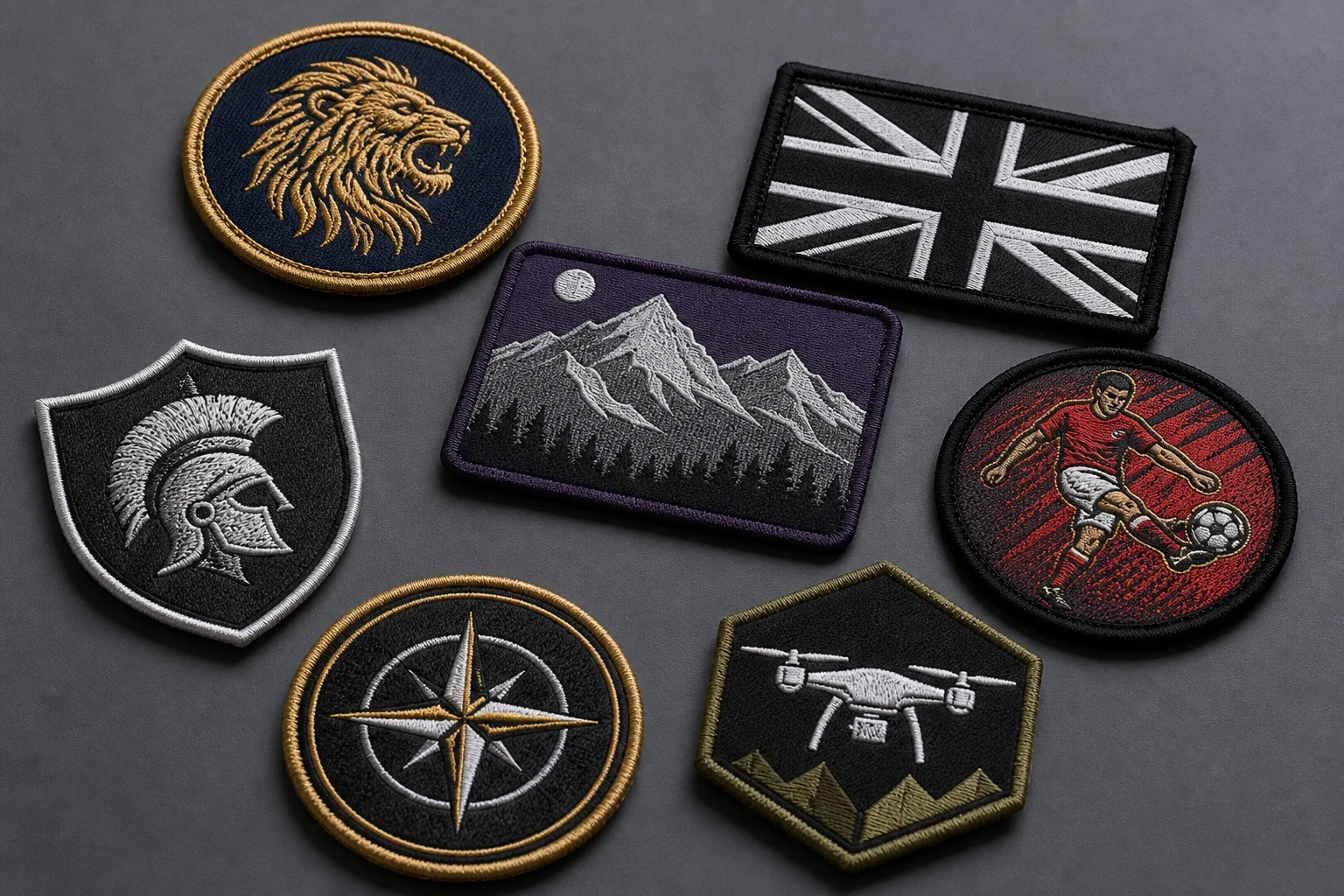
Fine-detail woven patches UK are best used for logos, names, club badges and artwork with small lettering or close linework. Their woven surface gives a flatter, sharper result than standard embroidery, making them suitable for workwear, sports kit, uniforms, merchandise, bags and detailed brand patches. The Customized Patches offers a free digital mockup, usually within 12 hours, with a 5-piece minimum per design.
Key takeaways
- Fine-detail woven patches UK are useful when small lettering, narrow borders or compact logo details need to remain readable.
- Woven patches have a flatter face than raised embroidery; printed patches are flatter still, so the right choice depends on the required texture and detail.
- Backing should match the garment: sew-on is dependable for heavy use, iron-on suits suitable fabrics, and Velcro works well on removable panels.
- The Customized Patches has a 5-piece minimum per design, provides a free digital mockup usually within 12 hours, and produces only after approval.
Fine-detail woven patches UK are most useful for badges, logos, names and compact artwork that needs clearer small detail than standard embroidery can provide. They suit football kit, workwear, school blazers, hospitality polos, bags and branded merchandise because the woven face is flat and the design can include close lines and small lettering.
The best use depends on the garment, the size of the design and how the patch will be washed or handled. The Customized Patches supplies UK-wide and keeps the ordering process straightforward: there is a 5-piece minimum per design, a free digital mockup is usually supplied within 12 hours, and production starts only after the artwork and mockup have been approved.
Why fine-detail woven patches UK suit detailed designs
Woven patches are made with tightly woven threads rather than the thicker stitched fill used for many embroidered patches. That construction gives the face a more even surface. Small words, narrow outlines and close areas of colour can therefore be shown more cleanly, particularly on patches that would be too small for a heavily raised stitch effect.
This does not mean woven is the right answer for every design. Embroidery gives visible thread texture and a stronger raised feel, which is often exactly what a traditional crest or motorcycle back patch needs. Printed is flatter; that is the point. It can be preferable for photographic artwork, gradients or very fine continuous lines. The useful comparison is in the Fine-detail woven patches UK vs embroidered patches: Which Is Right for Your Project? guide.
| Requirement | Woven patch | Embroidered patch | Printed patch |
|---|---|---|---|
| Small text and close linework | Usually a strong choice when the patch is sized correctly | Can lose clarity as stitch density and patch size become limiting | Can show very fine artwork, subject to print and fabric suitability |
| Surface appearance | Flat, tidy and lightly textured | Raised thread texture with a more traditional badge appearance | Smooth and flat |
| Best visual use | Detailed logos, labels, names and compact badges | Crests, bold lettering, clubs and designs where texture matters | Gradients, illustrations, tonal artwork and photographic detail |
| Common UK garments | Polos, jackets, bags, uniforms and sportswear | Blazers, jackets, teamwear and heavy garments | Light garments, promotional items and detailed image-led designs |
| Backing options | Sew-on, iron-on and Velcro can be specified | Sew-on, iron-on and Velcro can be specified | Backing depends on the product and intended garment |
A useful rule from our team is to judge the design at its finished size, not on a large computer screen. A logo that looks perfectly legible at six inches may become cramped at two inches. We check this on the digital mockup before production, which is why the approval stage matters.
The top 10 uses for detailed woven patches in 2026
1. Football clubs and grassroots sports teams
Football clubs use woven patches for committee jackets, coaches' jackets, kit bags and presentation wear. A club crest may contain a shield, a founding year, a small motto and several colour areas. Woven construction can keep those parts visually separate without making the badge feel bulky.
For match kit, check the fabric before choosing the backing. A thin nylon shell needs a method that will not pull or distort the fabric, while a heavier tracksuit top may accept sew-on or iron-on more readily. If players will wash the garment often, ask about sew-on first rather than relying on an iron-on patch that may peel after a dryer cycle.
2. Cadet units, scouts and uniformed organisations
Cadet units and youth organisations often need clear unit names, years, district references or small symbols in one compact badge. Fine-detail woven patches work well for optional activity badges, event identifiers and bags, especially where a clean, uniform appearance matters.
The design should be checked against the actual uniform colour. Dark navy thread or a black border can disappear on a dark garment, while a white edge may be too stark for a formal blazer. A digital mockup lets the organiser compare border, background and lettering before ordering a batch.
3. Workwear and trade uniforms
Businesses use patches to show a company logo, department, service area or employee name. They can be applied to fleece jackets, polo shirts, gilets, overshirts and hi-vis compatible outer layers, subject to the garment manufacturer's care instructions.
Fine detail is particularly useful when the logo includes a web address, service descriptor or narrow icon. Keep the wording short, though. A patch is not a replacement for a full sign. At small sizes, one strong brand mark and a readable name usually work better than a paragraph squeezed into the border.
4. Hospitality polos and staff clothing
Restaurants, cafés, hotels and event teams often need a neat branded finish on polos, aprons, overshirts and jackets. A woven patch can give the uniform a distinct identity without the raised bulk of heavy embroidery, which may be useful on a lightweight polo or a garment worn close to the skin.
Hospitality garments are washed frequently, so the application method deserves as much attention as the artwork. Sew-on is normally the safer conversation for repeated laundering. Iron-on can work on suitable fabrics and with correct pressing, but heat, steam, fabric softener and tumble drying can shorten its life.
5. Streetwear and independent clothing brands
Small clothing labels use woven patches on caps, overshirts, work jackets, hoodies and tote bags. They are helpful when the brand identity includes fine lettering or a compact symbol that would look too crowded in raised thread.
A small run can also be used for a test drop, provided the order meets the 5-piece minimum per design. Consider the patch as part of the garment rather than an afterthought: a narrow merrowed border may suit a classic label, while a clean cut edge may better match a modern woven label style. For a more dimensional look, compare the options in 3D embroidered patches.
6. School blazers, colleges and alumni clothing
Schools and colleges may need house badges, society emblems, leavers' designs or alumni merchandise. Woven patches can hold small year numbers and fine outlines on blazers, sweatshirts, bags and sportswear, provided the finished size leaves enough room for those details.
Blazers are often made from wool or a wool blend, so the backing and application method should be agreed before production. A sew-on crest is usually the sensible route for formal uniform. Test an iron-on application carefully on the actual fabric; heat that is acceptable for cotton can mark or flatten wool.
Not sure whether woven detail, raised embroidery or printed artwork will suit the garment? Send the logo and the intended item to The Customized Patches for a free digital mockup, usually within 12 hours, so you can compare the result before producing.
GET A FREE MOCKUP7. Biker jackets and motorcycle club clothing
Motorcycle clubs commonly order large back pieces, chest badges and smaller support patches for leather or heavy denim. Traditional embroidered and merrowed crests remain popular because their raised edge and thread texture are part of the look. Woven patches can be useful for detailed rocker lettering, small supporting logos or labels where a flatter face is preferred.
Leather needs careful handling. An iron-on backing is not automatically suitable, and heat can mark or damage the surface. For leather jackets, ask about sew-on application and consider the weight of the patch, the needle path and the position of seams. See the dedicated biker and motorcycle club patches hub before finalising a back layout.
8. Events, festivals and volunteer teams
Event organisers use patches as staff identifiers, volunteer badges, commemorative merchandise and limited-run souvenirs. A woven badge can carry an event name, date, location and small icon in a format that feels more substantial than a printed transfer.
For a single event, think about the difference between an operational badge and a keepsake. Staff may need Velcro so a badge can move between a jacket and a vest. Visitors buying merchandise may prefer sew-on or iron-on, depending on the garment they plan to customise.
9. Bags, rucksacks and equipment cases
Patches are a practical branding option for backpacks, kit bags, laptop cases, camera bags and equipment cases. They can identify ownership, show a club logo or give a plain bag a more finished appearance.
A Velcro panel is useful for removable patches on tactical-style bags and equipment cases. A sew-on patch is usually better for a permanent club or brand mark. Check the panel size and the surrounding seam before ordering: a patch that overlaps a zip, padded section or curved pocket may not sit flat.
10. Brand merchandise, packaging and customer gifts
A woven patch can turn a plain cap, tote or jacket into branded merchandise without printing the full garment. It can also be packed with a product as a customer gift, included in an influencer mailer or used as a reward for a club or community campaign.
The artwork should make sense away from the original brand context. A short name, recognisable symbol or campaign date will usually travel better than a detailed slogan. If you need a soft, raised varsity finish instead, compare chenille patches before choosing.
Choosing size, border and backing
Size controls more than the overall appearance. It determines how comfortably small letters, narrow gaps and internal shapes can be made. A two-inch circular badge may work for a simple icon, while a crest with a motto may need three inches or more. The correct size also depends on its position: a chest patch, sleeve patch and large back patch have different visual requirements.
Borders help define the artwork and protect the edge, but a very narrow border can become difficult to reproduce cleanly. A merrowed crest has a rounded, rope-like edge and suits traditional badges. A laser-cut or clean-cut edge may be better for a compact modern logo. The Woven patches Sizing and Backing Options Explained guide covers the practical differences.
- Sew-on backing: a dependable choice for jackets, uniforms, bags and garments that will be washed regularly. It takes longer to apply but gives the wearer control over placement.
- Iron-on backing: convenient for suitable cotton and blended fabrics when the pressing instructions can be followed accurately. It is not a universal answer for nylon shells, leather, wool or coated materials.
- Velcro backing: useful when the patch needs to be removed, swapped or transferred between compatible panels. Specify the loop panel position as well as the patch itself.
- Adhesive options: useful for temporary presentation or certain items, but they should not be treated as a permanent substitute for stitching on hard-wearing garments.
If the patch is going onto a nylon shell, ask before selecting iron-on. Nylon can react poorly to high heat, and the surface may be water-resistant or coated. On wool coaches' jackets and school blazers, sewing is usually the safer starting point. The garment is part of the specification, not just the delivery address.
Artwork details that make or break a small patch
Send the cleanest artwork available. Vector artwork is helpful, but a large raster file can also be assessed if the logo is clear. Include the correct colours and tell us if a colour must match a particular brand reference. Do not expect a small patch to reproduce every detail from a large poster or website header.
Small text needs special attention. Thin fonts, script lettering and tightly packed capitals may merge when reduced. We may suggest opening a gap, thickening a line or removing a minor detail. That is not changing the identity of the design; it is adapting it to the physical size of a patch.
- Check the finished width and height in inches, including the border.
- Confirm whether the patch is circular, shield-shaped, rectangular, custom-shaped or a simple label.
- State the garment colour and material, especially for nylon, leather, wool and coated fabrics.
- Mark the intended application area so the backing and shape can be judged properly.
- Keep a master version of the artwork so later batches match the approved design.
- Ask for a mockup if you are unsure about text size, colour contrast or border width.
The How to Design Artwork for woven patches That Production-Ready guide is useful for designers preparing files. The main point is simple: detail is only valuable if it survives reduction, weaving and the distance at which people will view the garment.
Ordering fine-detail woven patches UK: quantities, approval and timing
Start the quote with the information that changes the price and production plan: finished size, quantity, shape, colours, backing, border and intended garment. If there are several designs, list the quantity for each design rather than only giving a combined total. The minimum is 5 pieces per design, so five of one badge and five of another are treated as separate designs.
The Customized Patches provides a free digital mockup usually within 12 hours. Review the spelling, dimensions, border, colours, backing and placement before approving it. We produce only after approval, so the mockup is the point to request changes rather than after the order has moved into production.
Lead time depends on the design, quantity, backing and current production schedule. A simple repeat order may be more straightforward than a first order with several badges and different backings. UK-wide shipping is available, but delivery time is separate from production time. If the patches are needed for a match, launch, graduation or event, give that date at the quotation stage.
Name sew-on, iron-on or Velcro on the quote and tell us what the patch will be fitted to. We show the appropriate backing on a free digital mockup, usually within 12 hours, and produce only after you approve the final version.
GET A FREE MOCKUP- Send the artwork, approximate size, quantity per design and garment details.
- Confirm whether the design should be woven, embroidered, printed or another patch type.
- Review the free digital mockup, usually within 12 hours.
- Approve the final artwork, size, backing and quantity in writing.
- Allow production and UK-wide delivery time around the date the patches are required.
- Apply the patches according to the chosen backing and garment care instructions.
For a wider look at the order stages, see A Step-by-Step Guide to Ordering woven patches. It is worth checking every detail once, carefully. A spelling error in a batch of five is inconvenient; the same error in a larger run is expensive to correct.
Woven, embroidered, printed or PVC: a practical choice
Fine-detail woven patches are a strong middle ground for logos that need a tidy, detailed face without a heavily raised finish. Embroidery is the better visual choice when texture, thread relief or a traditional crest matters. Printed patches are useful for flatter artwork, gradients and illustration-led designs, while PVC is suited to a moulded, hard-wearing appearance.
| Patch type | Choose it when | Main trade-off |
|---|---|---|
| Fine-detail woven | You need small text, close lines and a flat woven surface | It will not give the same raised texture as heavy embroidery |
| Embroidered | You want visible thread texture, depth and a traditional badge feel | Very small details may need simplifying |
| Printed | The artwork has gradients, tonal shading or very fine continuous detail | It has less thread texture and may look more like a printed label |
| PVC | You want a moulded surface, strong outlines or a weather-resistant style | It has a different visual character and may not suit formal uniform |
| Leather | The brand needs a natural material and understated premium appearance | The material and application require careful planning |
Compare the full product choices through embroidered patches, woven patches, printed patches, PVC patches and leather patches. There is no single best patch material. The correct option is the one that fits the artwork, garment, handling and budget without forcing the design into the wrong production method.
Care and application mistakes to avoid
Many patch problems start with the garment rather than the patch. Iron-on can peel after a dryer cycle if the adhesive was not pressed at the right temperature or if the fabric was unsuitable. A nylon jacket may scorch or deform under heat. A Velcro patch may catch on knitwear. A sewn badge can pucker if it is forced across a curved seam.
Use the garment manufacturer's care instructions and test the application where possible. For workwear and sports kit, wash the garment as instructed and avoid assuming that a patch changes the garment's care rating. If a patch is likely to be removed or replaced, use Velcro from the beginning rather than adding it later.
- Do not approve a design without checking the spelling at finished size.
- Do not choose iron-on solely because it is quick; check the fabric, coating and care routine.
- Do not place a patch over a zip, pocket opening, seam or stretch panel without checking how it will sit.
- Do not combine different patch sizes or borders without viewing the complete garment layout.
- Do not order a large quantity before confirming the mockup, backing and application plan.
For more preparation points, use the 10 Questions to Ask Before Ordering woven patches checklist. A few minutes spent on the material and backing can prevent a good-looking patch from being applied to the wrong garment.
Are fine-detail woven patches right for your project?
Choose them when the design has small lettering, close linework or several compact colour areas, and when you want a flatter face than standard raised embroidery. They are a practical fit for teamwear, uniforms, workwear, bags, merchandise and event clothing across the United Kingdom.
Choose something else if the design depends on a high pile, a soft chenille surface, photographic shading or a hard moulded finish. Send the actual artwork and garment information rather than relying on a generic product description. A production-led recommendation should explain both what will work and what may need changing.
The Customized Patches can quote from a 5-piece minimum per design and provide a free digital mockup usually within 12 hours. Once the design, size, backing and quantity are approved, production can begin with the specification agreed.
Frequently asked questions
What are fine-detail woven patches UK used for?
Fine-detail woven patches UK are used for detailed club badges, business logos, names, school and cadet insignia, hospitality uniforms, sportswear, jackets, bags and merchandise. They are especially useful for small lettering and close linework that needs a flatter face than raised embroidery.
What is the minimum order for fine-detail woven patches?
The minimum is 5 pieces per design. If you order two different badges, each design needs to meet the 5-piece minimum. Quantities, sizes and backing types should be listed separately on the quote.
How quickly can I see a patch mockup?
The Customized Patches provides a free digital mockup usually within 12 hours. The mockup should be checked for spelling, size, colours, border, backing and placement. Production starts only after the final version has been approved.
Are woven patches better than embroidered patches for small text?
Woven patches can be better for small text because their tightly woven face is flatter and can show compact details clearly. The finished size still matters, and very small or thin lettering may need adjustment. Embroidery remains preferable when raised thread texture is part of the desired look.
Can woven patches be put on nylon, wool or leather?
They can be applied to some nylon, wool and leather garments, but the backing must be chosen for the material. Sew-on is often the safer option for leather and wool. Nylon may be unsuitable for high heat, so iron-on should not be selected without checking the garment and pressing requirements.
Can I order fine-detail woven patches for delivery anywhere in the UK?
Yes. The Customized Patches supplies customers across the United Kingdom with UK-wide shipping. Give the required event, match, launch or uniform date when requesting a quote, because production time and delivery time are separate parts of the schedule.
Ready to produce custom patches for your UK team or brand?
GET A FREE MOCKUP