
Rubber Patches UK: Are They the Same as PVC? A Buyer Guide
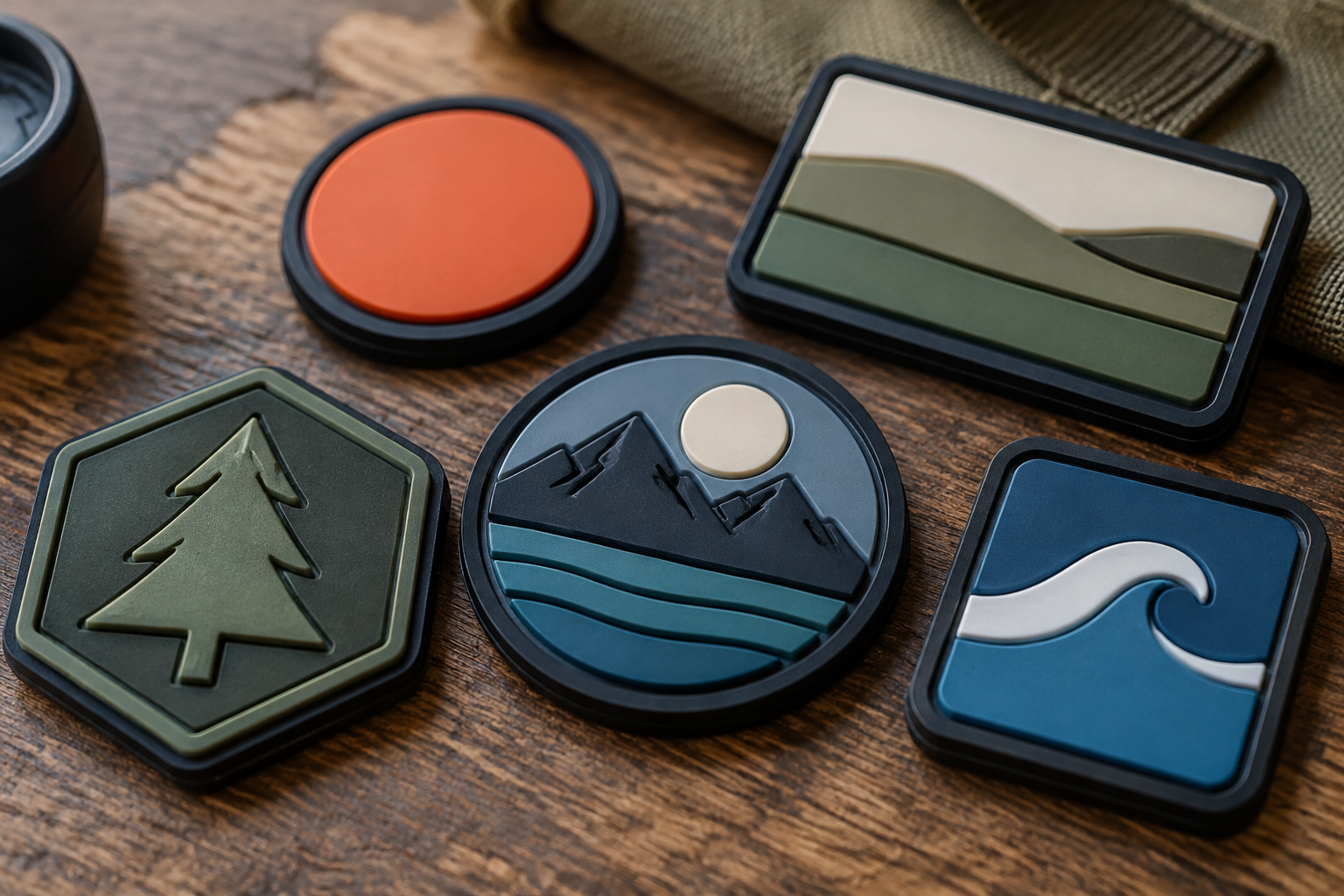
In UK patch listings, ‘rubber patches’ often means soft moulded PVC patches, but the materials are not technically identical. PVC is a plastic; silicone and other rubbers are different materials. Ask for the actual material, thickness, relief and backing rather than relying on the word ‘rubber’ alone.
Key takeaways
- ‘Rubber patch’ often means soft PVC, but the name alone does not confirm the material.
- Moulded PVC suits bold colour areas and raised detail better than photographic shading.
- A water-resistant patch does not make its attachment to a jacket waterproof.
- The Customized Patches has a 5-piece minimum per design and produces only after approval.
If you are searching for rubber patches UK, most listings using that description mean soft moulded PVC patches. They have a flexible, rubber-like feel, but PVC is technically a plastic, not rubber. Confirm the material before ordering: silicone and other rubber compounds are not interchangeable with PVC.
The useful buying question is what the patch must do: carry a bold logo, bend around a cap, wipe clean or detach before washing. Specify that job alongside the material, size and backing rather than treating ‘rubber’ as a complete specification.
Rubber patches UK: what does the name actually mean?
‘Rubber’ and ‘PVC’ commonly describe the same soft moulded patch style in catalogues. The difference is precision: PVC identifies polyvinyl chloride, while ‘rubber’ may describe only the feel. A listing headed ‘rubber badge’ therefore needs a material check.
Soft PVC patches use a flexible formulation rather than the rigid PVC associated with pipes. Silicone is a separate material with different properties. Do not assume a PVC quote covers silicone, or that every product called rubber has the same flexibility.
| Listing term | What it tells you | What to confirm |
|---|---|---|
| Rubber patch | Usually a soft moulded style; material may be unclear | Is it PVC, silicone or another compound? |
| Soft PVC patch | Flexible polyvinyl chloride | Thickness, relief, finish and backing |
| Silicone patch | A different polymer from PVC | Material specification and care requirements |
| 2D or 3D moulded patch | Describes the relief, not the material | Flat raised levels or rounded sculpted detail? |
What will the patch feel and look like?
Soft PVC feels smooth or lightly textured rather than fibrous. It can bend, but thickness, shape and raised areas affect stiffness; a broad badge may sit poorly across a tight curve even if its material is flexible.
A 2D design usually has flat raised areas separated by recessed channels. A 3D design adds rounded or sculpted surfaces. More relief gives stronger shadows but adds bulk, so it is not automatically better for lettering or small logos.
Choose solid colours and specify the surface finish
Moulded PVC suits distinct blocks of colour with clear boundaries. Supply brand colour references and request a matt or glossier surface if that matters. A screen mockup shows the layout, but cannot prove physical colour, texture or flexibility.
Send your logo with a note on flat raised detail or sculpted relief so the intended finish is clear. Get a free digital mockup, usually within 12 hours, before approving production.
GET A FREE MOCKUPPhotographs, gradients and very fine tonal shading are better candidates for printed patches. If your priority is crisp small lettering with less bulk, compare woven patches. Special effects such as translucent or glow colours need confirmation rather than an assumption that every colour treatment is available.
How much detail will fit?
Start with the available space on the garment, then judge the artwork at actual size. A hypothetical 70 mm (2.76 in) club badge may hold a bold emblem comfortably while a ring of tiny lettering needs enlarging or simplifying.
- State finished width and height, including the outer border.
- Keep letter openings and gaps between shapes visibly separate.
- Choose the essential wording before shrinking an entire crest.
- Leave room for a sewing channel if the patch will be stitched.
There is no universal minimum text size that works for every font and moulded design. Ask for an artwork check rather than relying on a screen enlargement; our patch lettering guide explains why open letter shapes help.
Which backing suits the garment?
The backing determines how the badge behaves in use. Confirm the attachment method in the quote: a moulded face does not mean that sew-on, adhesive or hook-and-loop backing is automatically included.
- Sew-on: a recessed sewing channel can guide stitches and keep them below the raised face. Check access behind linings and pockets.
- Hook-and-loop: useful for removable team or morale patches. Confirm whether both the hook-backed patch and the matching loop panel are needed.
- Iron-on: do not assume suitability. The backing, PVC face and garment must all tolerate the specified application conditions.
A nylon shell needs particular care: stitching makes holes, while heat can damage fabric or coatings. Read how to add patches to waterproof jackets before choosing attachment. PVC resists water, but neither stitch holes nor the surrounding garment become waterproof because the badge is.
Where does PVC make sense for UK teams and brands?
PVC is a practical option for club kit bags, outdoor-brand rucksacks, work jackets and removable tactical or morale patches. Its solid face can be wiped clean, although dirt can collect in recessed detail and raised edges can catch.
Include the garment, backing and required date so the quote addresses the full specification. Request a free digital mockup, usually within 12 hours, and check the design before production.
GET A FREE MOCKUPOn a canvas cap, check the panel curve and patch width. On a lightweight polo, PVC may feel heavy or pull the fabric; embroidered patches or woven badges may suit better. A wool jacket may also suit a textile badge visually, even where PVC would function.
For care, follow both garment and backing instructions rather than assuming all PVC patches are machine-washable. Remove detachable patches where appropriate and avoid unapproved heat treatments. Our outdoor durability comparison covers the material trade-offs in more detail.
What should you send for a quote, and when does production start?
The Customized Patches makes patches to order from your artwork for buyers across the United Kingdom. We have a 5-piece minimum per design, quotes from £60 and free UK shipping; the final quote depends on the specification.
- Send your artwork through our free mockup quote, naming soft PVC if that is the material required.
- Give dimensions, quantity per design, colour references, relief and intended garment or bag.
- Specify the backing and any sewing channel; include your required delivery date.
- Check the mockup and quoted specification, request corrections, then approve.
Our free digital mockup is usually ready within 12 hours. We produce only after approval. The mockup turnaround is not the production or delivery time: ask for both timings in the quote, particularly for a fixed event date.
Frequently asked questions
Are rubber patches UK listings always PVC?
No. Many use ‘rubber’ to describe soft PVC, but silicone and other rubber materials also exist. Ask for the actual material in the written specification.
Are PVC patches waterproof?
The moulded PVC face does not absorb water like a textile face. That does not make the whole attachment waterproof: stitching can puncture a jacket membrane, and backing performance varies.
Can PVC patches reproduce any logo colour?
Solid colour areas are the natural fit. Supply colour references and confirm matching expectations; gradients and photographic shading usually suit printed patches better. Screen colours are not physical colour proofs.
Can I iron a rubber patch onto a polo?
Only if the patch has a suitable heat-activated backing and both patch and polo tolerate the application instructions. A rubber-like face alone does not indicate iron-on compatibility.
What is the minimum order for a custom PVC design?
The Customized Patches has a 5-piece minimum per design. Different designs each need to meet that minimum; five mixed designs do not count as five pieces of one design.
Does the 12-hour mockup offer mean delivery in 12 hours?
No. The free digital mockup is usually ready within 12 hours, not the finished patches. Production starts only after approval; confirm production and shipping timings in your quote.
Ready to produce custom patches for your UK team or brand?
GET A FREE MOCKUP