
Custom Patches for Rowing and Sailing Clubs
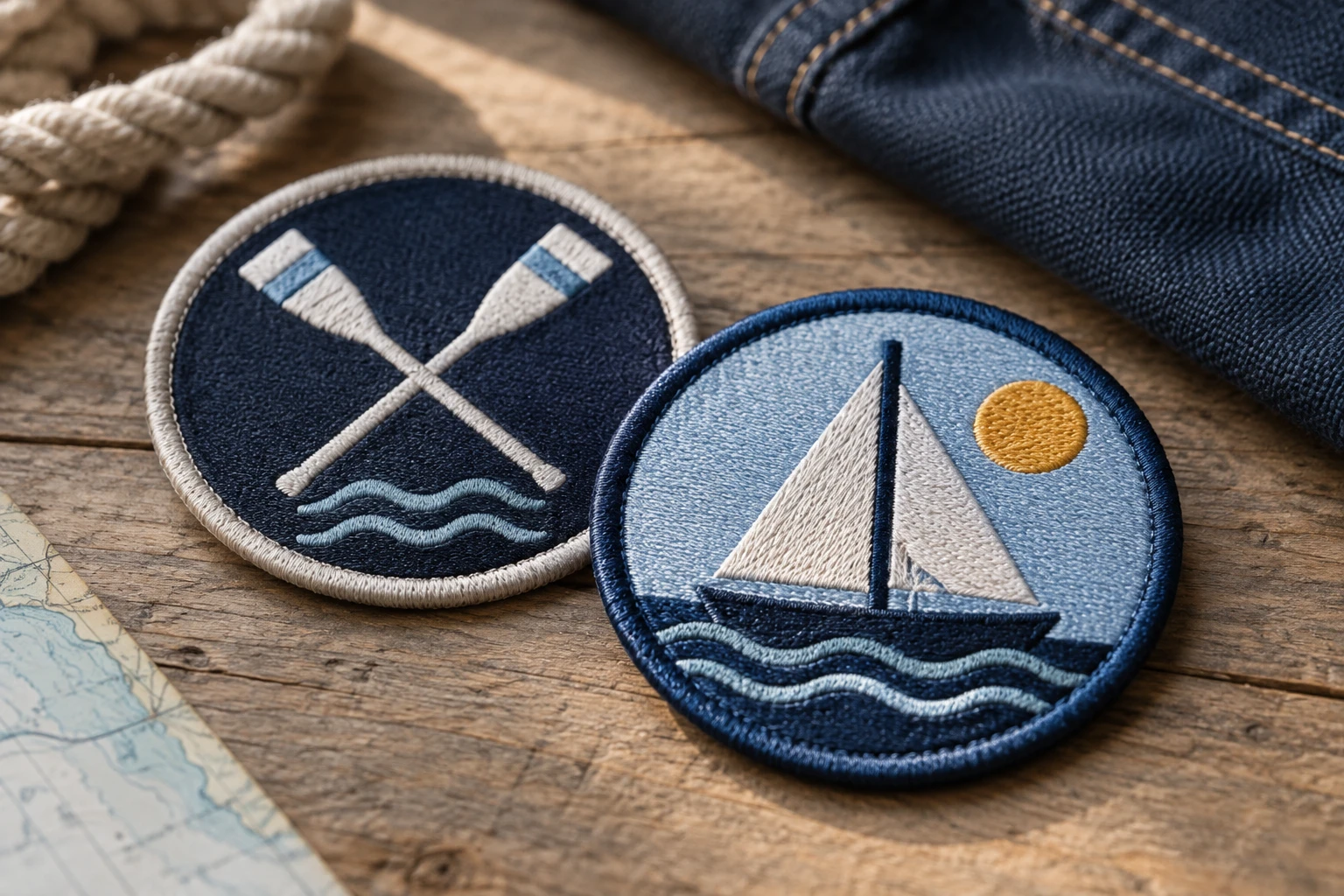
Rowing club patches are custom badges used to identify a club on blazers, training clothing and equipment bags. Embroidery suits traditional crests, woven patches preserve finer lettering, and PVC suits wipe-clean badges on wet-use kit. Choose the attachment for the garment: a water-resistant patch does not make stitching holes waterproof.
Key takeaways
- Embroidered badges suit bold blazer crests; woven patches can retain finer lettering at the same overall size.
- A waterproof patch face does not waterproof the needle holes used to attach it.
- Patch placement should avoid rowing contact points, harness straps, pocket openings and garment closures.
- The Customized Patches has a 5-piece minimum per design and produces only after artwork approval.
Rowing club patches usually work best as embroidered crests on blazers and low-bulk badges on training kit. For sailing clubs, separate formal badges from patches for wet outerwear: salt exposure, fabric coatings and attachment method matter as much as appearance.
Start with the actual garment, not just the crest file. A wool jacket, stretch rowing top and waterproof nylon shell need different specifications; one badge size and backing rarely suit all three.
How should rowing club patches fit a blazer?
For a traditional blazer crest, embroidered patches give raised thread texture and clear blocks of colour. Measure the pocket face and leave space around the badge; do not size it from a photograph alone.
A paper template around 80–100 mm (3.1–3.9 inches) high is a useful starting point, not a standard requirement. Check it on the smallest blazer as well as the largest, especially if a shield has projecting oars, scrolls or flags.
Keep the pocket usable
Sew through the pocket face without catching the jacket body behind it. A tailor may need to open part of the pocket seam for access; stitching straight through can close the pocket and pull the blazer out of shape.
For wool, sew-on attachment avoids the heat and pressure required by iron-on adhesive. Specify whether the jacket will be dry-cleaned, and check compatibility before attaching the badge; our guide to patching wool and melton jackets covers the construction choices.
Which material suits the crest and the kit?
Choose texture for formal clothing, detail for small crests and easy cleaning for exposed kit. The same club artwork can need simplified lettering or a different border when moved between materials.
| Patch type | Useful application | Main trade-off |
|---|---|---|
| Embroidered | Blazer pockets and bold crests on polos | Raised texture; small motto text and narrow gaps can fill in. |
| Woven | Fine lettering on lightweight clothing | Flatter detail; less of the raised appearance of embroidery. |
| Printed | Gradients, shaded boats or detailed illustrations | Preserves artwork without thread texture; washing suitability depends on construction. |
| PVC | Wipe-clean badges on kit bags or suitable outerwear | Waterproof face, but greater bulk and no waterproof seal at attachment holes. |
Compare woven patches with embroidery if the crest contains a long club name. Printed patches suit tonal artwork, while PVC patches suit bold shapes where a wipe-clean surface matters more than a textile finish.
Send the crest, proposed size and garment so we can review detail and material together. We provide a free digital mockup, usually within 12 hours.
GET A FREE MOCKUPMetallic thread can accent a ceremonial crest, but it should not automatically carry over to frequently washed kit. State the intended care routine and read Metallic Thread on Patches: Look, Durability and Washing before specifying it.
Where should badges sit on training and sailing kit?
Check placement while wearing the garment in its working position. A badge that looks centred on a hanger can sit beneath a buoyancy aid, rub under a strap or crease as the rower reaches forward.
- Polo: check a small paper template on the chest, clear of the placket and armhole.
- Stretch rowing top: avoid stiff badges across areas that stretch substantially; a patch does not stretch with the fabric.
- Sailing jacket: use a maker-provided badge panel where available, without covering reflective details, vents or closures.
- Canvas cap: check the curve and centre seam before choosing a wide crest.
- Kit bag: choose a flat panel away from zip teeth, handles and surfaces that scrape against the ground.
Choose the backing for the fabric
Sew-on is a practical choice for accessible, non-waterproof fabric. Iron-on can lift after unsuitable washing, and application heat can damage some nylon shells or coatings; use it only where both garment and adhesive instructions permit.
Hook-and-loop allows badge removal but needs a matching panel on the garment. Adding that panel still raises the same stitching and waterproofing questions as sewing on the badge itself.
What changes with saltwater and regular soaking?
A PVC face does not absorb water like a textile badge, but water can reach its edges, backing and attachment points. Sewing through a waterproof shell creates needle holes; ordinary stitching is not a waterproof seal.
Before modifying a technical jacket, follow its manufacturer's guidance or use a specialist repair service. Patches on Waterproof Jackets: How to Add One Without Leaks explains why patch material and garment waterproofing are separate decisions.
- After saltwater exposure, rinse with fresh water where the garment's care instructions allow.
- Dry the garment and badge fully before storage; avoid putting damp kit straight into a closed bag.
- Inspect stitching, lifted adhesive edges and trapped grit rather than judging only the visible patch face.
- Keep heat, detergents and drying methods within the limits of both garment and badge.
How much crest detail should you keep?
Review the artwork at its finished size. Crossed oars, rigging, dates and a motto may look clear on a screen but merge in small embroidery; retain the identifying shapes and simplify secondary detail before increasing stitch density.
Include your garment details and required arrival date in our [free mockup quote](#quote) form. We provide a free digital mockup, usually within 12 hours, for approval before production.
GET A FREE MOCKUPUse a clear gap between lettering and the border. A merrowed border gives a raised wrapped edge on suitable shapes, but tight notches and fine projections may need a different edge treatment; avoid forcing every crest into the same outline.
Supply the best original artwork available and identify colours, spelling and details that must remain unchanged. How Much Detail Can a Patch Hold? Embroidery vs Woven vs Printed helps resolve detail questions before approval.
What should you send for a quote and delivery plan?
The Customized Patches makes patches to order from your artwork, with a 5-piece minimum per design. Quotes start from £60 and shipping is free across the United Kingdom; request a quote for your actual specification rather than treating that starting figure as a per-piece price.
- Send the crest and quantity per design, separating formal badges from wet-use kit requirements.
- Specify finished width and height, material, border, backing and garment fabric.
- Include a placement photograph with measurements, the wash routine and any waterproof coating.
- Give your required arrival date and UK delivery postcode; ask for production and transit timing separately.
- Check spelling, proportions, colours and attachment details on the digital mockup before approving.
Our free digital mockup is usually ready within 12 hours; that is artwork timing, not a production or delivery promise. We produce only after approval, so allow time for revisions and confirm the schedule before committing to a regatta or club presentation.
Frequently asked questions
What is the best material for rowing club patches?
Embroidery suits bold blazer crests. Woven patches are useful for finer lettering or lower bulk, while PVC suits wipe-clean badges on suitable bags and outerwear. Choose for the garment and care routine, not just the sport.
Can I iron a club badge onto a waterproof sailing jacket?
Not without checking the jacket manufacturer's instructions. Heat can damage coatings, and adhesive may not bond reliably to the surface. A maker-provided badge panel or specialist attachment service is a safer starting point.
Will a PVC patch keep a sailing jacket waterproof?
No. The patch face can be waterproof while stitching holes still admit water. The attachment and any necessary sealing must be suitable for the jacket's construction.
Can the same crest be used on blazers and training tops?
Yes, but size, material and detail may need to change. A large embroidered blazer crest can be too stiff for stretch kit, and its motto may need simplifying when reduced.
What is the minimum order for club badges?
The minimum is 5 pieces per design. If you need different sizes, materials or personalised versions, list them separately and ask how they affect the specification and quote.
Does the 12-hour mockup mean patches arrive the next day?
No. The free digital mockup is usually supplied within 12 hours, but manufacture and shipping happen later. Production begins only after approval; confirm timing against your required arrival date. UK shipping is free.
Ready to produce custom patches for your UK team or brand?
GET A FREE MOCKUP