
Custom Patches for Cricket Clubs in the UK: Blazer Badges and Playing Kit
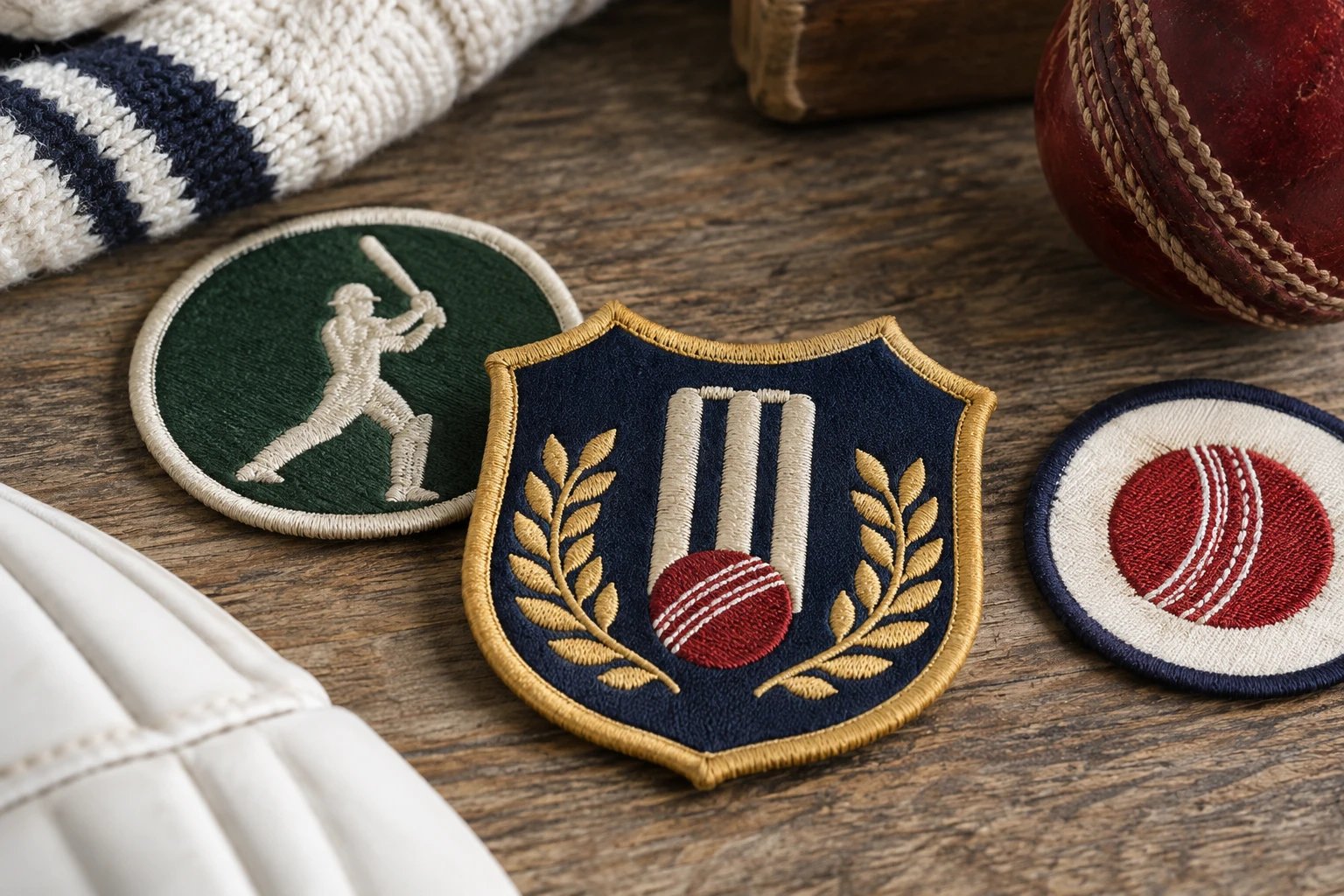
Cricket club patches should match the garment: embroidered sew-on crests suit blazer breast pockets, while lighter woven badges can suit thin playing shirts. Specify the finished dimensions, artwork, border and attachment method together. Touring badges and scorebook covers need separate placement checks rather than automatically using the blazer specification.
Key takeaways
- A blazer pocket badge should be sewn to the pocket face without stitching the pocket shut.
- Woven patches can retain fine crest detail with less bulk than dense embroidery.
- Iron-on backing is suitable only when both the garment and adhesive instructions permit the required heat.
- The Customized Patches has a 5-piece minimum per design and produces only after approval.
For custom patches for cricket clubs UK-wide, choose embroidered sew-on crests for traditional blazers and consider lighter woven badges for thin playing shirts. Specify each badge around its garment, not just the club logo: pocket space, fabric stretch and washing requirements affect the result.
The Customized Patches makes patches to order from your artwork, with free shipping throughout the United Kingdom. We have a 5-piece minimum per design and provide a free digital mockup, usually within 12 hours; we produce only after approval.
What makes a cricket blazer badge look formal?
A formal crest depends on proportion, restrained colour and tidy placement. Embroidered patches give the shield, initials and main symbols a raised thread texture; a background close to the blazer colour makes the badge feel less like a contrasting label.
Measure the breast pocket before choosing dimensions. A paper template around 75–90 mm (3–3.5 inches) wide is a useful starting point, not a standard: leave clearance from pocket edges and check different jacket sizes.
Keep the pocket usable
Sew the badge to the pocket face without catching the jacket body behind it. A tailor may need access behind the pocket, particularly on lined wool jackets; the jacket placement guide explains the checks.
Metallic thread can accent a crest, but it is not the same construction as a traditional bullion-wire badge. If the club wants that particular ceremonial finish, name it explicitly rather than assuming gold-coloured embroidery will look identical.
Choose the finish before shrinking the crest
A crest containing a pavilion, crossed bats, a founding year and a small motto may need simplification. Fine lettering can fill in on small embroidery; woven patches usually hold finer lines, while printed patches suit tonal artwork without raised stitching.
Send the crest, intended dimensions and a garment photo so the specification reflects its placement. Get a free digital mockup, usually within 12 hours, before approving production.
GET A FREE MOCKUP| Use | Suggested finish | Attachment | Main trade-off |
|---|---|---|---|
| Blazer breast pocket | Embroidered crest | Sew-on | Traditional texture; tiny mottos may need enlarging |
| Lightweight playing polo | Woven badge | Sew-on after fabric check | Less bulk; non-stretch badge can still restrict fabric |
| Tour sweatshirt or canvas bag | Embroidered badge | Sew-on, or compatible iron-on | Raised texture; check bag lining and garment heat tolerance |
| Detailed anniversary artwork | Printed badge | Backing matched to surface | Fine colour detail; no stitched relief |
| Scorebook fabric cover | Flat woven badge | Sew to removable cover | Low profile; keep clear of hinges and closures |
Specify the finished outer dimensions, including the border. A merrowed edge gives simple shapes a rounded stitched rim; a cut edge can follow more intricate outlines. Keep lettering away from either edge and check the artwork at actual size, not only enlarged on screen.
Playing kit needs a different backing decision
Dense embroidery can stiffen a lightweight polyester playing shirt. A smaller, flatter badge reduces bulk, but any non-stretch patch can pull against stretch fabric; avoid seams and areas that distort strongly when the player moves.
- Sew-on: avoids activation heat, but stitching tension must suit thin fabric to prevent puckering.
- Iron-on: use only where the garment tolerates the required temperature and pressure; unsuitable application or washing can cause edge lifting.
- Hook-and-loop: useful for removable badges on compatible outerwear, but bulky for a thin playing polo.
- Nylon shell: heat may damage the fabric or coating, while sewing creates holes that can compromise waterproofing.
Follow both garment and patch-care instructions, using the more restrictive requirements. Read Iron-On vs Sew-On Patches before selecting backing, and check competition or club clothing rules before finalising crest and sponsor placement.
Touring patches and scorebook badges: formal or casual?
A touring badge can be more relaxed than the blazer crest: keep the club identity prominent, then add the destination and year. A round format suits a sweatshirt or canvas kit bag, but extra wording may require more space than the regular crest.
Treat each tour year or changed design as a separate specification. Avoid packing an itinerary into a small badge; a short place name and date are easier to read, especially in embroidery.
Attach to the cover, not the scorebook pages
A scorebook badge works best on a removable fabric cover that can be sewn before fitting. Keep it away from the spine, elastic closure and fold lines, and avoid a thick badge where it would make the book unstable when laid open.
Include your required date and separate garment specifications in the [free mockup quote](#quote). We provide a free digital mockup, usually within 12 hours, for checking before production.
GET A FREE MOCKUPDo not iron a patch onto a paper or laminated cover: heat can warp the cover or damage its finish. For a rigid cover, ask about surface-compatible adhesive rather than assuming iron-on backing will bond without heat.
Specifying custom patches for cricket clubs UK-wide
Use our quote form to separate the blazer, playing-kit and tour requirements. Quotes start from £60, but that is not a fixed price for every design or quantity; request a specification-based total.
- Send the clearest artwork available and identify details that must remain, such as the founding year.
- State quantity per design, finished dimensions, colours, border and preferred patch type.
- Name the garment fabric, placement and backing; include a pocket measurement for blazers.
- Give the required delivery date and allow time for approval, production, delivery and attachment.
- Check spelling, proportions and dimensions on the mockup before approving.
The usual 12-hour mockup turnaround is not a production or delivery promise. Confirm the schedule in your quote, especially before a tour or presentation; a digital proof shows the proposed design, not a physical test of texture or garment attachment.
Our ordering guide explains the approval process. Production begins only after approval, so resolve any crest changes before signing off.
Frequently asked questions
Can we order custom patches for cricket clubs UK-wide in small quantities?
Yes. The Customized Patches has a 5-piece minimum per design and free UK shipping. Different crests or tour-year artwork should be identified as separate designs in the quote.
What size should a cricket blazer badge be?
There is no universal size. Try a paper template around 75–90 mm (3–3.5 inches) wide, then adjust it to the pocket, crest proportions and smallest jacket receiving the badge.
Can the same badge go on blazers and playing shirts?
Sometimes, but check both garments first. A dense crest that sits well on wool may feel stiff on a thin polo; the same artwork can need a different size, construction or backing.
Will a small club motto remain readable?
That depends on its size, lettering and patch construction. Woven construction can retain finer detail than embroidery; compare the options in Embroidered vs Woven Patches.
Are iron-on badges suitable for cricket whites?
Only if the fabric and care label permit the adhesive's application conditions. Polyester shirts can be heat-sensitive. Sew-on avoids heat activation, although thin fabrics still need suitable stitching.
Does the free mockup show the finished thread colour exactly?
No. A digital mockup shows proposed colours and layout, but screens and real threads differ. Supply colour references and raise matching requirements before approval rather than treating the screen as an exact physical sample.
Ready to produce custom patches for your UK team or brand?
GET A FREE MOCKUP