
Custom Luggage Tags: Materials, Straps and Information to Print
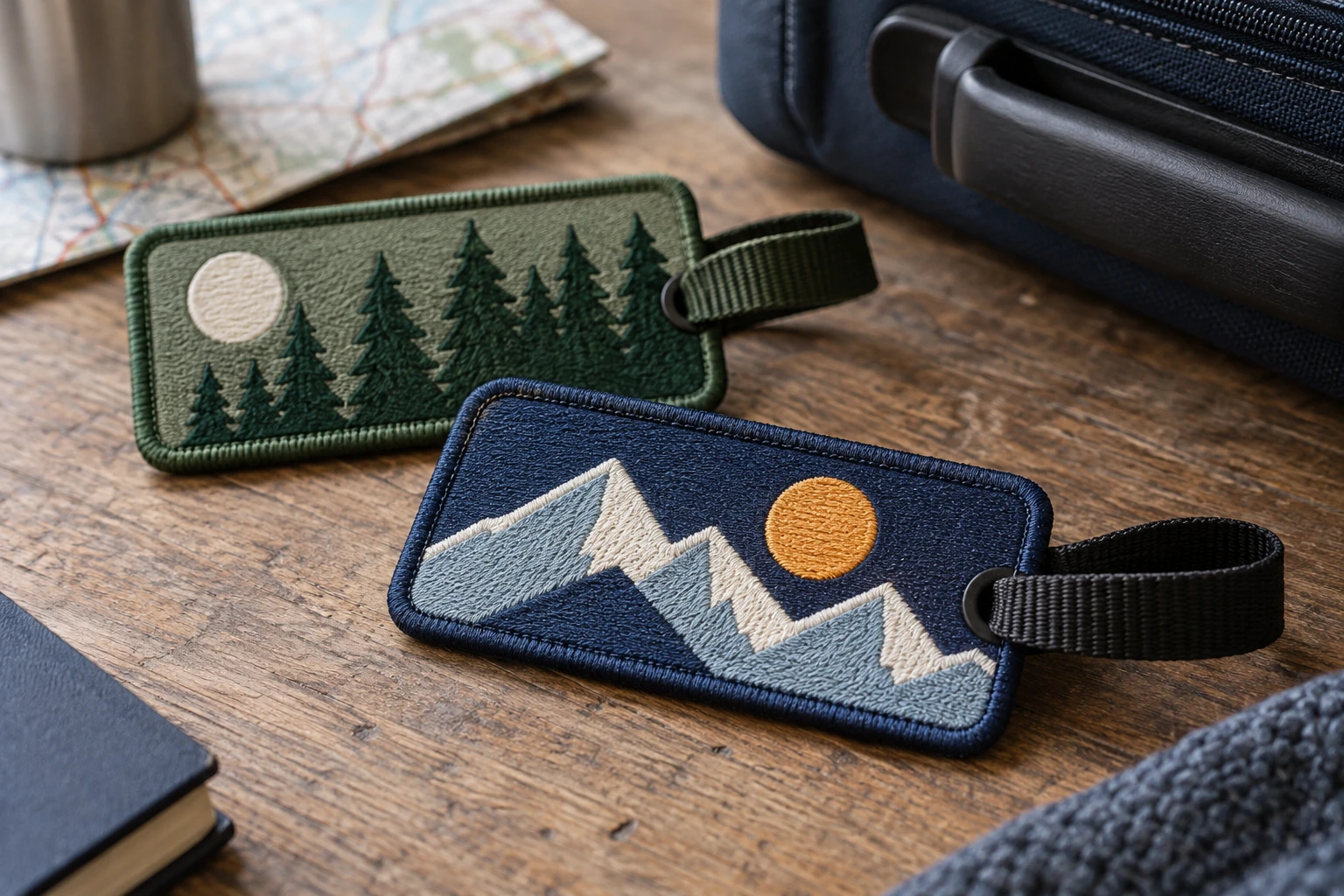
Custom luggage tags identify bags through branding and contact details. Choose PVC for a wipe-clean body, leather for a firm tag that develops wear, or woven fabric for a lightweight option. Specify the strap’s usable closed length, keep contact information readable, and use a covered panel rather than displaying a full home address.
Key takeaways
- PVC resists water, but a tag’s paper insert, closure and strap need separate consideration.
- Specify usable closed strap length, not just the length of the loose strap.
- A name, reachable telephone number and email are usually more useful on display than a full home address.
- A woven logo, moulded logo and printed contact panel require different artwork and production methods.
Choose custom luggage tags by material, strap fit and how contact details will be protected. PVC suits a wipe-clean tag, leather offers a firmer body, and woven fabric keeps weight down; none compensates for a weak attachment or unreadable information.
Separate the branding from the identification panel in your specification. A shared club crest can stay unchanged while a replaceable card carries each traveller’s details, avoiding permanent personal information on a reusable team tag.
Which material suits custom luggage tags?
The material affects flexibility, surface detail and how the tag wears against a suitcase. It does not define the whole product: ask about the backing, strap slot, contact panel and closure as well as the branded face.
| Material | Useful qualities | Trade-offs | What to specify |
|---|---|---|---|
| Flexible PVC | Wipe-clean body; bold moulded shapes and colour areas | Raised detail can collect dirt; water resistance of the body does not protect an open card pocket | Body thickness, slot position, logo relief and separate contact-detail method |
| Leather | Firm feel; suitable for debossed or embossed branding | Can scratch, darken and absorb moisture; low-contrast impressions are poor for small contact text | Real or faux leather, finish, edge treatment and buckle or loop attachment |
| Woven fabric | Lightweight and flexible; finer thread detail than embroidery | Can absorb moisture; exposed cut edges can fray; a thin body may need reinforcement | Edge finish, backing, reinforced attachment point and card-holder construction |
The construction principles behind PVC patches, leather patches and woven patches help explain the branded face, but a patch is not automatically a finished luggage tag. Faux leather also varies by coating and backing; Faux Leather Patches: How They Differ From Real Leather explains why the material should be named explicitly.
What size and strap length should you specify?
Start with the readable information area, then allow space for the border, strap slot and any privacy flap. An illustrative body size is 90 × 55 mm (3.54 × 2.17 inches), but this is a planning example, not a standard or a confirmed available size.
Measure around the actual attachment point with string or a flexible tape. A padded holdall handle needs more room than a narrow webbing loop; a suitcase’s moving telescopic handle may trap the strap or obstruct retraction.
Ask for usable length, not just overall length
- State overall strap length and the usable closed loop circumference or adjustment range.
- Allow for the fastening overlap and the path through the tag slot; neither adds usable space around the handle.
- Specify strap width, thickness, fastening type and slot dimensions together.
- Keep the tag close enough to the bag to reduce snagging, with enough movement to read the reverse.
Send the tag dimensions and a measurement around the intended handle so the attachment can be discussed alongside the artwork. We provide a free digital mockup, usually within 12 hours; confirm physical strap fit separately.
GET A FREE MOCKUPA buckle gives adjustable closure but needs its tail secured. A loop-through strap has no buckle, but must pass through its own opening during fitting; ask for a dimensioned drawing, and check a physical sample if fit is critical.
What information belongs on the tag?
Use enough information for someone to contact the owner, without broadcasting unnecessary personal details. A name, telephone number with the international dialling code, and a monitored email address usually provide practical ways to respond.
- Visible face: team or business branding and a simple bag identifier.
- Covered panel: traveller’s name, telephone number and email address.
- Inside the bag: additional contact information in case the external tag is lost.
- Shared team luggage: a monitored team contact and bag number rather than a permanent individual address.
A privacy flap reduces casual viewing; it does not make the information secure. Avoid putting a full home address, travel dates or a child’s school details on an exposed face, and use a replaceable insert if the owner or destination changes.
A QR code can point to contact information, but requires a working link and a suitable phone. Keep a readable contact route as well, and do not treat information behind a publicly scannable code as private.
Keep branding and contact lettering readable
Use a bold logo on one side and uncluttered contact details on the other. Strong contrast, plain lettering and space between lines matter more than fitting every brand message onto the tag.
Moulded PVC and woven fabric do not reproduce artwork in the same way as ink. Fine text may fill in or lose definition; How Much Detail Can a Patch Hold? Embroidery vs Woven vs Printed explains the differences.
Include both faces, the strap requirements and any changing contact details in your [free mockup quote](#quote). We provide a free digital mockup, usually within 12 hours, so you can review the layout before approving production.
GET A FREE MOCKUPIf matching embroidered patches on kit bags, simplify the tag artwork rather than copying tiny stitching details. Print the proof at actual size and read every character; a digital mockup can show layout, but cannot prove abrasion resistance, colour matching or attachment strength.
What to send for a quote and approval
Ask for the complete tag assembly, not just a price for the branded face. Confirm that the proposed material, strap and privacy panel can be supplied together before finalising artwork.
- Send the artwork and quantity per design. Follow Which Artwork File Formats Work for Custom Patches? (AI, EPS, PDF, PNG) for file preparation.
- Give body dimensions, material, edge finish, attachment-point measurements and fastening preference.
- Identify which details stay identical and which change by traveller. Ask how individual names affect design grouping and price.
- Specify printed details or a removable insert, plus any cover, window or flap.
- State your required delivery date and UK destination, then confirm production and transit estimates before approval.
The Customized Patches makes orders from the customer’s artwork, with a 5-piece minimum per design. Quotes start from £60, but that is not a confirmed price for any particular luggage-tag specification; our quote form is the place to confirm the complete cost.
We offer a free digital mockup, usually within 12 hours, and produce only after approval. Mockup timing is separate from production and delivery; shipping is free across the United Kingdom, and your required arrival date should be checked before you approve.
Frequently asked questions
Which material is best for custom luggage tags?
PVC suits a wipe-clean body, leather offers a firm tag, and woven fabric is light and flexible. Choose the complete construction, including the attachment and contact panel, rather than judging by the front material alone.
Should I put my home address on a luggage tag?
A full home address is usually unnecessary on an exposed panel. Use a reachable telephone number and email, preferably behind a cover, and keep additional identification inside the bag.
Is there a standard luggage-tag strap length?
There is no single length that fits every handle. Measure the attachment point and specify the usable closed loop size, allowing separately for fastening overlap and the route through the tag slot.
Are PVC luggage tags waterproof?
PVC itself resists water, but an assembled tag may contain a paper insert or an unsealed pocket. Ask about the whole construction rather than assuming the contact details are protected from rain.
Can every tag have a different name?
Ask whether variable names are available for the proposed production method and how they affect pricing and the 5-piece minimum per design. Replaceable contact cards let users add their details without changing the shared branded face.
Does a mockup confirm that the strap will fit?
No. A mockup helps check artwork and layout, not physical fit or strength. Confirm dimensions against the actual handle and ask about a physical sample if the attachment is critical.
Ready to produce custom patches for your UK team or brand?
GET A FREE MOCKUP