Custom Embroidered Patches UK: Types, Sizes, Backings and How to Order
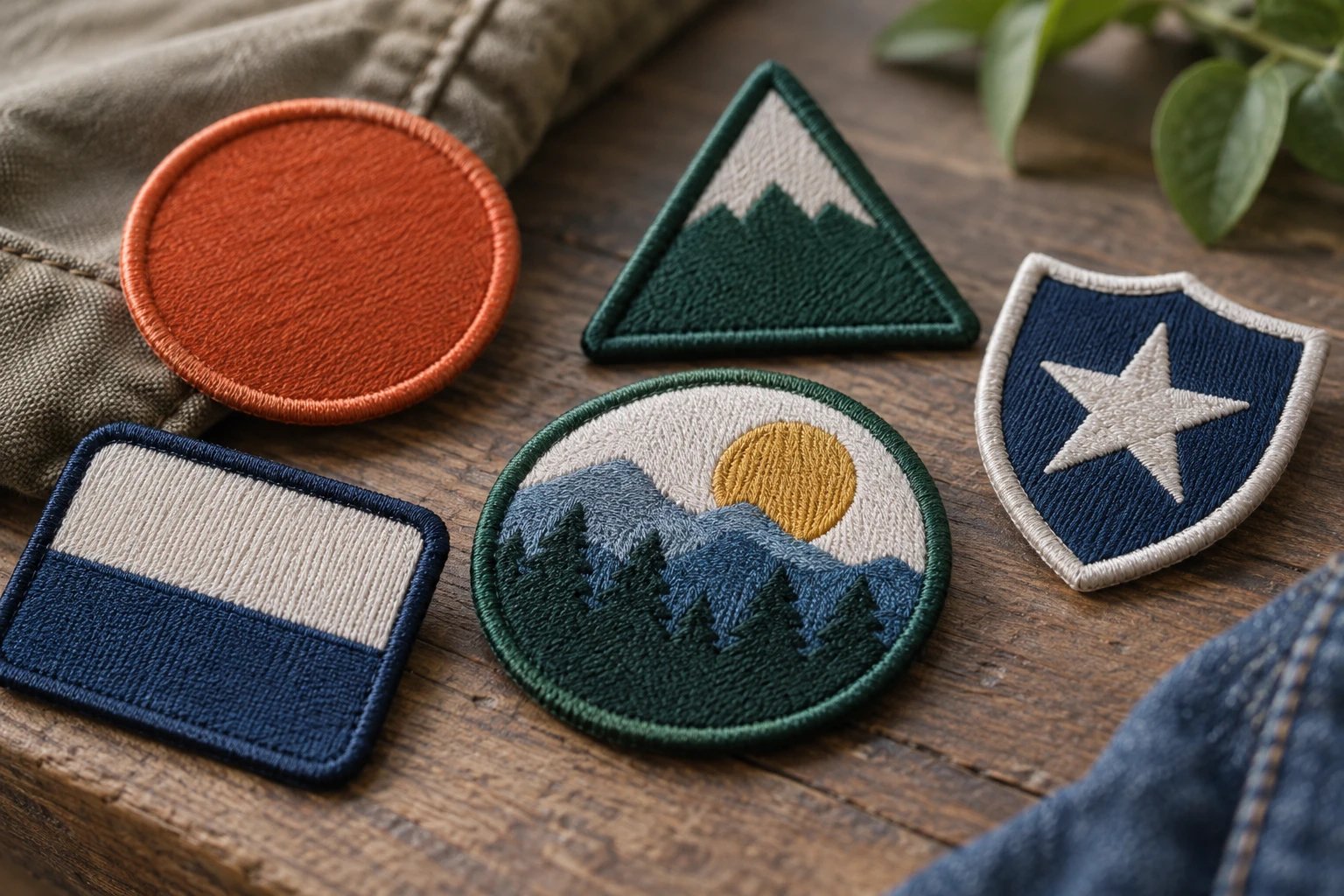
Custom embroidered patches are separate fabric badges stitched with thread from your artwork, then attached to clothing or accessories. Specify the finished dimensions, thread coverage, border and backing before ordering. Embroidery suits bold logos and clear lettering; woven or printed patches are better alternatives for very fine detail.
Key takeaways
- Embroidery suits bold shapes; small lettering may need enlargement, simplification or a woven finish.
- Thread coverage describes the stitched proportion of the patch face, not its quality grade.
- Choose backing for the garment fabric, washing routine and need for removal.
- The minimum is 5 pieces per design; production starts only after mockup approval.
We make custom embroidered patches UK teams, brands and clubs can specify by size, thread coverage, border and backing. Choose embroidery for textured logos and clear lettering, then match the attachment method to the garment rather than choosing iron-on by default.
The Customized Patches makes patches to order from your artwork, with a 5-piece minimum per design and free shipping throughout the United Kingdom. Quotes start from £60. Our free digital mockup usually arrives within 12 hours, and we produce only after approval.
Is embroidery right for your logo?
Standard embroidered patches use stitches to build lettering, outlines and filled areas over a fabric base. They suit club crests, team initials and bold business logos, but stitches cannot reproduce every tiny gap or photographic detail.
Choose woven patches for finer lettering and a flatter surface, or printed patches for gradients and photographs. 3D embroidered patches use foam beneath suitable stitched areas for extra height; broad lettering works better than intricate crests. Chenille patches provide a fuzzy pile rather than ordinary embroidery’s stitched texture.
Specify the thread, twill, coverage and edge
Thread types and colour matching
Polyester embroidery thread generally offers good colourfastness and resistance to repeated washing. Rayon, a viscose-based thread, is valued for its sheen but generally tolerates harsh laundering less well. Ask which thread is proposed if wash performance matters.
Metallic and glow-in-the-dark threads are specialist options to discuss, not automatic substitutes for standard thread. Supply brand colour references, but expect matching to available thread shades: a screen mockup cannot prove the exact colour or sheen of physical thread.
Twill base and embroidery coverage
- Twill is the woven base fabric. Its colour becomes part of the design wherever stitches leave it exposed.
- Partial coverage leaves some twill visible. It can create a clean background without stitching every area.
- Full coverage fills the face with thread. It gives a more heavily stitched surface and can increase stiffness, stitch count and cost.
Send your artwork with any thread, twill and border preferences so these can be checked together. Get a free digital mockup, usually within 12 hours, before approving production.
GET A FREE MOCKUPCoverage is not a quality score. If the design uses a plain navy background, navy twill with stitched lettering may be more appropriate than a fully stitched navy field. Specify the base colour as well as the thread colours.
Merrowed or cut border?
A merrowed border wraps the edge with a raised overlocked finish and suits circles, rectangles and simple shields. Tight internal corners and narrow points are harder to finish neatly this way.
A cut edge with a stitched outline suits more intricate shapes; heat or laser sealing depends on compatible materials. Keep enough material outside the outline to avoid a weak, fraying edge, and confirm that quoted dimensions include the border.
What size should an embroidered patch be?
Measure the usable garment panel, not just the logo on screen. Cut a paper template to the proposed finished dimensions and place it on the garment; check seams, pocket openings and how the fabric curves when worn.
| Placement | Illustrative starting size | Check before ordering |
|---|---|---|
| Canvas cap front | 60 × 40 mm (2.36 × 1.57 in) | Crown curvature, centre seam and space above the peak |
| Polo chest | 70 × 70 mm (2.76 × 2.76 in) | Weight and stiffness on lightweight knit |
| Jacket upper sleeve | 80 × 60 mm (3.15 × 2.36 in) | Sleeve width, seam clearance and movement |
| Jacket back | 250 × 200 mm (9.84 × 7.87 in) | Panel space and distortion as the jacket bends |
These are starting points, not standard requirements. For straightforward lettering, around 5–6 mm (0.20–0.24 in) character height is a useful starting point for discussion, not a readability guarantee. Fine text can fill in; simplify it, enlarge the patch or compare a woven version. See Embroidered Patches for Jackets: Size, Backing, Placement.
Which backing suits the garment?
- Sew-on: a dependable permanent choice for suitable jackets, polos and bags. Stitching can mark fabric, catch a lining or compromise a waterproof shell.
- Iron-on: useful on heat-tolerant fabric where both the garment label and adhesive instructions allow it. Heat-sensitive nylon and coated shells need particular caution.
- Hook-and-loop: useful for removable identifiers. Specify the hook-backed patch and whether you also need a matching loop panel attached to the garment.
- Adhesive: generally suited to temporary positioning or display, not repeated garment washing.
Send your artwork, finished dimensions, quantity and garment details through our [free mockup quote](#quote). We provide a free digital mockup, usually within 12 hours, and produce only after you approve.
GET A FREE MOCKUPFor a wool jacket, sewing avoids pressing heat onto the surface, but check lining access. On a nylon shell, neither ironing nor stitching should be assumed safe. For a canvas cap, the curved surface can make even iron-on pressure difficult; discuss sewing instead.
Iron-on edges can lift after unsuitable hot washing, repeated flexing or incomplete bonding. Follow the stricter garment and patch care instructions, and consider perimeter stitching where the fabric permits it. Iron-On vs Sew-On Patches: Which Lasts Longer? explains the attachment trade-offs.
How to order custom embroidered patches UK-wide
- Send clear artwork through our quote form. Vector artwork helps where available; flag any small text or details that must remain.
- State the quantity per design, finished width and height, shape, placement and garment fabric. Include a delivery postcode and any required event date.
- Specify thread colours, twill colour, coverage, border and backing, or identify the choices you need help making.
- Check the free digital mockup for spelling, proportions, colours and dimensions. Confirm backing and other written specifications alongside the artwork.
- Approve only when the details are correct. We produce only after approval; confirm production and delivery timing before committing to a deadline.
The usual 12-hour mockup turnaround is not a production or delivery promise. A digital preview also cannot demonstrate physical stitch texture, exact colour or attachment strength. Our Ordering Custom Patches Online: What to Expect guide explains the approval process.
Quotes start from £60, but the amount depends on your specification and quantity; do not treat that figure as a fixed per-patch price. Ask for an itemised quote covering the agreed design and backing. Free UK-wide shipping is included.
Frequently asked questions
What is the minimum order for custom embroidered patches UK buyers can place?
Our minimum is 5 pieces per design. Different designs cannot be combined to meet that minimum; include the quantity for each design in your enquiry.
Does full embroidery coverage make a better patch?
Not automatically. Full coverage gives an all-thread face, while partial coverage uses visible twill as part of the artwork. Choose by appearance, flexibility and budget.
Can you reproduce very small lettering?
It depends on character height, font and spacing. Fine lettering may need simplifying or enlarging. Woven patches are worth considering when preserving small text matters.
Can I iron a patch onto any jacket?
No. Heat can damage some nylon, coatings and delicate fabrics. Check the garment label and patch application instructions; sewing also needs care around waterproof layers and linings.
How quickly will my patches arrive?
The free digital mockup is usually provided within 12 hours, but that is not dispatch timing. Confirm production and delivery estimates for your specification before approving an order.
How should embroidered patches be washed?
Follow both garment and patch instructions, using whichever is more restrictive. Avoid picking loose threads or scrubbing edges. See How to Wash Embroidered Patches Without Damage for care guidance.
Ready to produce custom patches for your UK team or brand?
GET A FREE MOCKUP