
Branded Patches for Construction and Trades Workwear
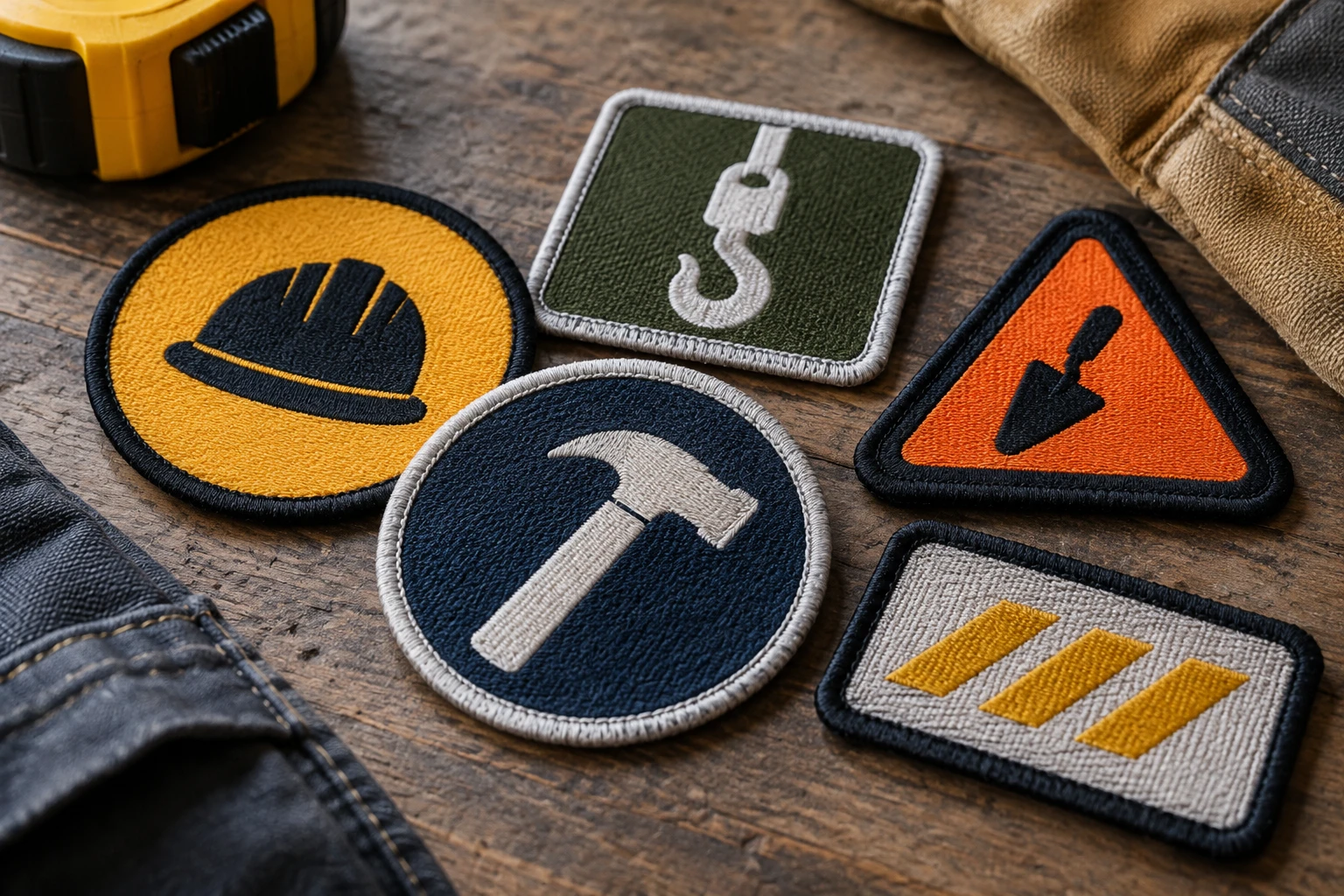
Construction workwear patches are separate branded badges attached to work garments. Sew-on embroidered or woven patches are practical options for suitable non-protective clothing, while removable patches need a compatible fastening panel. On hi-vis or other protective garments, confirm permitted branding areas and attachment methods with the garment supplier before ordering.
Key takeaways
- Check approved branding areas before adding patches to hi-vis or protective clothing.
- Specify patch material and attachment separately; both affect durability.
- Laundry temperature, drying and chemicals belong in the patch brief.
- Keep an approved specification for reorders; the minimum is 5 pieces per design.
For construction workwear patches, start with the garment and wash routine, then choose the badge material and attachment. Sew-on embroidery suits bold logos on suitable non-protective workwear; woven patches suit finer detail. Check supplier-approved branding positions before modifying hi-vis or other protective garments.
A patch needs to remain readable without catching on tools, obstructing pockets or damaging the garment underneath. Separate ordinary polos and cotton drill jackets from waterproof shells, hi-vis vests and flame-resistant clothing when preparing your brief.
Can you put branded patches on hi-vis workwear?
Do not assume an empty-looking chest panel is available for branding. Hi-vis garments depend on areas and arrangements of fluorescent background material and retroreflective tape; covering either can affect performance. Ask the garment supplier to confirm permitted badge dimensions, positions and attachment methods for the specific model and size range.
Keep patches off reflective tape. An ordinary bright-coloured badge is not a substitute for fluorescent or reflective garment material, and a digital mockup cannot verify that modified workwear remains suitable for its protective purpose.
Apply the same caution to flame-resistant and arc-protective clothing: an ordinary patch, thread or adhesive may be unsuitable. Sewing through a waterproof nylon shell also creates needle holes. Get approval for the complete patch-and-attachment specification before altering protective clothing.
Which construction workwear patches suit daily wear?
Embroidered patches give bold lettering and simple symbols a textured finish. Small text and narrow gaps can fill in with stitches, so simplify the artwork rather than shrinking a detailed company letterhead onto a chest badge.
Woven patches have a flatter surface and can reproduce finer lettering. PVC patches offer a wipeable moulded face, but are generally thicker and less suited to a lightweight polo. No material choice alone establishes compatibility with industrial laundry.
| Patch type | Useful for | Trade-off to check |
|---|---|---|
| Embroidered | Bold logos on suitable drill jackets and heavier overshirts | Raised threads can snag; fine lettering needs simplification. |
| Woven | Compact logos and smaller lettering on polos or shirts | Fine detail still needs enough physical space to read. |
| PVC | Wipeable badges on suitable outerwear or removable panels | Thickness and weight can pull at thin fabric. |
| Printed | Gradients and artwork that cannot be reduced to thread colours | Confirm the print, edge and backing suit the intended laundry. |
Choose the attachment separately
Sew-on attachment is a practical starting point for suitable non-protective workwear because it does not rely on adhesive alone. Iron-on backing needs compatible fabric and application heat; poor bonding or unsuitable washing and drying can cause edge lifting. Never assume a coated nylon shell can tolerate a hot iron.
Send the logo, garment details and wash routine so the proposed patch specification can be reviewed together. We offer a free digital mockup, usually within 12 hours, before you approve production.
GET A FREE MOCKUPHook-and-loop attachment allows removal but needs a matching garment panel, and exposed hooks collect lint. For gradients, compare printed patches before changing the artwork. State both the patch type and backing on the quote rather than asking only for a “durable badge”.
Where should the logo sit, and how big should it be?
On ordinary non-protective workwear, a left-chest position is a useful starting point, provided it avoids pocket openings, zips and seams. Check the position while the garment is worn: a logo hidden by a tool vest or shoulder strap provides little identification.
- Trial a paper rectangle around 80 × 40 mm (3.15 × 1.57 inches) for a compact chest logo; this is a starting point, not a universal size.
- Check the smallest and largest garment sizes rather than approving placement on one sample size.
- Keep clear of pocket flaps, fastening points and high-friction areas beneath straps.
- Remove tiny contact details if they cannot be read at the intended finished size.
Keep the paper template at actual size when reviewing artwork. Seven Patch Design Mistakes That Cause Rework (and How to Avoid Them) explains why adding more detail can make a small badge less useful.
What makes a patch last through work and washing?
Durability depends on the face material, edge finish, attachment and care routine working together. Describe likely exposure to abrasion, mud, oils and repeated washing; “outdoor use” does not tell a supplier whether the badge will be lightly soiled or scrubbed daily.
Provide the wash temperature, detergent or chemical requirements, drying method and any industrial laundry process. Follow the garment care label, but also confirm that the patch and attachment tolerate that routine. A garment’s wash rating does not automatically apply to an added badge.
Check edges, not just the centre
Rounded shapes have fewer projecting points to catch, while an appropriate edge finish helps contain fabric fibres. Look for loose stitching, exposed raw edges or lifting adhesive during routine checks; repair an attachment before the badge catches and tears the garment.
Include your first-order quantities and likely reorder requirements in the brief so the specification is clear from the start. Get a free digital mockup, usually within 12 hours; production begins only after approval.
GET A FREE MOCKUPFor a larger rollout, ask about a physical sample and test the complete badge on the intended garment under the actual care routine. A digital mockup checks appearance, not wash performance. See Why Patch Edges Fray and How to Stop It for edge-specific considerations.
How to order now and keep bulk reorders consistent
The Customized Patches makes patches to order from your artwork, with a 5-piece minimum per design. Quotes start from £60, with free shipping across the United Kingdom; the final quote depends on the specification and quantity.
- Send the artwork, quantity per design, garment model and any supplier branding restrictions through our free mockup quote form.
- Specify finished dimensions, material, colours, border, backing and laundry requirements. Mention any required matching hook-and-loop panel.
- Review the free digital mockup, usually available within 12 hours. Check spelling, size and attachment details; we produce only after approval.
- Ask for current production and delivery timings before committing to a site start or uniform issue date. Mockup turnaround is not dispatch time.
Keep a specification for the next order
Save the approved artwork version, dimensions, colour references, backing and border details alongside the garment model. List quantities by design, not just by total workforce; different names, roles or logos may create separate designs, so confirm how the minimum applies.
For repeat orders, reference the approved specification and flag any garment or laundry changes. Retain a physical patch for colour comparison rather than relying on a phone photograph, and confirm how closely a new batch can match. Ask for quantity comparisons rather than assuming a particular bulk discount.
Frequently asked questions
What is the best backing for construction workwear patches?
Sew-on is a practical starting point for suitable non-protective garments. Hook-and-loop suits removable badges where a matching panel exists. Iron-on needs confirmed fabric, heat and laundry compatibility.
Can we sew patches onto hi-vis jackets ourselves?
Check with the garment supplier first. Avoid reflective tape and obtain approval for the badge size, position and attachment method; sewing is not automatically suitable just because it avoids heat.
Will embroidered patches survive industrial washing?
Do not assume so. Give the supplier the actual washing, chemicals and drying requirements, then confirm compatibility of the patch and attachment. Test the complete application before a wider rollout.
Can each worker have a different name patch?
Different names change the artwork and may constitute separate designs. Our minimum is 5 pieces per design, so confirm the quantity required for each name before planning the order.
Are patches better than direct embroidery for a changing workforce?
Removable patches can make role or team changes easier, while direct embroidery needs no separate badge attachment. Sewn patches still take time to remove. Compare Patch or Direct Embroidery on the Garment? When Each Makes Sense.
How quickly can we receive a bulk order?
Ask for current production and shipping timings against your specification and deadline. The free digital mockup is usually provided within 12 hours, but that is not a production promise. Production starts only after approval, and UK shipping is free.
Ready to produce custom patches for your UK team or brand?
GET A FREE MOCKUP