
Are fine-detail woven patches UK Right for Your Project? A Decision Guide
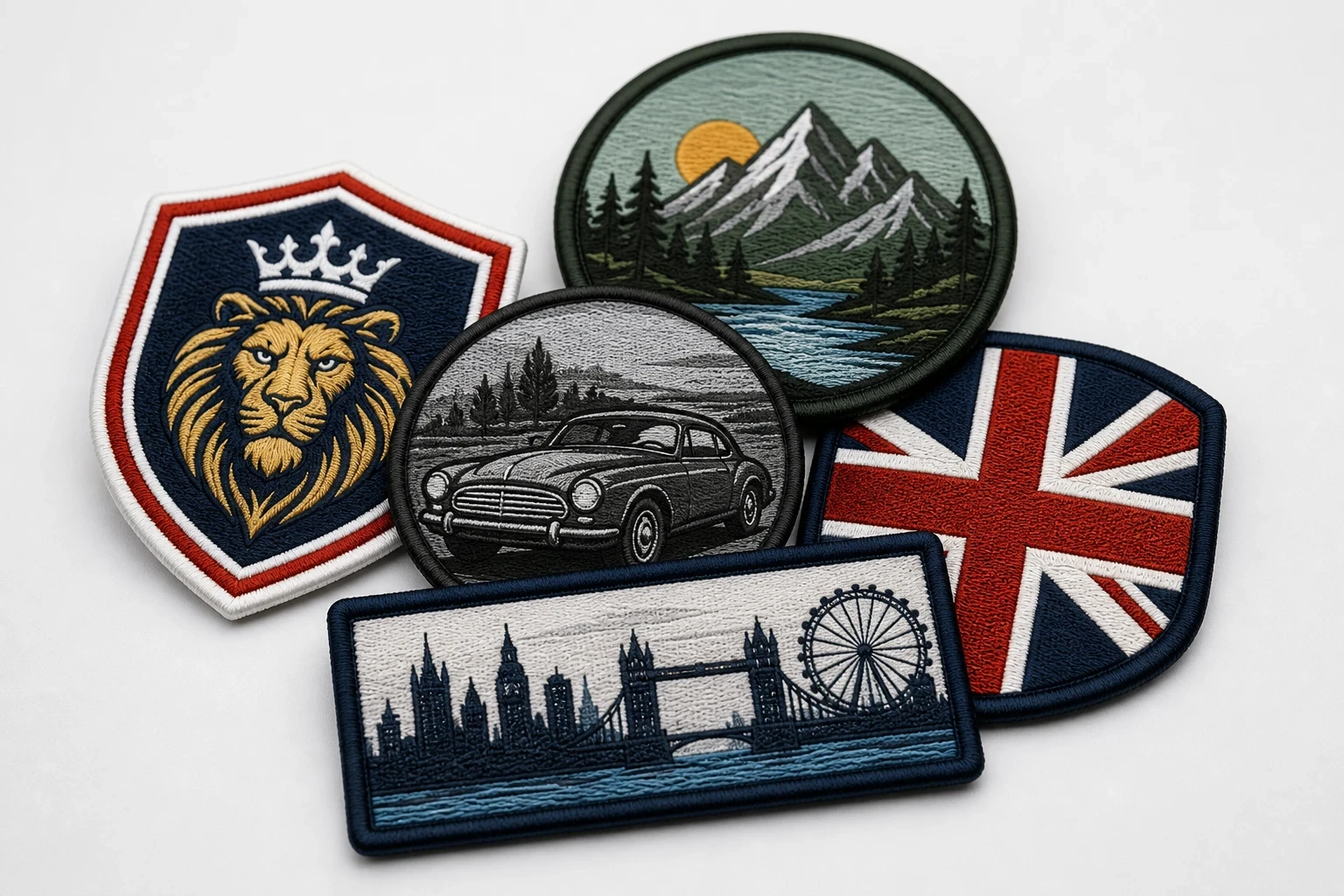
Fine-detail woven patches UK are a good choice for logos, labels and badges with small lettering, thin outlines or several colour changes. Their flat woven surface shows detail more clearly than standard embroidery, while still giving a stitched patch appearance. They are less suitable when you need raised texture, heavy abrasion resistance or a very large design.
Key takeaways
- Fine-detail woven patches are usually best for small lettering, thin lines and logos with several close colour areas.
- The flat surface is clearer than raised embroidery, but it does not give the same high, textured thread effect.
- The Customized Patches accepts a 5-piece minimum per design and normally supplies a free digital mockup within 12 hours.
- Choose the backing and garment together: sew-on, iron-on and Velcro each suit different UK clothing and working conditions.
Fine-detail woven patches UK are right for your project if the design depends on small lettering, narrow outlines or clean colour blocks rather than raised texture. They are often a sensible middle ground between embroidered patches and printed patches: more detailed than dense embroidery, but still made as a proper textile patch.
The Customized Patches produces these for United Kingdom teams, brands, clubs and businesses, with a 5-piece minimum per design. You receive a free digital mockup usually within 12 hours, and production starts only after you approve the artwork, size, colours and backing.
What makes fine-detail woven patches different?
A woven patch is made by weaving finer threads closely together to form the artwork. Instead of building the image mainly with raised stitches, the design is formed across a flatter textile face. That construction gives small details somewhere to sit without the thick thread ridges that can close up narrow spaces.
This matters on a club crest with a small motto, a hospitality logo with fine lettering, or a clothing label containing a web address. A standard embroidered version may need the text enlarged or simplified. Woven construction can retain more of the original shape, although there is still a practical limit: tiny text that is unreadable on screen will not become readable simply because the patch is woven.
The face is normally flatter and lighter than a traditional embroidered patch. That can be useful on a nylon shell, a fitted polo or a cap where a high pile would feel bulky. It also means you should not order woven patches expecting the raised, tactile look of a merrowed crest or a varsity letter.
The surface finish is part of the decision
Printed is flatter; that is the point. If your design needs a smooth photographic fade, tiny tonal shading or a deliberately low-profile finish, compare printed patches as well. Woven patches still have a textile character, with visible thread structure and a defined edge, but they are not the right answer for every image.
- Choose woven construction for crisp small lettering, line work, badges and compact brand marks.
- Choose raised embroidery for texture, traditional club styling and bold thread relief.
- Choose print for gradients, photographic elements and very fine tonal changes.
- Choose PVC when a moulded, wipe-clean and weather-focused finish matters more than a textile appearance.
Which projects benefit most from this construction?
Fine-detail woven patches work particularly well on garments where the patch will be seen from close range. Think branded workwear, school blazers, hospitality polos, event jackets, gym bags and small-run merchandise. A company logo that contains a thin circular line or six words around a badge usually benefits from the flatter face.
They also suit teams ordering a modest run rather than thousands of identical garments. A football club may need 20 staff jackets with a sponsor mark. A cadet unit may want a clean sleeve badge for a particular intake. A small UK clothing brand may test a woven label-style patch before committing to a larger stock order.
Biker and motorcycle club patches need more thought. Large back pieces often rely on bold, highly visible embroidery and a substantial edge, while a smaller woven chest or sleeve badge can carry fine lettering more clearly. If the project is mainly about traditional biker styling, review the biker and motorcycle club patches range before choosing a flat face.
For schools and clubs, check the actual garment before approving the order. A patch intended for a wool coaches jacket behaves differently from one going onto a polyester football top. A Velcro panel may need a hook backing rather than an iron-on layer, and a thin nylon shell may show puckering if the patch is too large or applied with excessive heat.
Fine-detail woven patches UK compared with other options
There is no single best patch type. The correct choice depends on the artwork, surface, handling and appearance you want after several months of use. The table below gives a working comparison before you send a quote request.
| Patch type | Best for | Main advantage | Main trade-off | Typical garment or use |
|---|---|---|---|---|
| Fine-detail woven | Small text, thin lines, compact logos and labels | Clear detail on a flatter textile face | Less raised texture than embroidery | Polos, jackets, bags, school and workwear |
| Embroidered | Bold crests, traditional badges and textured logos | Raised thread effect and familiar patch appearance | Very small lettering or narrow gaps may close up | Football kits, blazers, jackets and clubwear |
| Printed | Gradients, photographs and very fine tonal artwork | Smooth, flat reproduction of complex colour changes | Does not give the same woven or stitched relief | Event clothing, labels and promotional garments |
| PVC | Outdoor, utility and wipe-clean applications | Moulded surface with strong visual separation | Less suitable for a soft textile or heritage look | Outdoor clothing, bags and equipment |
| Chenille | Large varsity letters and bold school or team designs | Deep, soft pile with strong visual impact | Poor fit for tiny text and intricate line work | Varsity jackets, school and sportswear |
The useful question is not simply, “Which patch looks best?” Ask what the viewer needs to read, how close they will stand, how the garment will be washed, and whether the patch must match an existing badge. You can compare woven patches with embroidered patches before deciding.
For a school crest, embroidery may carry the expected formal appearance even if woven construction holds more small detail. For a modern streetwear logo, a flat woven face may look intentional and cleaner. For a waterproof equipment bag, PVC may be more practical. Printed is not a lesser option if a flat image is the required finish.
How size, artwork and colour affect the result
Small artwork needs enough physical room. A design that looks fine at 6 inches wide may lose its hierarchy at 2.5 inches. Before quoting, identify the smallest text, thinnest line and closest colour pairing. These are the details that decide whether the artwork should stay as supplied or be adjusted for production.
Not sure whether thread or ink will hold your logo? Get a free digital mockup in 12 hours and compare both before you produce.
GET A FREE MOCKUP- Measure the usable area of the garment in inches, not just the old patch or screen preview.
- Keep important lettering away from the merrowed or stitched edge.
- Separate similar shades if the logo will be viewed in low light or from a distance.
- Avoid assuming that a fine outline will remain equally visible on a dark or textured garment.
- Send the original vector artwork if available, but include a clear PNG when that is the only file you have.
A mockup should show more than a logo floating on a white background. It should show the proposed patch size, border, face style, backing and placement. A sleeve badge, left-chest mark and large back design each need different proportions. The same artwork may need a separate version for a small cap panel.
Colour matching needs a sensible expectation. Digital screens, garment dyes and thread colours do not behave identically. If a brand colour is critical, state the reference and explain where the patch will be used. The production team can then flag a close colour pair, a dark background issue or a detail that needs a small artwork change.
Not sure whether thread or ink will hold your logo? Get a free digital mockup in 12 hours and compare both before you produce.
Backing and garment compatibility
Backing should be selected with the garment and the expected use in mind. Sew-on backing is usually the dependable choice for long-term attachment, especially on wool coaches jackets, heavy cotton, denim and garments that will be washed repeatedly. It takes more fitting time, but the patch is not relying on adhesive alone.
Iron-on backing can be convenient for team clothing and retail applications, but the application temperature, pressure and fabric all matter. Nylon shells can be damaged by excess heat. A patch that seems secure on day one may lift at the corners after a dryer cycle if it was applied to the wrong fabric or not pressed evenly.
Velcro is useful for changing identifiers, operational clothing and equipment that needs the badge removed for washing. Specify whether the garment already has a loop panel. Adding hook-backed patches to a smooth nylon shell without a matching loop surface will not create a workable attachment.
| Backing | Good choice for | Check before ordering |
|---|---|---|
| Sew-on | Wool, denim, heavy jackets and long-term use | Allow time for stitching and check the edge can be reached |
| Iron-on | Suitable cotton or polyester garments and faster application | Fabric heat tolerance, pressing instructions and dryer use |
| Velcro | Removable badges, uniforms and equipment panels | The garment must have, or be fitted with, a matching loop panel |
| Adhesive | Short-term display or selected smooth surfaces | It may not withstand repeated washing, flexing or abrasion |
A common failure is specifying the face correctly but treating the backing as an afterthought. It is common to see iron-on patches peel from workwear after a dryer cycle, and patches ordered for nylon shells where the application heat was unsuitable. Put the garment type, washing routine and attachment method on the quote request.
If you are unsure, the Woven patches Sizing and Backing Options Explained guide is a useful starting point. The final recommendation should still be based on your actual garment rather than a generic product photograph.
Ordering quantities, mockups and lead times
The Customized Patches has a 5-piece minimum per design. That suits a small business testing a logo, a club replacing a handful of badges or a team ordering a limited staff run. Each separate artwork is treated as its own design, so five versions of five different names are not automatically the same as 25 pieces of one design.
Send the artwork, finished size in inches, quantity, preferred backing, garment type and delivery postcode. If you have an existing patch, include a photograph with a ruler beside it. That gives our team more useful information than a description such as “medium size” or “standard badge”.
A free digital mockup is usually supplied within 12 hours. It is a planning visual, not a physical sample, so use it to confirm the shape, border, scale, colour arrangement and backing before production. Production begins only after approval; this is the point to request a correction rather than after the patches have been made.
Lead time depends on design complexity, quantity, backing and current production capacity. UK-wide shipping is available, but delivery time is separate from production time. If the patches are needed for a tournament, school term, product launch or trade event, give the date at the start of the conversation rather than assuming a standard turnaround.
Name sew-on, iron-on or Velcro on the quote. We show the correct back on a free 12-hour mockup so production matches the garment.
Where these patches can disappoint
Woven construction is not a way to reproduce every feature of a full-size artwork at a tiny scale. Very small negative spaces can close, fine script can become a dark line, and a detailed illustration may need fewer colours or a larger finished size. A clear mockup should expose those risks before approval.
Name sew-on, iron-on or Velcro on the quote. We show the correct back on a free 12-hour mockup so production matches the garment.
GET A FREE MOCKUPThey may also disappoint if you expected a raised, luxury or heritage finish. The surface is deliberately flatter. That is useful for clean logos and labels, but it will not imitate the thick pile of chenille patches or the raised stitch height of a heavily embroidered crest.
- Do not select woven construction only because the artwork file contains many details.
- Do not reduce a large logo to a tiny badge without checking the smallest text.
- Do not apply iron-on backing to a heat-sensitive nylon shell without confirming suitability.
- Do not approve a colour from a screen alone if a close brand match is essential.
- Do not assume an old patch's backing will suit a new garment.
For outdoor equipment, cycling kit and garments exposed to dirt or moisture, compare PVC patches as well. For a premium leather accessory or heritage item, leather patches may fit the material better. The right answer is the one that survives the use and looks deliberate on the finished item.
A practical decision checklist for UK buyers
Start with the viewing distance. If people will read the patch from a few feet away, the design needs stronger contrast and larger lettering than a label inspected in the hand. Then consider the garment: a school blazer, nylon shell, wool coaches jacket, football top and Velcro panel each impose different limits.
- Write down the finished patch width and height in inches.
- Circle the smallest text and thinnest line in the artwork.
- Decide whether a flat woven face or raised stitched texture suits the brand.
- Choose sew-on, iron-on or Velcro based on the actual garment.
- Confirm the quantity, remembering the 5-piece minimum per design.
- Request a free digital mockup and check the face, edge, scale and backing.
- Approve only after the mockup matches the garment and intended use.
- Keep the approved artwork and quote with the garment order for future repeats.
This checklist is especially useful for businesses that may reorder later. A saved approved version reduces uncertainty, but always mention if the garment, size or backing has changed. A patch that worked on a cotton polo may not transfer directly to a waterproof jacket.
For further preparation, see 10 Questions to Ask Before Ordering fine-detail woven patches UK and the A Step-by-Step Guide to Ordering fine-detail woven patches UK. Both are useful before sending a quote, particularly if several people need to sign off the design.
Who should choose fine-detail woven patches?
Choose them when the patch must keep small words, narrow borders or compact brand detail while remaining relatively flat. They are a strong option for UK businesses, clubs and teams that want a tidy textile badge without the heavier relief of embroidery. The 5-piece minimum also makes a small test run practical.
Choose another construction if the main objective is a raised varsity look, a photographic image, a moulded outdoor finish or a very large traditional crest. A patch can be well made and still be wrong for the job. The most reliable order is based on the artwork and garment together, not on the product name alone.
If your logo includes small text and you are still weighing the options, send it to The Customized Patches with the garment details. We can show a proposed woven version alongside a suitable alternative on the free digital mockup, normally within 12 hours, before anything goes into production.
Frequently asked questions
Are fine-detail woven patches UK suitable for small lettering?
Yes, they are often suitable for small lettering because the woven face is flatter and uses fine threads. The lettering still needs enough physical height and contrast. Send the artwork with the intended finished size in inches so the mockup can show whether the text remains practical.
What is the minimum order for fine-detail woven patches UK?
The Customized Patches has a 5-piece minimum per design. Different artwork versions, such as separate names or colourways, may count as separate designs. Confirm the quantity breakdown on the quote before approval.
How quickly can I see a woven patch mockup in the UK?
The Customized Patches usually supplies a free digital mockup within 12 hours. The mockup is sent for approval, and production starts only after you approve the artwork, size, colours and backing. Production and UK-wide delivery times are separate and depend on the order.
Are woven patches better than embroidered patches?
Neither is always better. Woven patches generally show small lettering and fine lines more clearly on a flatter surface, while embroidered patches provide raised texture and a traditional crest appearance. Compare the The Difference Between woven patches and embroidered patches, Explained guide before choosing.
Can fine-detail woven patches go on nylon jackets?
They can be used on suitable nylon garments, but the backing and application method need checking first. Iron-on application may damage heat-sensitive nylon, while sew-on or Velcro may be more suitable. Include a photograph or garment specification with the quote.
Which backing should I choose for a team or club patch?
Sew-on is a dependable option for wool, denim and jackets that will be washed often. Iron-on can suit compatible cotton or polyester garments when applied correctly. Velcro is useful for removable badges and equipment panels, provided the garment has a matching loop surface.
Ready to produce custom patches for your UK team or brand?
GET A FREE MOCKUP