
Puff Embroidery Patches for Caps in the UK: Sizing, Foam and Artwork Guide
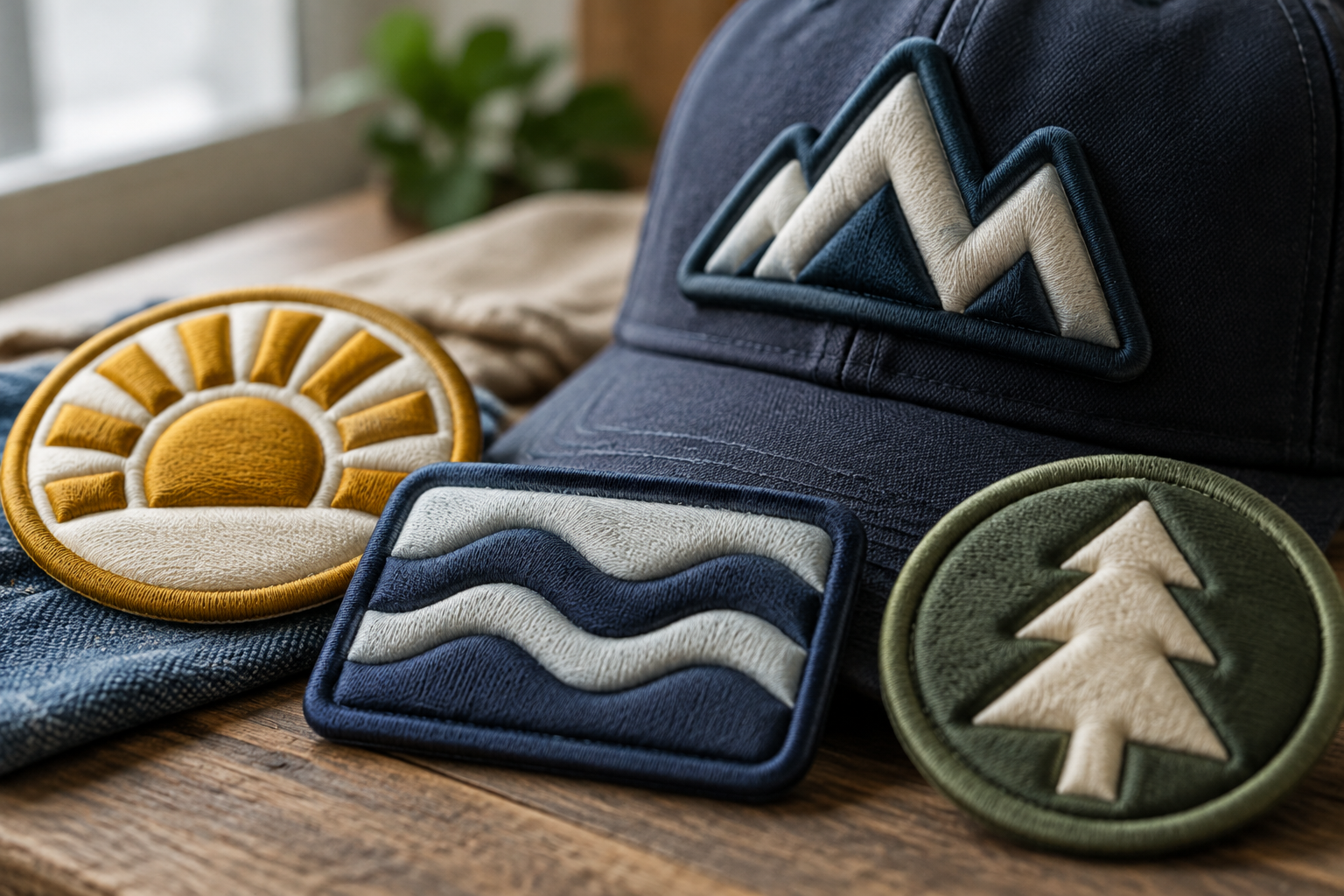
Puff embroidery patches use thread stitched over foam to create raised lettering or shapes on a separate patch base. For caps, the design must suit the usable front-panel area and crown curvature. Bold artwork works best; foam thickness, border clearance and attachment should be agreed before production.
Key takeaways
- Measure the usable cap front, not the whole crown, before choosing patch dimensions.
- Bold letters and simple shapes suit puff embroidery; small supporting text is better kept flat.
- Foam thickness is not the same as finished raised height because stitching compresses the foam.
- The Customized Patches has a 5-piece minimum per design and produces only after approval.
For puff embroidery patches for caps UK-wide, start with the cap’s usable front-panel area and a bold, simplified logo. Choose foam and attachment to suit the crown: a large, stiff patch can distort a soft cap, while fine lettering can lose definition in raised stitching.
Unlike direct cap embroidery, 3D embroidered patches are stitched separately and then attached. That separates embroidery from the cap’s construction, but the finished patch still has to follow its curve without lifting at the edges.
What size puff patch will fit your cap?
Measure the intended position with the cap supported in its worn shape. Record the available width and height above the peak, noting the centre seam, panel joins, eyelets and any space needed to reach the attachment line.
As a layout trial, cut paper rectangles measuring 60 × 40 mm (2.36 × 1.57 inches) and 80 × 45 mm (3.15 × 1.77 inches). These are comparison sizes, not universal recommendations. Hold them against the actual cap and check from the front and side; a paper template shows the footprint, not the stiffness.
Allow for seams, the peak and the sewing line
A separate patch can span a six-panel cap’s centre seam, but the ridge may stop it sitting flush. There is no single safe seam-clearance figure for every cap: check the seam bulk and attachment route rather than assuming a standard gap will work.
- Keep the lower edge clear of the peak junction so the patch does not buckle against it.
- Leave a flat perimeter for attachment; do not run raised letters into the sewing line.
- Check that the installer can reach the perimeter without catching the sweatband.
- Send the cap model and front and side photographs with your dimensions.
How much foam suits a structured or unstructured cap?
Embroidery foam around 2–3 mm (0.08–0.12 inches) thick is commonly used for puff work, but the correct choice depends on stitch coverage and shape. Foam thickness is not finished relief height: thread compresses it, and the patch base adds its own thickness.
Send the cap model, patch dimensions and the areas you want raised so the proposal reflects the crown. We provide a free digital mockup, usually within 12 hours, for you to review before production.
GET A FREE MOCKUPA structured cap has front-panel support that generally carries a firm badge more readily. An unstructured cotton or canvas cap folds around the head, so a broad, stiff patch may stand away from the crown. A smaller footprint or less raised coverage can be more suitable.
| Cap construction | Main constraint | Specification to discuss |
|---|---|---|
| Structured six-panel | Curved front and raised centre seam | Patch width, seam bridging and a reachable flat border |
| Structured five-panel | Often no central front seam, but panel shapes vary | Usable front area and clearance above the peak |
| Unstructured cotton or canvas | Soft crown can pucker around a stiff patch | Smaller footprint, restrained puff coverage and sew-on attachment |
| Foam-front trucker | Heat-sensitive materials and a compressible front | Material compatibility and controlled attachment pressure |
More foam does not automatically make a clearer logo. Excessive height can crowd narrow gaps or leave exposed foam where stitch coverage is unsuitable. Specify the raised areas and desired appearance, then agree a workable foam choice rather than requesting maximum thickness.
Which artwork works in puff embroidery?
Bold initials, broad strokes and simple symbols are good candidates. Puff needs stitching that covers the foam and closes the ends of raised shapes; adding foam beneath an ordinary flat embroidery file is not a reliable substitute for suitable digitising.
Keep the main mark raised and supporting detail flat
- Thicken narrow strokes and open tight spaces inside letters.
- Remove tiny outlines, fine serifs and isolated dots.
- Keep small club names, dates or straplines in flat stitching, or omit them.
- Replace gradients and shading with solid colour areas.
- Separate raised elements from the border and attachment line.
There is no universal minimum letter size: font, stroke width and internal gaps all matter. Use Best Fonts for Patch Lettering: Readability at Small Sizes to assess the lettering, and judge the proof at the proposed physical size rather than enlarged on screen.
If fine detail is essential, consider woven patches instead of forcing everything into puff. Printed patches suit gradients, while flat embroidered patches retain thread texture without the same foam-related constraints. A mixed flat-and-puff layout can preserve supporting detail.
Should a puff patch be sewn or ironed onto a cap?
Sew-on attachment is generally the more dependable starting point for a curved cap, provided the installer can reach the perimeter. Ask for a flat sewing margin and keep attachment stitches away from the raised artwork.
Include your cap photographs and required date with the specification. Get a free digital mockup, usually within 12 hours, and review the layout before approving production.
GET A FREE MOCKUPIron-on attachment needs compatible materials, even pressure and the correct temperature. A domestic iron struggles with crown curvature, while pressure can flatten puff and excessive heat can damage synthetic fronts. Adhesive edges may lift if bonding is incomplete or later care exceeds the backing’s limits.
Check the cap’s care label and the backing instructions before applying heat. Our Iron-On vs Sew-On Patches in the UK: Which Lasts Longer? guide explains the broader trade-offs. For removable patches, a cap needs a matching loop panel; a hook-backed patch alone will not attach to plain fabric.
How to specify puff embroidery patches for caps UK-wide
The Customized Patches makes patches to order from your artwork, with a 5-piece minimum per design. Quotes start from £60, with free shipping across the United Kingdom; request a design-specific quote rather than treating that starting figure as a price for every specification.
- Send your artwork, quantity, cap model, material and photographs through our free mockup quote.
- Give finished width and height, intended placement and which elements should be raised.
- Name the backing and attachment method, including who will fit the patches.
- Review the dimensions, colours, foam proposal, border and simplified details before approval.
- Confirm production and delivery timing against your required date before authorising production.
We provide a free digital mockup, usually within 12 hours, and produce only after approval. That is the usual mockup turnaround, not a production or delivery promise. A digital proof checks the proposed layout; it cannot physically demonstrate foam feel or fit on your particular cap.
Frequently asked questions
Are puff embroidery patches for caps UK orders the same as direct 3D embroidery?
No. A puff patch is embroidered on a separate base and attached afterwards. Direct 3D embroidery is stitched into the cap itself, so the production setup and design constraints differ.
Can a puff patch cover a cap’s centre seam?
Yes, but covering a seam does not guarantee a flush fit. Check the ridge height, patch stiffness and sewing access on the actual cap before finalising the dimensions.
Is thicker foam always better?
No. Thicker foam needs suitable artwork and stitch coverage. It can reduce definition in tight spaces, and its original thickness does not equal the finished raised height.
Will puff embroidery work on an unstructured cap?
It can, but a large, stiff patch may distort the soft crown. Consider a smaller patch, fewer raised areas and a flat attachment border, then assess the proposed footprint on the cap.
Which artwork file should I send?
Send a vector file if available, or a clear, high-resolution image. Include dimensions and mark the raised elements. See Which Artwork File Formats Work for Custom Patches? (AI, EPS, PDF, PNG). Embroidery still requires digitising.
Can I order one puff patch to test before buying more?
Our minimum is 5 pieces per design, not one. The free digital mockup is usually ready within 12 hours, but it is not a physical sample. We produce only after approval; confirm any physical testing requirements when requesting your quote.
Ready to produce custom patches for your UK team or brand?
GET A FREE MOCKUP