
Printed patches: Everything UK Buyers Need to Know
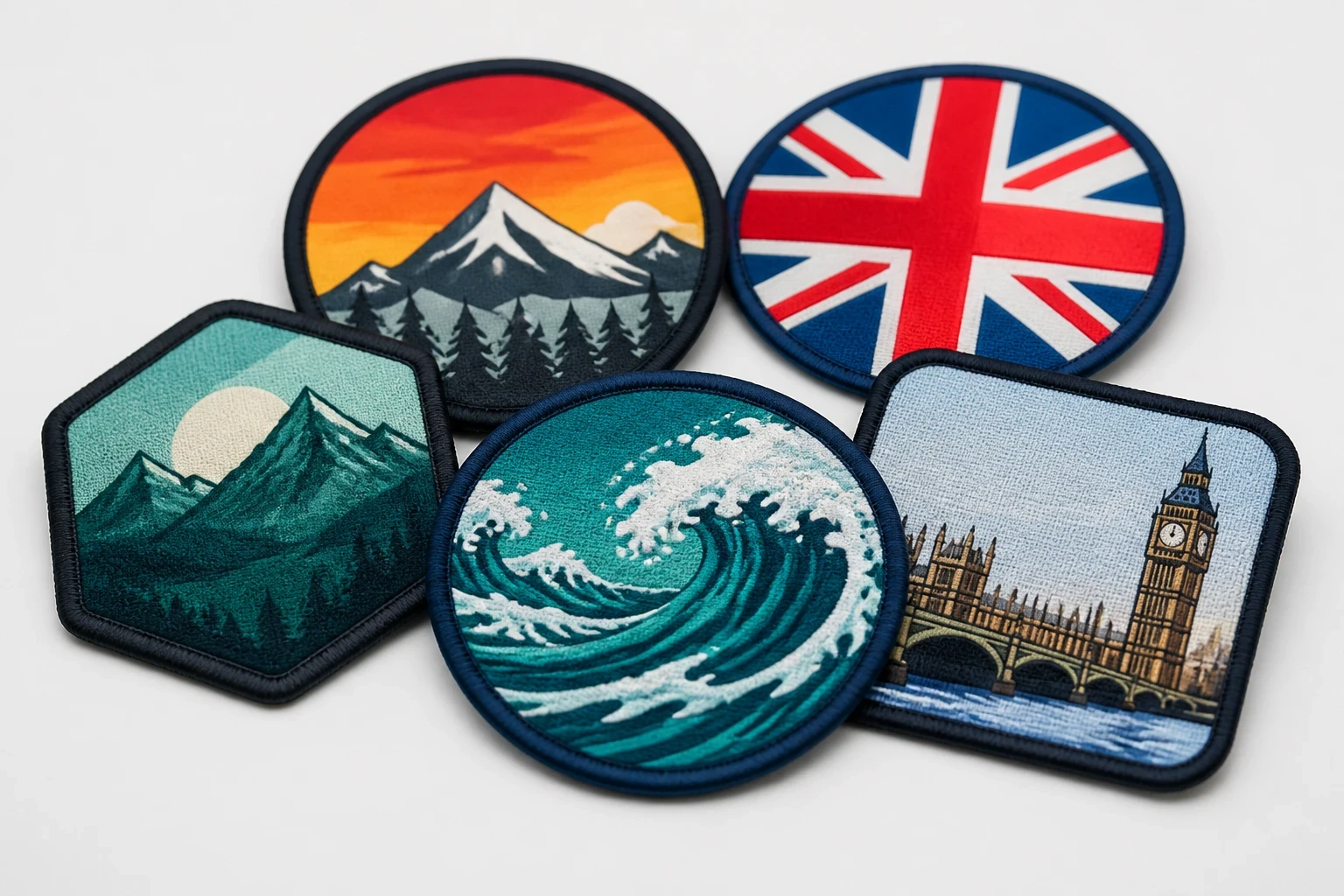
Printed patches are fabric badges with artwork applied as ink rather than stitched thread. They suit photographs, gradients, small lettering and detailed logos because the surface stays flat and the artwork is reproduced directly. UK buyers can order from The Customized Patches from five pieces per design, with a free digital mockup usually supplied within 12 hours and production starting only after approval.
Key takeaways
- Printed patches use ink on a fabric base, so they are flatter and better suited to gradients, photographs and fine artwork than raised embroidery.
- The Customized Patches accepts a minimum order of five pieces per design and sends a free digital mockup usually within 12 hours.
- Production starts only after artwork, size, shape, colours and backing have been approved.
- Sew-on, iron-on and Velcro backings suit different garments; nylon shells and frequent washing need a more cautious choice than a casual cotton jacket.
Printed patches are flat fabric badges made by applying ink to a patch surface rather than building the image from stitched thread. They are often the sensible choice for gradients, photographs, small lettering and logos with fine colour changes. For UK orders, The Customized Patches supplies custom designs from a 5-piece minimum per design, with a free digital mockup usually sent within 12 hours.
The important point is that printed is flatter; that is the point. A football club sponsor mark, hospitality logo or full-colour illustration can stay close to the fabric instead of becoming a raised field of thread. You still need to choose the fabric, edge, size and backing carefully, particularly if the patch will sit on a nylon shell, a wool coaches jacket or a Velcro panel.
What are printed patches?
A printed patch starts with a fabric base, usually selected for its handle, colour and intended use. The artwork is then reproduced on the face of the patch using a print process suited to the design. The result is a badge with a smooth or lightly textured face, a defined outer edge and no separate thread areas forming the picture.
That makes printed patches useful for artwork that would be awkward to translate into embroidery. A sunset gradient, a painted mascot, a road map, a product illustration or a logo with several close shades can be represented more directly. Fine detail still has practical limits: very small text may become difficult to read once the patch is reduced to a few inches wide.
How the surface differs from embroidery
An embroidered patch uses thread density, stitch direction and raised yarn to create the design. That gives it a tactile finish, but it also means tiny gaps can close up and gradients need to be simplified. Printed patches use the face of the fabric as the picture area, so the colour can remain flatter and more continuous.
Neither method is automatically better. A traditional merrowed crest on a rugby blazer may need the texture and border of embroidery. A detailed hospitality emblem on a polo may look cleaner as a printed badge. If you are comparing the two, our guide to embroidered patches explains where the raised finish earns its place.
When should a UK buyer choose printed patches?
Start with the artwork and the garment, not with a favourite patch type. Printed patches make sense where a smooth face, accurate colour placement or a low-profile finish matters. They are especially practical for teams and businesses ordering one design for several garment colours, because the artwork can stay consistent across a run.
- Photographic artwork, painted illustrations and artwork with shading.
- Logos containing gradients, colour blends or several close shades.
- Small runs for clubs, events, product launches and staff clothing.
- Badges that need to sit under a backpack strap, on a polo or beside a zip without a thick raised surface.
- Uniform details where the brand wants a flat, modern appearance rather than a traditional stitched crest.
- Designs that include more visual detail than a simple thread-based badge can comfortably show.
There are sensible exceptions. A printed patch on a hard-used motocross jacket may need stronger attachment than an iron-on alone. A school blazer may call for sew-on backing because it will be brushed, washed and worn repeatedly. A biker vest with a large back panel may suit an embroidered or printed combination, depending on the artwork and the finish wanted.
Printed does not mean indestructible
The print is only one part of the product. Abrasion, washing temperature, tumble drying, sunlight, the base fabric and the backing all affect service life. An iron-on patch can peel after a dryer cycle if the heat, pressure or garment surface is wrong. For a uniform that is washed every week, tell us that before the quote rather than treating it as an afterthought.
A good specification matches the use. Sew-on backing is dependable on many jackets and blazers because the stitches carry the load. Iron-on is convenient for suitable cotton and similar fabrics, while Velcro works well for removable name tabs, tactical panels and some club kit. A nylon shell can be slippery or heat-sensitive, so a sew-on option is often the safer discussion.
| Requirement | Printed patches | Embroidered patches | Woven patches | PVC patches |
|---|---|---|---|---|
| Best for | Gradients, photographs, illustrations and flat branding | Raised crests, bold lettering and traditional uniform badges | Fine linework and compact lettering with a woven face | Weather-resistant, moulded or rubber-like designs |
| Surface | Flat printed fabric face | Raised thread texture | Flatter thread construction | Solid rubber-like surface |
| Fine colour changes | Usually the strongest option for continuous shading | Need simplification or stitch planning | Can show detail but remains thread-based | Usually requires artwork adapted to the moulded form |
| Typical garment fit | Polos, jackets, event wear and branded clothing | Blazers, jackets, club kit and traditional uniforms | Caps, shirts, uniforms and detailed logos | Outdoor kit, bags and workwear where the look suits |
| Main trade-off | Flat artwork can show wear more directly | Raised texture can limit tiny detail | Less photographic than print | Less flexible and often heavier than fabric patches |
This comparison is a starting point, not a replacement for seeing the artwork. A design can move from one category to another once its size, wording and use are known. For example, a simple two-colour club badge may be ideal as embroidery, while the same badge with a detailed landscape illustration may be more practical as a printed patch.
If you are choosing between flat printed artwork and a more tactile badge, compare the woven patches and 3D embroidered patches options as well. Woven can handle compact detail with a fabric feel; 3D embroidery adds height to selected areas and is intended to be noticed as a raised finish.
Artwork, colour and size decisions
The clearest starting file is usually a clean vector logo, although a high-resolution PNG, PDF or photograph may also be workable. Include the wording exactly as it should appear. If the patch contains a telephone number, web address or team name, check every character before approval; a production file cannot correct information that was supplied incorrectly.
Colour on a screen is not the same as colour on cloth. Dark navy can appear almost black against some fabrics, and a fine pale line can lose contrast on a light patch base. Tell our team which colours matter most, provide brand references if you have them, and review the mockup at the intended size rather than judging only a large image on a monitor.
How large should printed patches be?
Measure the available area on the garment. A chest badge may be around 3 to 4 inches wide, while a sleeve badge often needs a narrower proportion. A cap has limited space and curvature, and a back panel can accept a much larger design. These are examples, not fixed sizes, because the lettering and shape determine how much room the artwork needs.
- Write down the maximum width and height, in inches, before requesting a quote.
- Measure around zips, pockets, seams and curved panels rather than measuring only the flat garment.
- Check whether the patch must fit beneath a jacket opening, bag strap or protective layer.
- Keep small words to a readable size; adding more detail does not make tiny text clearer.
- Ask for a mockup showing the badge at its intended scale and on the proposed garment where possible.
A patch that looks balanced on a full-screen logo can look crowded at 2.5 inches wide. This is where a digital mockup earns its keep. We can show the outline, placement and general balance before any manufacturing takes place, and The Customized Patches produces only after you approve the mockup.
Not sure whether ink, woven thread or embroidery will hold your logo best? Send the artwork and garment details for a free digital mockup, usually within 12 hours, so you can compare the proposed finish before production.
GET A FREE MOCKUPShape, border and edge finish
Common shapes include circles, shields, rectangles, arches and custom outlines. A clean outer border helps the badge read against the garment, but it also takes up space. If the artwork runs close to the edge, leave enough room for a reliable finish rather than forcing every last millimetre of the design into the patch.
A merrowed edge gives a traditional raised border, while other edge treatments can suit a flatter printed look. The choice should follow the artwork and the garment. A formal club crest may benefit from a defined border; a deliberately cut illustrated shape may need the outline to follow the artwork more closely.
Backing options for jackets, polos and kit
Backing is the part that attaches the patch to the garment. It is not a minor add-on. Tell us if the badge is for a cotton polo, a denim jacket, a school blazer, a nylon shell, a wool coaches jacket, a kit bag or a Velcro panel. The same face design may need a different backing for each use.
| Backing | Good fit | Advantages | Points to check |
|---|---|---|---|
| Sew-on | Blazers, jackets, bags, wool and hard-used garments | Reliable attachment and suitable for many fabric types | Needs stitching and a suitable needle; curved areas need care |
| Iron-on | Suitable cotton and similar flat garments | Quick application without visible hand stitching | Heat, pressure and washing affect the bond; some garments still benefit from sewing |
| Velcro | Removable name tabs, tactical clothing and compatible panels | Allows the patch to be taken off or swapped | Needs matching loop fabric on the garment and adds thickness |
Iron-on is often chosen for convenience, but it is not a universal answer. A nylon shell may not tolerate the required heat, while a stretchy polo can flex in a way that challenges the adhesive. We have also seen customers expect an iron-on badge to survive repeated tumble drying without extra stitching. That is where a sew-on solution, or a combined approach, deserves consideration.
Velcro is useful for teams that change names, roles or identifiers, but the garment needs a loop panel or a suitable attachment area. It is common on some tactical and utility clothing, less so on a standard school blazer. If you need a removable patch, state that clearly in the quote so the back is shown correctly on the mockup.
Printed patches compared with other patch types
The right choice depends on the job. A school badge with a simple crest may look natural in embroidery. A hospitality group with a shaded illustration may prefer print. A cycling club might choose woven for a compact logo, while an outdoor brand may consider PVC for a more rubberised surface.
- Embroidered patches suit raised thread, bold shapes, traditional crests and a recognisable textile finish.
- Woven patches use a tighter woven face and can be a strong option for fine lines and small lettering without the height of heavy embroidery.
- PVC patches offer a solid, weather-conscious surface and a distinct rubber-like appearance.
- Chenille patches are associated with soft, high-pile varsity lettering and large tactile designs.
- Leather patches suit selected premium, heritage and workwear applications where the material itself is part of the look.
- Biker and motorcycle club patches often use larger back designs, rocker shapes and attachment plans suited to leather or heavy denim.
Printed patches are often selected because they preserve the artwork rather than because they imitate another material. That distinction helps avoid disappointment. If you want a raised border, a thick yarn texture or a rubberised badge, choose the relevant process. If you want a flat illustration that remains visually close to the supplied artwork, print may be the more honest fit.
Minimum quantities, quotes and UK delivery
The Customized Patches works from a 5-piece minimum per design. If you need three sizes or three different logos, ask how the quantities should be counted, because each distinct design may be treated separately. A small run can suit a new brand, a football squad, a cadet unit testing a badge or a business ordering a limited event uniform.
A useful quote includes the finished dimensions in inches, quantity, patch shape, artwork, backing, edge preference, garment type and delivery postcode. If there are several designs, list them separately. This prevents a round chest badge, a sleeve tab and a large back patch being treated as one specification.
What happens after you request a quote?
- Send the artwork, quantity and intended garment or panel.
- Confirm the approximate size, shape, backing and any deadline.
- Receive the quote and ask questions about the proposed construction.
- Review the free digital mockup, usually supplied within 12 hours.
- Check spelling, colours, dimensions, placement and backing.
- Approve the final mockup; production starts only after approval.
- Allow the agreed production and UK-wide shipping time shown with the order.
A mockup is not a formality. It is the point where a team can spot a sponsor name that is too small, a badge that will collide with a pocket, or a backing that does not suit the nylon shell. If the garment is already made, send a clear photograph with a ruler or known reference beside the placement area.
Lead time depends on the design, quantity, backing and current production schedule. A simple repeat order is different from a large set of personalised name tabs. If your club has a presentation date, tell us at the first message. It is easier to discuss a realistic date before approval than to discover that a last-minute courier cannot solve a production-stage delay.
Care, application and common failures
Application should match the backing. For sew-on patches, use thread that suits the edge and stitch through a stable part of the garment. For iron-on patches, follow the supplied temperature and pressure guidance, protect the face from direct heat and let the bond cool fully before testing it. A heat-sensitive nylon shell needs particular care and may be better served by stitching.
Wash the garment according to its label and avoid assuming that every patch can go through a hot dryer. Excessive heat can affect adhesive, fabric and print. If the patch is on a football jacket, coaches jacket or workwear item that receives frequent washing, say so when ordering. The application method is part of the specification.
Problems we regularly help prevent
- Using a patch that is too large for a curved sleeve or cap.
- Putting pale artwork on a pale base with little contrast.
- Expecting tiny wording to remain readable at a very small finished size.
- Selecting iron-on for a garment that cannot take the required heat.
- Leaving no clear area around a zip, seam, pocket or existing badge.
- Sending a low-resolution screenshot and expecting fine lettering to reproduce cleanly.
- Approving a design without checking the actual backing or the final wording.
- Tumble drying an iron-on patch repeatedly without checking the bond.
Name sew-on, iron-on or Velcro on the quote and tell us the garment. We will show the proposed back on a free digital mockup, usually within 12 hours, and production begins only after you approve it.
GET A FREE MOCKUPThe fix is usually straightforward: provide the garment details, state the intended size, ask for the mockup at scale and allow the design to be adjusted before production. A flatter finish may expose wear sooner than a raised thread badge, but it can also be the only sensible way to keep a detailed illustration legible.
Examples from real UK orders
Football clubs often need a badge that reads clearly on tracksuit tops and kit bags without becoming too heavy. Printed artwork can work well for a crest containing a shield, small sponsor detail and several colours, provided the finished size gives the lettering room. If the badge is going on match kit that is washed constantly, attachment and care need as much attention as the face.
Cadet units and outdoor groups may request name tabs or unit identifiers for removable panels. Here, Velcro can be practical, but only if the garment already has the matching loop area. A wool coaches jacket tends to need a different approach: the face may be printed, while sew-on attachment avoids relying on heat-sensitive adhesive.
Hospitality polos and workwear usually need a tidy, low-profile logo that sits comfortably under an apron, jacket or lanyard. Printed patches can keep a multicolour mark visually clean, although a simpler embroidered logo may be more appropriate if the brand wants a traditional uniform signal. Biker vests and heavy denim can accept larger designs, but the attachment should be selected for the weight and movement of the garment.
School blazers bring their own practical limits. A crest needs enough contrast and a size that suits the chest area, while repeated brushing and washing favour a secure attachment. We would rather explain that sew-on is safer than promise that iron-on will last indefinitely on every blazer.
A simple buyer's checklist
Before you send the request, gather the details below. It takes a few minutes and usually produces a more useful first quote. If you do not know the best process, send the artwork and garment information anyway; our team can explain the trade-offs.
- Final artwork and exact wording.
- Quantity, remembering the 5-piece minimum per design.
- Finished width and height in inches, or the maximum available area.
- Patch shape and whether the outer edge should follow the artwork.
- Garment type: polo, shirt, blazer, denim, wool, nylon shell, bag or Velcro panel.
- Preferred backing: sew-on, iron-on or Velcro.
- Any deadline, event date or UK delivery requirement.
- A reference colour, brand guide or existing patch if colour matching matters.
- A photograph of the intended placement if size or curvature is difficult to judge.
Once the mockup arrives, check more than the logo. Look at the border, proportions, wording, contrast, backing and placement. The Customized Patches produces only after approval, so this is the right stage to request a correction rather than trying to solve it after the patches have been made.
Final advice for ordering printed patches in the UK
Choose printed patches for the qualities they actually provide: a flat face, direct colour reproduction and room for artwork that would be difficult to build from thread. Do not choose them simply because the first image on a screen looks attractive. The garment, washing routine, attachment method and finished dimensions decide whether the result works in daily use.
For a small club run, a business uniform, a school badge or a product launch, start with a clear file and a realistic specification. The Customized Patches serves customers across the United Kingdom, accepts five pieces per design, provides a free digital mockup usually within 12 hours and waits for approval before production. Those steps give you a proper chance to check the patch before money and materials are committed.
If you are still comparing methods, the Complete Guide to Printed patches in 2026 covers further design and ordering points. You can also review the Fine-detail woven patches UK Sizing and Backing Options Explained guide before deciding whether a woven face may suit the same artwork.
Frequently asked questions
What are printed patches used for?
Printed patches are used for team badges, branded workwear, club clothing, event merchandise, school items, bags and jackets where a flat surface can show gradients, photographs, illustrations or detailed logos. They can be made for sew-on, iron-on or Velcro attachment, depending on the garment and intended use.
What is the minimum order for printed patches in the UK?
The Customized Patches has a 5-piece minimum per design. If you need several different logos, sizes or shapes, list each design clearly in the quote request so the quantities and specifications can be checked separately.
How quickly can I see a printed patch mockup?
The Customized Patches usually provides a free digital mockup within 12 hours. Production starts only after the customer approves the artwork, so you can check the spelling, layout, size, colours and backing before manufacturing begins. You can request a free mockup quote with the artwork and garment details.
Are printed patches better than embroidered patches?
Neither is best for every order. Printed patches are often better for flat artwork, gradients, photographs and fine colour changes. Embroidered patches suit raised thread, bold lettering and traditional crests. Compare the artwork, garment, washing routine and desired texture before choosing; the Difference Between woven patches and embroidered patches, Explained guide may also help.
Can printed patches go on nylon jackets?
They can, but the backing and application method need checking first. Nylon shells may be heat-sensitive or slippery, so iron-on attachment is not always the safest option. Sew-on or a suitable removable backing may be more practical. Send a photograph or garment description so the backing can be discussed before production.
Do printed patches fade or peel after washing?
Their service life depends on the print, fabric, attachment, washing routine and drying method. Repeated high heat can affect iron-on adhesive, and abrasion can wear any exposed surface over time. Follow the garment and patch care guidance, avoid assuming that tumble drying is suitable, and mention frequent washing when requesting a quote.
Ready to produce custom patches for your UK team or brand?
GET A FREE MOCKUP