
Chenille vs Woven Patches: Which One Suits Your Design?
Chenille patches suit bold letters and simple shapes where a soft, raised texture matters. Woven patches suit smaller lettering, fine outlines and detailed logos with a flatter finish. Choose between them at the intended patch size, then check garment weight, attachment method and care requirements before approving production.
Key takeaways
- Chenille's raised yarn texture suits bold lettering and broad shapes better than fine detail.
- Woven patches have a flatter surface that supports smaller lettering and finer outlines.
- Durability depends on attachment, edge finish, garment use and care, not patch type alone.
- The Customized Patches has a 5-piece minimum per design and produces only after approval.
The choice between chenille vs woven patches is mainly about texture versus detail. Choose chenille for soft, raised letters and simple emblems; choose woven for fine outlines, smaller text and a flatter finish. Neither is automatically more durable: attachment, garment fabric and washing conditions also matter.
Start with the smallest feature your design must retain, then check where the patch will sit. A large varsity letter on a wool jacket and a compact crest on a polo need different specifications, even if they use the same club colours.
Chenille vs woven patches: what actually changes?
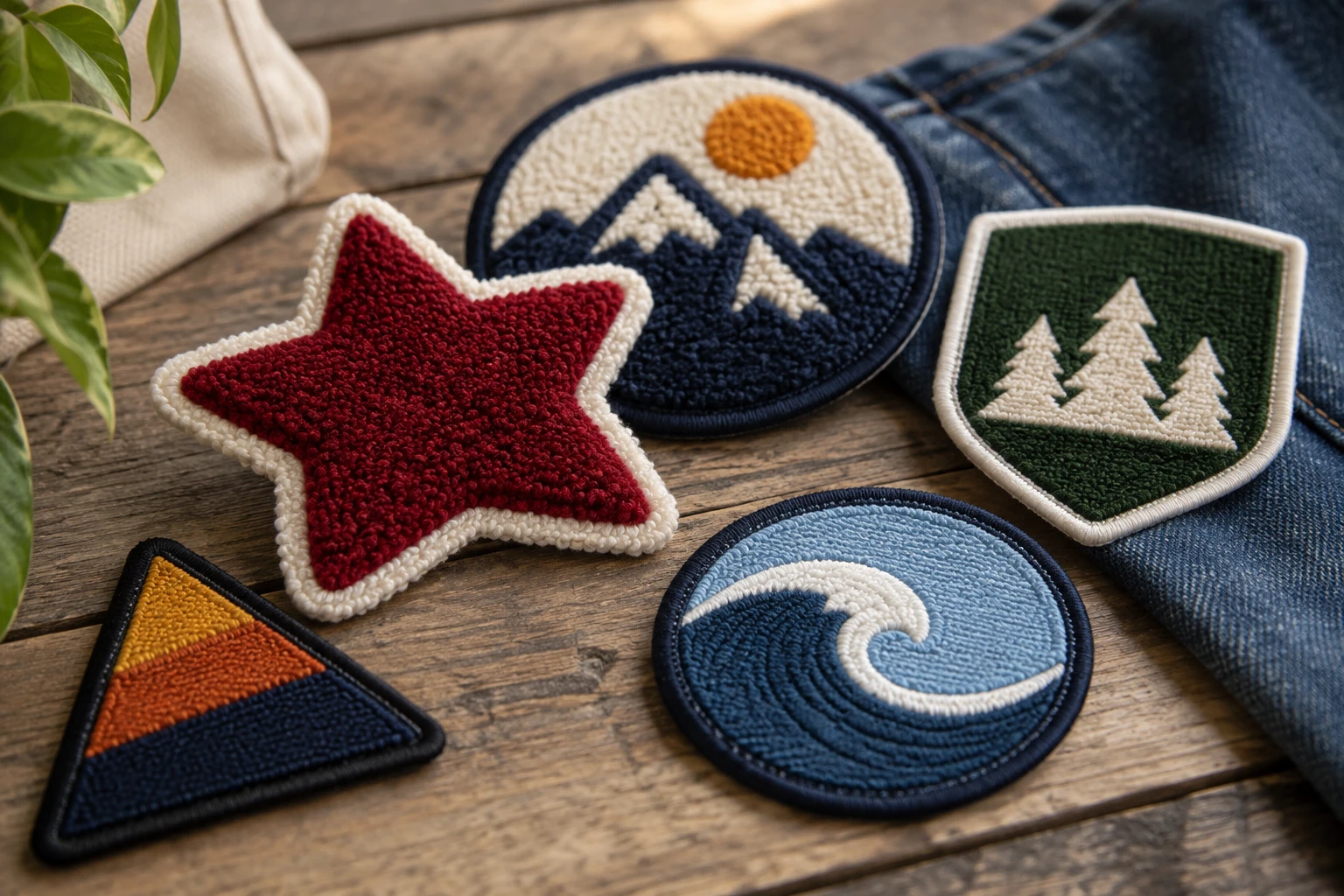
Chenille patches use yarn to create a soft, raised pile, commonly on a felt base. Broad areas gain texture and depth, but the fuzzy surface makes tiny gaps and narrow lettering harder to define.
Woven patches form the design with interlaced threads rather than a raised pile. Their flatter construction accommodates finer detail, although thread still limits how small a feature can become. Neither method reproduces every detail visible in enlarged artwork.
| Factor | Chenille | Woven |
|---|---|---|
| Surface | Soft, raised yarn pile | Flat, closely woven surface |
| Best design fit | Bold initials and broad shapes | Detailed crests, fine outlines and smaller text |
| Garment match | Wool jackets, heavyweight sweatshirts | Polos, shirts, canvas caps |
| Wear concerns | Pile can catch, flatten or collect lint | Surface and edges can snag or abrade |
| Cost drivers | Size, yarn coverage, layers and added embroidery | Size, weave specification, colours and finishing |
| Attachment | Check base, thickness and garment | Check backing, edge and garment |
Will your lettering survive at the finished size?
Judge the artwork at its intended dimensions, not zoomed in on a screen. A hypothetical 100 mm (3.94 in) chenille initial has room for broad strokes; a 60 mm (2.36 in) crest containing a motto is more likely to benefit from woven construction.
Check letters, gaps and the border
- Print the design at actual size and check whether the smallest wording remains readable.
- Look at enclosed spaces in letters such as A, B and R; chenille pile can obscure narrow openings.
- Allow space for the edge finish instead of running text up to the cut line.
- Ask for a production check of thin lines; there is no universal minimum text size that suits every font and construction.
Send your artwork with the intended dimensions so the texture and lettering can be assessed together. Get a free digital mockup, usually within 12 hours, before deciding what to approve.
GET A FREE MOCKUPChenille can be combined with embroidered details, but those details use a different construction and may add cost. If your logo needs gradients or photographic shading, compare printed patches rather than forcing it into thread. Seven Patch Design Mistakes That Cause Rework (and How to Avoid Them) covers artwork checks before approval.
Which patch suits your garment?
A wool varsity jacket or heavyweight sweatshirt generally supports chenille's bulk better than a lightweight polo. Woven is less bulky and often a better starting point for shirt pockets and canvas caps. On a curved cap, check that the patch width does not make its edges stand away from the panel.
- Wool jacket: consider sew-on attachment, checking access through the lining.
- Polo: keep the patch proportionate; a large, stiff backing can restrict stretch or pull the fabric.
- Canvas cap: measure the usable panel, including seams and curvature.
- Nylon shell: check heat sensitivity and waterproof construction before choosing adhesive or stitching.
Do not assume iron-on is safe because the patch accepts adhesive. Heat can damage some shells, while sewing creates needle holes that may affect waterproofness. If the patch itself seems too bulky, compare Patch or Direct Embroidery on the Garment? When Each Makes Sense.
Which lasts better through wear and washing?
Woven's low profile gives it less raised pile to catch during everyday wear, but it is not snag-proof. Chenille can flatten under repeated friction, especially beneath bag straps. Neither material should be described as universally longer-lasting without considering use and care.
Attachment can fail before the patch face does. Iron-on edges may lift after hot washing or tumble drying, particularly if the bond was unsuitable or poorly applied. Follow care instructions compatible with both patch and garment, and avoid brushing or rubbing chenille aggressively.
Confirm an edge finish suited to the shape: tight corners and narrow projections need particular attention. Exposed or poorly secured edges can fray on either construction. Why Patch Edges Fray and How to Stop It explains what to check.
What changes the price?
Do not compare prices without matching dimensions, quantity, backing and edge finish. Chenille's material coverage, felt layers and any added embroidery affect its cost; woven pricing also depends on weave requirements, colours and finishing. Neither is always the lower-cost option.
Include your garment, backing preference and required delivery date with the artwork. We provide a free digital mockup, usually within 12 hours, so you can check the specification before approving production.
GET A FREE MOCKUPThe Customized Patches offers quotes from £60, but that is not a fixed price for either construction. Request like-for-like specifications and identify which artwork changes each option needs. Why Patch Quotes Vary: Size, Stitch Count, Colours and Backing explains the wider factors.
What should you send, and when can production start?
We make patches to order from your artwork, with a 5-piece minimum per design and free shipping across the United Kingdom. Use our free mockup quote form to provide a complete specification rather than just a logo.
- Send the clearest artwork available, plus any wording that must remain readable.
- State width and height in millimetres, quantity per design and preferred patch type.
- Name the garment fabric, placement, intended backing and washing requirements.
- Give your required delivery date and UK destination so timing can be checked.
- Review dimensions, colours, lettering, border and backing before approval.
Our free digital mockup is usually ready within 12 hours, and we produce only after approval. That mockup turnaround is not a production or delivery promise; ask for both timings before committing to an event date. A digital preview shows layout, not the physical feel of chenille pile.
Frequently asked questions
For chenille vs woven patches, which is better for small text?
Woven is generally better because its flat thread structure supports finer lettering. Readability still depends on font, contrast and finished size; ask for a production check rather than relying on enlarged artwork.
Can chenille include an embroidered outline?
Yes, chenille can be combined with embroidered outlines or details. Specify which areas need pile and which need conventional stitching; compare with embroidered patches if most of the design needs defined lines.
Are woven patches waterproof?
No. Woven fabric is not inherently waterproof, and sewing can introduce holes into a waterproof garment. Specify the shell fabric and intended exposure before choosing attachment.
Can both types have iron-on backing?
Both constructions can be made with heat-activated backing, but suitability depends on the patch and garment. Confirm compatibility and application instructions; do not apply heat to a sensitive fabric without checking.
Is chenille always more expensive than woven?
No. Size, quantity, construction and finishing determine the quote. Compare the same dimensions and backing, including any embroidery or extra layers needed to make the chenille version readable.
What is the minimum order, and can I approve the design first?
The minimum is 5 pieces per design. The Customized Patches provides a free digital mockup usually within 12 hours and starts production only after approval.
Ready to produce custom patches for your UK team or brand?
GET A FREE MOCKUP