
How 3D embroidered patches Can Strengthen Your Brand Identity
3D embroidered patches strengthen brand identity by giving logos, initials and symbols a raised, tactile finish that is easy to recognise on clothing and kit. The effect works best for bold shapes with limited small detail. The Customized Patches offers a 5-piece minimum per design and a free digital mockup usually within 12 hours before production.
Key takeaways
- A raised foam layer makes a short logo, initial or bold emblem stand out at a glance.
- 3D embroidery suits simple, confident artwork better than fine text, gradients or detailed illustrations.
- The garment, attachment method and washing routine matter as much as the front design.
- The Customized Patches has a 5-piece minimum per design and produces only after mockup approval.
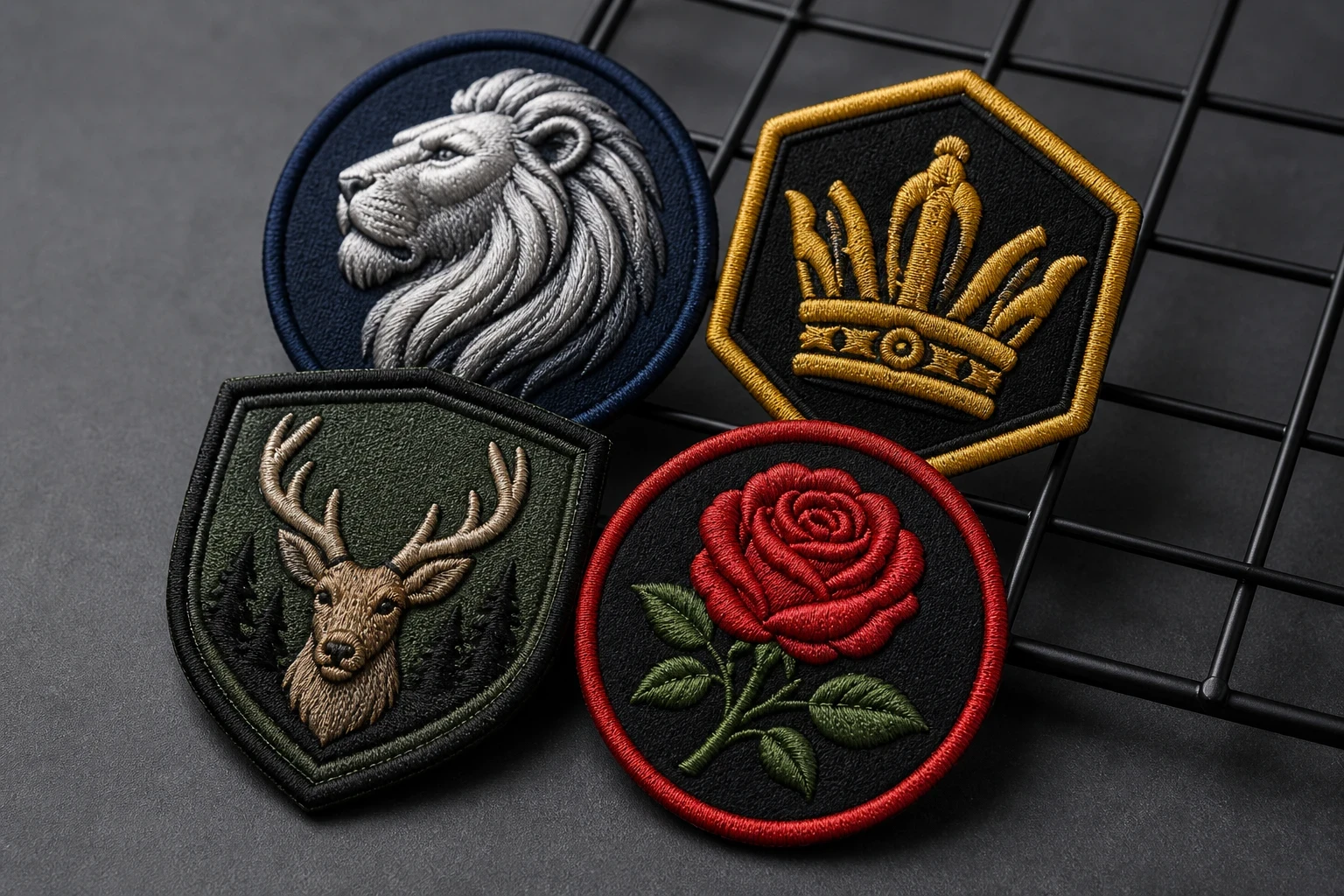
3D embroidered patches strengthen a brand identity by making a logo or emblem raised, tactile and easier to recognise on clothing. The extra height gives a short wordmark, initial or bold symbol more presence than a flat stitch field, particularly on caps, jackets, polos and teamwear.
The result is not automatically better than every other patch. It depends on the artwork, garment and use. The Customized Patches supplies 3D embroidered patches across the United Kingdom, with a 5-piece minimum per design and a free digital mockup usually within 12 hours. Production starts only after you approve the design and specifications.
Why 3D embroidered patches are noticed faster
A brand mark on clothing has to work at arm's length, across a busy changing room, or in a photograph where the garment is not the main subject. A raised section catches light differently from the surrounding thread. That change in shadow can make a simple mountain, letter, animal head or club crest readable before someone has studied the stitching.
There is also a physical cue. People can feel a well-made raised patch on a jacket or cap, which gives the item a more considered finish than a plain printed transfer. That does not make it suitable for every logo, but it can help a brand feel consistent across staff clothing, event merchandise and customer-facing kit.
Recognition comes from repetition
A patch does not build recognition from one appearance. It works through repeated use. The same raised mark on a football club's training top, a coach's jacket and a presentation polo gives supporters and customers several chances to connect the symbol with the organisation.
For a small UK business, that might mean putting one compact mark on work fleeces, delivery jackets and staff caps. For a cadet unit, it may mean a consistent shoulder identifier on outer layers and a separate formal crest on blazers. The identity becomes stronger because placement, colour and proportions stay under control.
What makes a 3D embroidered patch suitable for a brand
The raised effect is created by stitching over a shaped foam layer, then covering and trimming the area so the relief follows the intended design. It works particularly well where the visual idea is clear: a bold initial, a chunky word, a simplified animal, a crest centre or a strong outline.
- Use bold letterforms rather than thin script. Narrow strokes can lose definition at a small finished size.
- Keep the number of thread colours under control so the mark remains clear on a moving garment.
- Give the raised area enough room. A very small foam section may look cramped rather than dimensional.
- Use contrast between the base fabric, border and raised thread so the shape can be read indoors and outdoors.
- Remove tiny decorative details that do not survive reduction. They can be retained in a flat embroidered version if they matter to the identity.
- Check the design at its finished size, not only as a large screen file.
Some logos need a mixed treatment. A raised central initial can sit beside flat embroidery for a supporting line, while a merrowed crest border gives the whole patch a defined edge. This is often more successful than trying to make every part of the artwork stand up.
Simple does not mean basic
A simplified mark can be more recognisable than a detailed one. Consider a biker club back patch, a hospitality polo or a school blazer badge. At a distance, the audience sees the outer silhouette and main colour blocks first. Fine shading and long lines are secondary.
If your identity depends on photographic detail, small gradients or a long paragraph of text, a printed patches option may be the more honest choice. Printed is flatter; that is the point. It can preserve artwork that raised embroidery would have to edit.
Choosing the right patch specification
Brand identity is affected by practical decisions that are easy to overlook at the artwork stage. A patch that looks right on screen can feel wrong on a thin nylon shell, sit awkwardly on a curved cap or peel from a garment that goes through a hot dryer.
| Specification | Best suited to | Brand benefit | Main trade-off |
|---|---|---|---|
| 3D embroidered front | Bold initials, short names, symbols and strong emblems | Raised texture and clear light-catching detail | Not ideal for fine text, gradients or very intricate artwork |
| Flat embroidered front | Traditional crests, detailed linework and formal uniform badges | Reliable stitched detail with a classic appearance | Less tactile and less visibly raised |
| Printed front | Illustrations, photographic marks, shading and small colour transitions | More freedom for detailed artwork and fine text | Flatter appearance and less thread texture |
| Woven front | Small lettering, clean lines and compact labels | Sharper detail at smaller sizes than standard embroidery | Little or no raised texture |
| PVC front | Outdoor clubs, utility clothing and modern industrial branding | Easy-to-clean surface and a solid rubber-like appearance | Different visual language from a fabric or heritage patch |
| Chenille front | Varsity lettering, school teams and large sports emblems | Deep pile and a distinctive collegiate feel | Bulkier texture and less suitable for tiny detail |
Backing should match the way the garment is used. Sew-on is dependable for jackets, heavy workwear and items that will be washed regularly. Iron-on can be convenient for some cotton garments, but heat, flexing and a dryer cycle can cause an adhesive to peel. Velcro is useful for removable identifiers on tactical clothing, bags and panels, but it adds thickness and needs a compatible loop surface.
Nylon shells deserve a separate check. Heat-sensitive outerwear can mark or distort during application, so sew-on or a carefully chosen attachment method may be safer than assuming iron-on is suitable. Wool coaches' jackets and lined garments may also need a production conversation before you order. Our guide to Custom embroidered patches UK Sizing and Backing Options Explained covers the points that affect fit and attachment.
Size is part of recognition. A tiny chest patch can look neat on a polo but lose its identity on a bulky winter coat. A large back emblem may work on a biker jacket or coaches' jacket but overwhelm a school blazer. Measure the available area in inches, then check how the patch sits over seams, pockets, zips and curved panels.
How raised embroidery supports a consistent visual identity
A strong identity is not just a logo file. It is the repeated combination of mark, colour, placement, material and behaviour. A raised patch can become one of those repeatable brand assets, provided the same version is used across orders and the production notes are kept.
- Set one approved artwork version for the main patch and avoid sending several unlabelled revisions to production.
- Record the finished width and height in inches, including the border, rather than describing the size as small or large.
- Keep the same border shape and backing where the garments have similar uses.
- Use a separate specification for dark and light garments if the contrast changes.
- Decide which details are essential to recognition and which can be removed at smaller sizes.
- Keep a photograph or approved digital mockup with your internal brand files.
Not sure whether raised thread, flat embroidery or ink will hold your logo best? Send the artwork and garment details for a free digital mockup, usually within 12 hours, so you can compare the direction before production.
GET A FREE MOCKUPThis matters for organisations with more than one person ordering. A club secretary, kit manager and supplier may each describe the same patch differently. A recorded approved mockup removes guesswork and reduces the chance of a new batch arriving with a different border, backing or proportion.
Examples from real garment types
A football club often needs a crest that can survive movement, contact and repeated washing. A raised ball, initial or central shield can add interest, while the smallest sponsor details may need to remain flat or printed. The right result is usually a controlled combination rather than a completely raised crest.
Hospitality polos need a clean mark that sits comfortably on lighter fabric. A compact raised initial can work on the chest, but a large thick patch may feel too heavy for a service shirt. A school blazer has a different requirement: a traditional flat embroidered crest may communicate formality better than a visibly padded design.
Biker vests and club jackets can support larger, more tactile artwork. The back panel has room for a recognisable top rocker, central emblem and lower text, although long lettering still needs enough height to remain legible. See the guide to biker and motorcycle club patches for considerations around layout and garment use.
Nylon shells, rain jackets and technical outerwear need more care. A patch may need to be sewn rather than heat applied, and stitching through a waterproof garment can affect its construction. The brand may be better served by a removable Velcro panel or a smaller mark placed on a compatible area.
3D embroidered patches compared with other patch styles
There is no single best patch material for every identity. The useful question is what the audience must recognise, how much detail the artwork contains and what the garment experiences during its life. A raised finish is persuasive for tactile, bold branding; it is less suitable where exact fine detail is the priority.
| Patch style | Visual character | Good brand applications | Consider before ordering |
|---|---|---|---|
| 3D embroidered patches | Raised, textured and light-catching | Caps, jackets, sportswear, club merchandise and bold business logos | Artwork needs simplified shapes and sufficient stroke width |
| Flat embroidered patches | Traditional, stitched and formal | School blazers, team crests, uniforms and heritage branding | Tiny details still have practical limits |
| Woven patches | Smooth with fine woven lines | Small labels, compact text and detailed simple marks | Less depth and a flatter hand feel |
| Printed patches | Flat with broad colour and image freedom | Illustrations, gradients, photographic or highly detailed logos | Ink and surface finish do not provide the same thread texture |
| PVC patches | Solid, rubber-like and modern | Outdoor equipment, utility brands and weather-facing applications | Can feel too industrial for traditional clubs or formalwear |
| Leather patches | Natural, understated and premium-looking | Denim, workwear, heritage brands and accessories | Not the best route for many colours or fine embroidered detail |
A brand may also use more than one style in a controlled system. For example, a raised embroidered badge could identify the main clothing range, a woven label could handle small care or product information, and a printed patch could carry an illustrated event graphic. Consistency comes from the rules around use, not from forcing every application into one material.
Ordering details that protect the finished identity
Start with the garment, not just the logo. Tell the maker whether the patch is for a cotton hoodie, nylon shell, wool coaches' jacket, cap, football top, school blazer, backpack or Velcro panel. The fabric, seam position and washing routine influence the suitable size and backing.
- Send the clearest artwork available, preferably a vector file or a high-resolution image with the intended colours identified.
- State the finished patch width and height in inches, and say whether the measurement includes the border.
- Explain the garment type, placement and expected washing or outdoor use.
- Choose the front treatment: raised 3D embroidery, flat embroidery, woven, printed, PVC or another suitable option.
- Select sew-on, iron-on, Velcro or another backing based on the garment and expected handling.
- Confirm the quantity. The Customized Patches has a 5-piece minimum per design.
- Review the digital mockup and ask questions about small text, borders, colours and application.
- Approve the mockup and specifications. Production begins only after approval.
A 5-piece minimum per design suits a small pilot run, a club committee testing a new crest, or a business ordering a few staff jackets. If you need two different sizes or separate colourways, ask whether they count as separate designs. Treating each version clearly at quote stage prevents confusion later.
The free digital mockup is a production checkpoint, not just a sales image. It lets you see the proposed proportions, raised areas, border and backing before anything is made. The Customized Patches usually sends this mockup within 12 hours, although the exact timing can depend on the artwork and information supplied.
Lead times and approval
Do not plan a launch, tournament or uniform handover around an assumed date before the artwork is checked. Approval time, artwork changes, quantity, patch complexity and the chosen garment can all affect the schedule. UK-wide delivery is then arranged against the agreed production plan.
If a team needs patches for a Saturday fixture, send the artwork and garment information early in the week or earlier still for a new design. If a brand is preparing a seasonal collection, approve the patch alongside the garment samples so the size and placement can be checked together.
The safest sequence is simple: quote, mockup, questions, approval, production and delivery. A rushed order with an unapproved logo is more likely to produce an avoidable mismatch than an order that allows one careful review.
Common mistakes that weaken brand presentation
Most disappointing patch orders are not caused by the basic idea. They come from a mismatch between artwork, size, garment and expectation. The following problems are common enough to check before a quote is confirmed.
- Trying to raise every line of a detailed logo. This can create a crowded surface where the important shape is no longer obvious.
- Ordering a patch too small for the text. A wordmark that works on a website header may not work at 2 inches wide on a moving sleeve.
- Assuming iron-on suits all fabrics. Nylon shells, coated materials and some technical garments need extra care.
- Ignoring the back of the patch. A neat front can still be impractical if the backing does not suit the garment or use.
- Using inconsistent colours between batches. A brand file should identify the intended thread or print colours as clearly as possible.
- Putting a large, heavy patch on a light polo. The garment may pull, ripple or feel uncomfortable.
- Forgetting the border in the quoted dimensions. The usable embroidered area is not always the same as the full patch size.
- Approving a screen image without checking the physical context. A patch on a curved cap or seam behaves differently from a flat preview.
- Ordering several near-identical versions without naming them. This increases the chance of the wrong file being approved.
- Treating raised embroidery as a replacement for all other branding. Some messages are clearer as woven, printed or flat embroidered artwork.
One familiar failure is an iron-on patch that peels after a dryer cycle. Another is a detailed crest placed on a Velcro panel where the edge catches during removal. Neither issue means patches are unsuitable; it means the specification needed to reflect the garment's actual life.
Maintenance, application and brand consistency
Follow the care guidance supplied for the selected backing and garment. A sew-on patch usually gives a dependable attachment for regular-use jackets, but the stitching should be checked at the edge after repeated washing. Iron-on applications should be treated carefully, with the garment and adhesive requirements followed rather than relying on a household iron setting.
Name sew-on, iron-on or Velcro on the quote and tell us which garment will carry the patch. We show the proposed backing and raised detail on a free digital mockup usually within 12 hours, then produce only after approval.
GET A FREE MOCKUPAvoid putting a patch specification into a brand manual without noting its use. The instruction for a cotton hoodie may not suit a waterproof jacket or wool outer layer. Record the approved artwork, finished size, backing, placement and any application notes so another supplier or team member can follow the same standard.
If the patch is used on merchandise, keep spare pieces from the same approved batch where possible. If a club changes its crest, separate the old and new versions in storage. A mixture of slightly different emblems on one team can make the organisation look less coordinated even if every individual patch is well made.
How UK organisations can use the raised finish
The most effective uses have a clear job. The patch identifies a group, marks a product range, adds a collectible detail or gives staff clothing a consistent visual cue. It should not be added simply because the surface is available.
- Football and rugby clubs can use a raised initial or simplified crest on training tops, coaches' jackets and supporter merchandise.
- Cadet units and outdoor clubs can use a bold identifier on compatible outerwear or removable Velcro panels.
- Hospitality businesses can place a compact raised wordmark on selected polos, overshirts or caps.
- Independent clothing brands can use a raised emblem on denim, work jackets, caps and heavyweight sweatshirts.
- Schools can reserve the effect for informal sportswear while keeping a traditional flat crest on formal blazers.
- Motorcycle clubs can use bold raised elements on a jacket front or support a larger back design with flat and raised sections.
- Trades and small businesses can add a recognisable mark to work fleeces, vanside bags and staff jackets.
- Event organisers can use a numbered or named patch as a keepsake, provided the lettering is large enough to read.
For customers looking across several UK areas, the UK city pages provide a starting point for local ordering information, while the embroidered patches hub covers the wider range of stitched options. The same production checks apply whether the order is for London, Manchester, Glasgow, Cardiff, Belfast or a smaller town.
A practical decision: should your brand choose 3D embroidery?
Choose 3D embroidered patches if your main mark is bold, your audience will see the garment at a short or medium distance, and a tactile finish supports the character of the brand. It is a strong fit for caps, jackets, teamwear, club clothing and merchandise where texture is part of the appeal.
Choose another method if your identity depends on fine gradients, tiny text, photographic detail or a very light garment. Woven patches can handle compact clean lettering, while printed patches preserve more detailed artwork. A flat embroidered or chenille patches option may suit a traditional team or school better.
There is also room for a planned combination. A business could use a raised logo on outerwear, a woven name label on smaller products and a printed event patch for a one-off campaign. The choice should follow the role of each garment and the way the audience is expected to recognise it.
The final check before approving
- Can someone identify the main mark at the intended viewing distance?
- Does the raised section contain only shapes that will remain clear at the finished size?
- Will the chosen backing suit the fabric, seams and washing routine?
- Have the front colours and border been checked against the actual garment?
- Is the quoted quantity at least 5 pieces for each design?
- Has the free digital mockup been reviewed by the person responsible for the brand?
- Have all questions been resolved before approval?
- Is the final placement recorded for future batches?
If those answers are clear, the patch has a better chance of doing useful brand work rather than becoming decoration that varies from garment to garment. For more ordering questions, see 10 Questions to Ask Before Ordering 3D embroidered patches and the 3D embroidered patches Best Practices for brands guide.
Frequently asked questions
How do 3D embroidered patches strengthen brand identity?
They give a logo, initial or emblem a raised surface that catches light and can be felt on the garment. This helps a bold mark stand out on caps, jackets, teamwear and merchandise. Repeating the same approved shape, colours, size and placement across garments makes recognition more consistent.
What artwork works best for 3D embroidered patches?
Bold artwork with clear silhouettes, short lettering and limited small detail usually works best. Thick strokes, strong colour contrast and a defined border help the raised sections remain readable. Fine script, gradients, tiny text and photographic detail may be better suited to printed, woven or flat embroidered patches.
What is the minimum order for 3D embroidered patches from The Customized Patches?
The minimum order is 5 pieces per design. Different sizes, colourways or substantially different artwork may be treated as separate designs, so state each version clearly when requesting a quote.
How quickly can I see a mockup for 3D embroidered patches in the UK?
The Customized Patches provides a free digital mockup usually within 12 hours. Timing can depend on the quality of the artwork and the information supplied. Production begins only after the mockup and specifications have been approved.
Which backing should I use for a raised patch?
Sew-on is often suitable for jackets, heavy workwear and items washed regularly. Iron-on can be convenient on compatible garments but may peel after heat, flexing or a dryer cycle. Velcro suits removable identifiers and compatible panels. Nylon shells, coated fabrics and wool garments should be checked before choosing heat application.
Are 3D embroidered patches suitable for school blazers and football kits?
They can be suitable for informal schoolwear, sports tops and club merchandise if the design is bold and the patch is not too heavy for the fabric. A traditional flat embroidered crest may be more appropriate for a formal blazer. Football kits may need a mix of raised and flat areas so sponsor details and small lettering stay legible.
Ready to produce custom patches for your UK team or brand?
GET A FREE MOCKUP