
Why brands with photorealistic designs Are Choosing printed patches
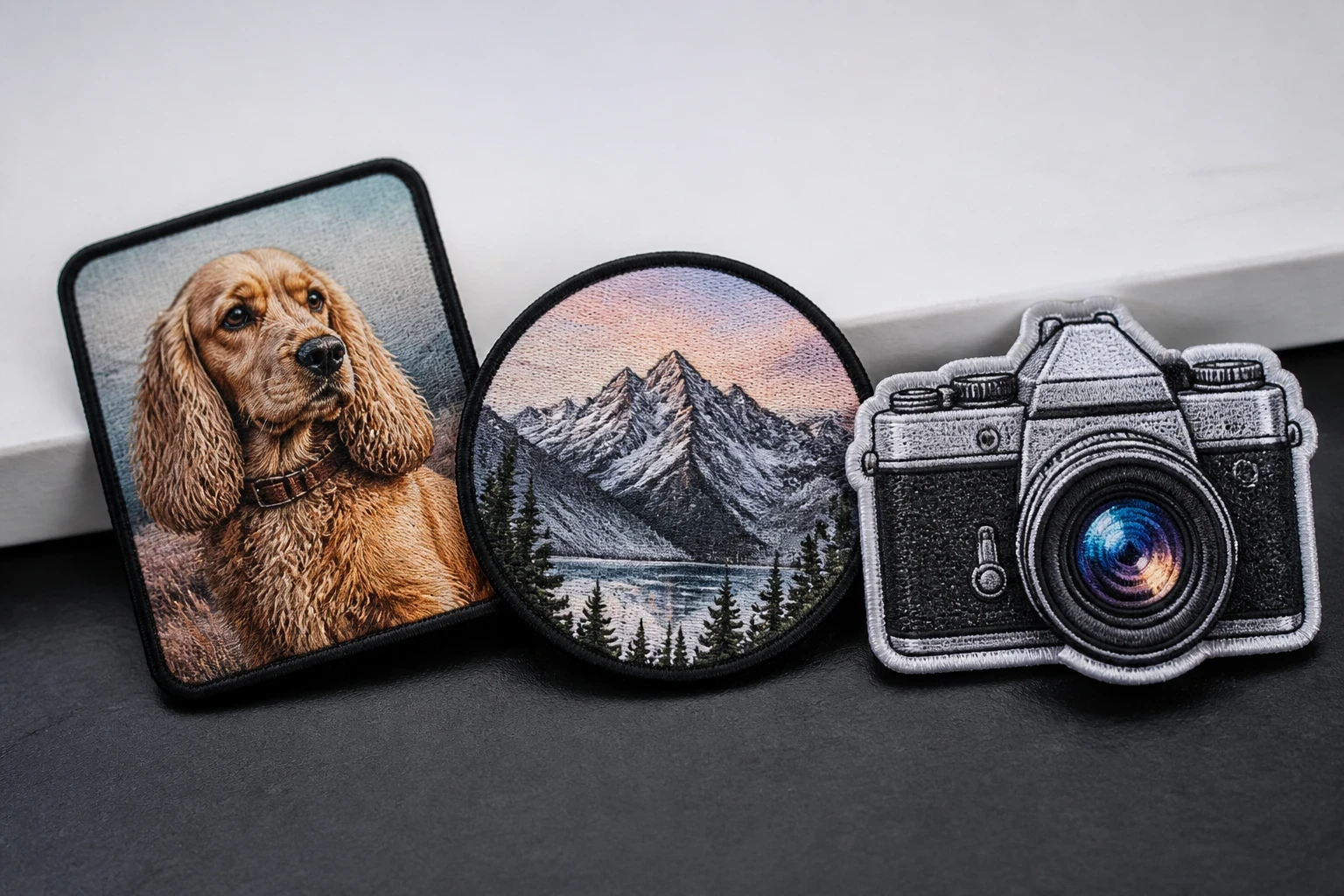
Brands with photographic artwork often choose printed patches because ink can reproduce gradients, shadows, small colour changes and image detail more naturally than stitched thread. The surface is flatter and less textured, but that is useful on logos designed to look like photographs. The Customized Patches supplies UK orders from five pieces per design, with a free digital mockup usually within 12 hours.
Key takeaways
- Printed patches are suited to photographic artwork, gradients, shadows and detailed illustrations that do not translate cleanly into separate thread areas.
- Printed is flatter than embroidery; that is the point when a brand wants the artwork to read like an image rather than a raised stitch design.
- The Customized Patches accepts a minimum of 5 pieces per design, offers a free digital mockup usually within 12 hours, and produces only after approval.
- Garment, size, wash conditions and backing matter as much as the artwork, particularly on nylon shells, wool coaches, Velcro panels and school blazers.
Brands with photorealistic artwork are choosing printed patches because ink handles gradients, shadows, fine colour changes and image detail without turning every part of the design into a separate stitch area. The result is flatter than embroidery, but that is often exactly what a photographic logo needs. It reads more like the supplied artwork and less like a raised textile interpretation.
For UK teams, clothing brands, hospitality businesses and clubs, the decision is not simply printed versus embroidered. It depends on the garment, the viewing distance, the wash routine, the backing and the amount of detail that must survive at the finished size. The Customized Patches has a 5-piece minimum per design, sends a free digital mockup usually within 12 hours, and produces only after approval.
Why photorealistic artwork suits printed patches
A photograph contains continuous changes rather than tidy blocks of colour. Think of a sunset in a brewery logo, a close-up animal eye for an outdoor brand, a painted motorcycle tank, or a food image used by a street-food business. Printed patches can place those tonal changes across the surface without asking thread to imitate every transition.
Embroidery builds an image with thread direction, stitch density and colour changes. That can look excellent for a crest or bold wordmark, but a photographic subject may become simplified. A dark shadow can merge into a nearby outline, a pale gradient can disappear, and tiny highlights may need to be removed. Printing keeps more of the original visual information, provided the artwork is large and clear enough for the intended patch size.
This does not make printed patches a better choice for every logo. A traditional sports crest with strong lettering may gain presence from a merrowed edge and raised thread. A military-style emblem may need the tactile surface of embroidery. The sensible starting point is the design and garment, not a promise that one construction suits every order.
Printed is flatter, and that can be an advantage
Some buyers use the word flat as if it means poor quality. It does not. A flatter patch can sit neatly on a shirt chest, work beneath a jacket, fit against a Velcro panel, and preserve fine artwork without a heavy pile of thread. It is useful for brands that want the patch to behave like a small label rather than a raised badge.
The trade-off is tactile impact. You will not get the same stitched relief as a traditional embroidered badge, a chenille letter or a 3D foam design. If the physical feel is part of the identity, compare embroidered patches and 3D embroidered patches before choosing.
What printed patches reproduce well
The strongest candidates usually share one feature: the artwork depends on gradual change. That might be a realistic illustration, a product photograph, a landscape used by an outdoor company, or a complex mascot with several shaded areas. Printed patches also make sense where the customer wants a small image on a workwear item without reducing it to a few heavy thread colours.
- Photographic logos with skin tones, fur, metal, smoke, water or reflective surfaces.
- Illustrations containing soft shadows, highlights and blended backgrounds.
- Brand artwork with more colours than would be practical to separate into thread blocks.
- Small promotional runs where a business wants five or more patches per design rather than a large stock order.
- Event, hospitality and retail clothing where the artwork needs to match a supplied campaign image.
- Detailed back patches or sleeve badges that will be viewed from a short distance.
The finished size still sets the limit. A high-resolution file cannot make a three-line slogan readable on a 2-inch patch if the letters are physically too small. We check the design at the proposed size, not only on a large computer monitor. If the artwork is busy, increasing the patch to 3, 4 or more inches may protect detail, though the available garment space must also be considered.
Where the method needs care
Very fine text, hairline borders and tiny isolated marks remain risky. Ink may show them in a digital proof, but the viewer may not read them once the patch is sewn onto a moving garment. A photographic face can work; a face alongside a 1.5mm caption may not. We would rather flag that at mockup stage than allow a screen-perfect file to become a disappointing small badge.
Colour should also be discussed honestly. Screens, phone displays and garment fabrics do not show colour identically, and a dark nylon shell can change how a patch is perceived. The mockup helps us review the overall appearance, but it is not a physical colour swatch. Send any brand colour references with the artwork so the production file has useful direction.
Printed patches compared with embroidery and other constructions
The right comparison is about use, not just appearance. A football club may choose embroidery for a simple badge on a polo but printed construction for a sponsor panel containing a photographic campaign. A biker club may want a large embroidered back crest for texture while using a printed sleeve patch for a detailed machine illustration.
| Patch type | Best for | Main visual character | Watch before ordering |
|---|---|---|---|
| Printed patches | Photorealistic designs, gradients, shaded illustrations and image-led branding | Flat surface with ink-based detail and smooth tonal changes | Small text and very fine lines may lose clarity at a small finished size |
| Embroidered patches | Bold crests, names, team badges and designs where texture matters | Raised thread, visible stitch direction and a traditional badge appearance | Gradients and photographic detail need simplifying into thread areas |
| Woven patches | Fine lettering, thin lines and a flatter textile badge with woven detail | Low-profile, fabric-based surface with a neat finish | Photographic shading is still interpreted through woven colour and scale |
| PVC patches | Outdoor, workwear and designs needing a moulded, wipe-clean surface | Rubber-like raised or flat shapes with strong solid colour | Photographic imagery and soft gradients are not the natural strength of the material |
| Chenille patches | Varsity lettering, school teams and bold collegiate artwork | Fuzzy, high-pile texture with strong visual presence | Fine photographic detail is unsuitable for the thick yarn surface |
| Leather patches | Heritage clothing, bags, makers' marks and understated branding | Natural or synthetic leather face with stamped or printed identity | The material and available mark-making method restrict tiny image detail |
A patch maker should not force a realistic image into a material chosen for a completely different effect. Our printed patches guide explains the construction in more detail, while the comparison of printed patches vs embroidered patches is useful if the same logo is being considered for two garments.
There is also a practical hybrid approach. A brand can use a printed image area with a stitched border, or use embroidered patches for a simple primary crest and printed patches for a detailed secondary graphic. That gives each part of a clothing range the finish it needs instead of making one patch type carry every job.
Choosing the size, shape and edge
Size is the first production decision that affects detail. Measure the usable space rather than the whole garment panel. On a polo, the chest may allow a compact 3-inch badge, while a back jacket design may need 8 to 12 inches to make a detailed subject recognisable. Sleeves, caps and small bags often need a more restrained shape.
- Use the garment placement as the starting measurement and record width and height in inches.
- Keep the most important face, product or symbol away from the edge so it is not crowded by the border.
- Ask for a shape that follows the artwork where that improves recognition; round, shield, rectangle and custom silhouettes all have different placement effects.
- Allow room for an edge finish and for the backing to sit cleanly on the garment.
- View the design at actual size before approving it. A large design on a monitor can hide problems caused by tiny lettering.
A merrowed crest gives a rounded, corded edge that suits many classic embroidered badges. Printed patches may use a different edge treatment depending on the shape and construction. Do not copy the border from an old embroidered sample without checking how the new surface will be cut and finished.
Not sure whether thread or ink will hold your logo? Send the artwork and garment details for a free digital mockup, usually within 12 hours, and compare the options before you produce.
GET A FREE MOCKUPThe garment changes the specification
A cotton polo, polyester football shirt, nylon shell and wool coach jacket do not behave in the same way. Fabric weight, weave, heat sensitivity and surface texture all affect the backing and fitting method. A patch that sits neatly on a smooth hospitality polo may need sewing on a slippery nylon jacket.
Velcro panels need the hook or loop side specified clearly. Removable patches are useful for cadet units, security teams and outdoor groups, but the panel must be large enough and positioned where the patch will not catch on equipment. A school blazer may suit sewing more than iron-on if it is worn and cleaned regularly.
Backing choices for teams, brands and businesses
Backing is not an afterthought. It decides how the patch attaches and how practical it is for the garment owner. Sew-on is usually the most flexible option for jackets, bags and uniforms because it avoids relying on adhesive alone. Iron-on is convenient for suitable fabrics and occasional use, but it must be applied with the correct heat, pressure and time.
- Sew-on backing: a dependable choice for nylon shells, wool coaches, heavy jackets, workwear and items that will be washed frequently.
- Iron-on backing: useful for suitable cotton or blended garments when the customer can follow application instructions and avoid excessive heat.
- Velcro backing: practical for removable identification on panels, tactical clothing, outdoor equipment and some club garments.
- Adhesive options: useful for temporary display or selected products, but not a substitute for stitching where the patch will be pulled or repeatedly washed.
The familiar failure is an iron-on patch that looks fine on day one and peels after a dryer cycle. That can happen when the garment fabric, heat setting, pressure, washing method or patch adhesive is unsuitable. We ask where the patch is going before recommending a backing. If the item matters, sewing is often the safer long-term route.
For teams and clubs, consider how the patch will be replaced. Sew-on badges are more permanent, while Velcro allows a unit or sponsor panel to change. For a clothing brand, the decision may be about customer convenience: a ready-to-iron patch is simple, but the care instructions still need to be supplied clearly.
Artwork preparation for a realistic result
Start with the highest-quality file available. A vector logo is useful for clean text and shape, while a high-resolution raster image is needed for photographic artwork. Do not enlarge a small social media image and expect it to contain detail that was never present in the original file.
- Send the original logo, photograph or illustration rather than a screenshot where possible.
- Identify the parts that must remain exact, such as a face, product label, sponsor mark or registered brand colour.
- Remove accidental compression, unused transparent space and background objects that do not need to appear on the patch.
- Check text at the proposed finished size and simplify wording if it becomes too small to read.
- State the intended garment colour, because a dark backing or dark clothing can alter contrast.
- Include any existing patch photograph if the new design must match a club, franchise or uniform system.
It helps to provide one clean version and one annotated version. The clean file shows what should be produced; the notes explain priorities. For example, a café may say that the illustrated coffee cup must stay detailed but the small opening-hours line can be removed. Those instructions are more useful than simply asking for every element to be kept.
Read our guide to Printed patches Best Practices for brands with photorealistic designs if the file contains several image layers, transparent effects or a complex background. The purpose of a mockup is not only to show a pretty preview. It is where scale, legibility and production choices are checked together.
How the UK ordering process works
Start by sending the artwork, quantity, finished size and garment details. The minimum is 5 pieces per design, so a small business can test a design without committing to a large run. If you need three different designs, each design is assessed separately rather than assuming five pieces across the whole basket.
The Customized Patches usually provides a free digital mockup within 12 hours. Check the image placement, border, shape, backing, dimensions and any changes to tiny text. This is the point to ask questions or request amendments; production begins only after you approve the artwork.
Once approved, the order is prepared for production and UK-wide shipping is arranged to the supplied address. Delivery timing depends on the specification, quantity and current production schedule, so allow room for an event, kit launch or uniform deadline. A rush request should be stated at quotation stage, not after approval.
Details to include in a quote
- The number of pieces per design, with at least 5 pieces for each design.
- The finished width and height in inches, or the available garment space.
- The garment type: football shirt, polo, jacket, bag, blazer, uniform, cap or Velcro panel.
- The preferred backing: sew-on, iron-on, Velcro or another agreed option.
- The artwork file and any brand colour references.
- The date the patches are needed and the UK delivery postcode.
- Any requirement for individual packing, multiple designs or matching an existing patch.
Price is affected by size, quantity, shape, backing, artwork handling and delivery requirements. A small run of detailed printed patches is not priced in exactly the same way as a large run of simple badges. For more context, see How Much Do printed patches Cost in the UK?, then ask for a quote based on your actual specification.
Real examples from our team
A football club badge usually has a different priority from a sponsor's campaign patch. The club crest may need bold embroidery, clean lettering and a traditional edge. The sponsor may supply a photograph of a player, product or venue that is better suited to printing. Both can sit on the same kit without using the same construction.
For a cadet unit, a removable Velcro patch can make practical sense when identifiers change between activities. A detailed crest can be printed, but the backing needs to match the existing loop panel and the patch needs enough contrast against the uniform. We would also check whether the badge will rub against webbing or equipment.
Hospitality polos are another common case. A restaurant may want a small illustrated dish, cocktail or building on the chest. On a 2.5-inch patch, the focal image needs to be clear and the wording restrained. If a designer sends a full menu, address and social media handles, the right answer may be a larger back patch or a simpler front version.
Name sew-on, iron-on or Velcro on the quote and include the garment type. We will show the proposed back and placement on a free digital mockup, usually within 12 hours, before production starts.
GET A FREE MOCKUPBiker and motorcycle club artwork often mixes bold text, flames, machines and shaded figures. A large back design gives a photographic motorcycle more room than a small sleeve badge. The customer may still choose an embroidered border for texture, especially if the patch is intended to sit alongside traditional club patches. See our guide to biker and motorcycle club patches for the wider garment context.
School blazers need particular care because the garment is worn often and may be cleaned repeatedly. A printed house emblem can preserve a detailed illustration, but the school should decide if it wants a permanent sew-on badge or a simpler application method. A smooth printed face will not replace the formal feel of a heavy embroidered school crest, so the visual brief matters.
Common mistakes that make detailed patches underperform
Most problems begin before production. The artwork is sent at social-media resolution, the proposed patch is too small, or the customer selects backing without mentioning the garment. These are fixable if they are raised at quotation and mockup stage.
- Choosing a finished size from a computer preview rather than measuring the garment.
- Keeping tiny wording because it is technically visible in the source file.
- Assuming a dark design will look the same on a dark jacket without checking contrast.
- Selecting iron-on for nylon, textured wool or a garment that will go through a demanding wash routine.
- Approving a mockup without checking the backing, edge, dimensions and placement.
- Expecting printed patches to have the raised texture of embroidery.
- Ordering several designs under one quantity and overlooking the 5-piece minimum per design.
- Approving production before all changes have been included in the final artwork.
The last point matters. A mockup may be free, but approval is still a production instruction. Check spelling, colours, shape, size, backing and quantity together. Once the artwork is approved, production follows that agreed specification rather than an earlier email attachment.
For a fuller checklist, read Common Mistakes to Avoid When Ordering printed patches. If your design is not photographic but relies on very fine lettering and thin woven lines, Fine-detail woven patches UK Sizing and Backing Options Explained may point you towards a more suitable construction.
Are printed patches the right choice for your brand?
Choose printed patches when the artwork depends on image detail, blended colour, realistic shading or a low-profile surface. They are especially useful for promotional clothing, outdoor imagery, food and drink brands, detailed mascots, event graphics and small-batch tests where the design needs to be seen as supplied.
Choose another construction when texture, raised thread, moulded durability or a heritage finish is central to the brief. Embroidery may be stronger visually for a simple crest. Woven construction may suit thin lettering. PVC may suit equipment exposed to dirt and moisture. Chenille may suit a school or varsity letter. Leather may suit a heritage maker's mark.
The sensible route is to send the artwork and garment information rather than deciding from a product photograph alone. The Customized Patches can then show the proposed result on a free digital mockup, usually within 12 hours. You can review the specification before paying for production, and no patches are produced until the design is approved.
A short decision check
- Does the design contain realistic shading, gradients or photographic detail?
- Will a flatter surface suit the clothing better than raised thread?
- Is the proposed patch large enough for the key image and any essential text?
- Will the garment be washed, dried, worn outdoors or exposed to rubbing?
- Does the patch need to be permanent or removable?
- Do you have at least 5 pieces for each design?
- Can you review and approve a digital mockup before production?
If the answers point towards printing, send the artwork, dimensions, quantity and garment details for a quotation. UK-wide delivery can be arranged, and the quotation can include the backing needed for the actual item rather than a generic recommendation.
Frequently asked questions
Why are brands choosing printed patches for photorealistic designs?
Printed patches can reproduce gradients, shadows, small colour changes and photographic detail more naturally than a design made from separate stitched areas. They have a flatter face, which suits brands that want an image-led finish rather than raised thread. The finished size still needs to be large enough for the important detail.
What is the minimum order for printed patches?
The minimum is 5 pieces per design. If you order three different designs, each design needs to meet the 5-piece minimum. The minimum suits small UK brand tests, club runs, event clothing and replacement badges without requiring a large quantity from the start.
How quickly can I see a printed patch mockup?
The Customized Patches usually sends a free digital mockup within 12 hours. The mockup lets you check the artwork, size, shape, border, backing and placement. Production starts only after you approve the final design, so changes should be raised before approval.
Are printed patches better than embroidered patches?
Neither is best for every design. Printed patches are often better for photographs, gradients and detailed illustrations, while embroidery suits bold crests, simple lettering and customers who want visible stitch texture. The garment, finished size, wash routine and intended appearance should decide the construction.
Can printed patches go on nylon jackets and Velcro panels?
They can, but the backing must match the garment and use. Nylon shells may be better suited to sewing than heat application, while Velcro panels need the correct hook or loop side and enough panel area. Tell us the garment type and whether the patch must be removable when requesting a quote.
Do printed patches fade or peel after washing?
Performance depends on the construction, garment, application method and care routine. An iron-on patch can peel if it is applied to unsuitable fabric, with insufficient heat or pressure, or put through a demanding dryer cycle. Sewing is often the safer choice for frequently washed workwear, jackets and uniforms. Follow the supplied care guidance.
Ready to produce custom patches for your UK team or brand?
GET A FREE MOCKUP