
Printed patches Trends to Watch in 2026
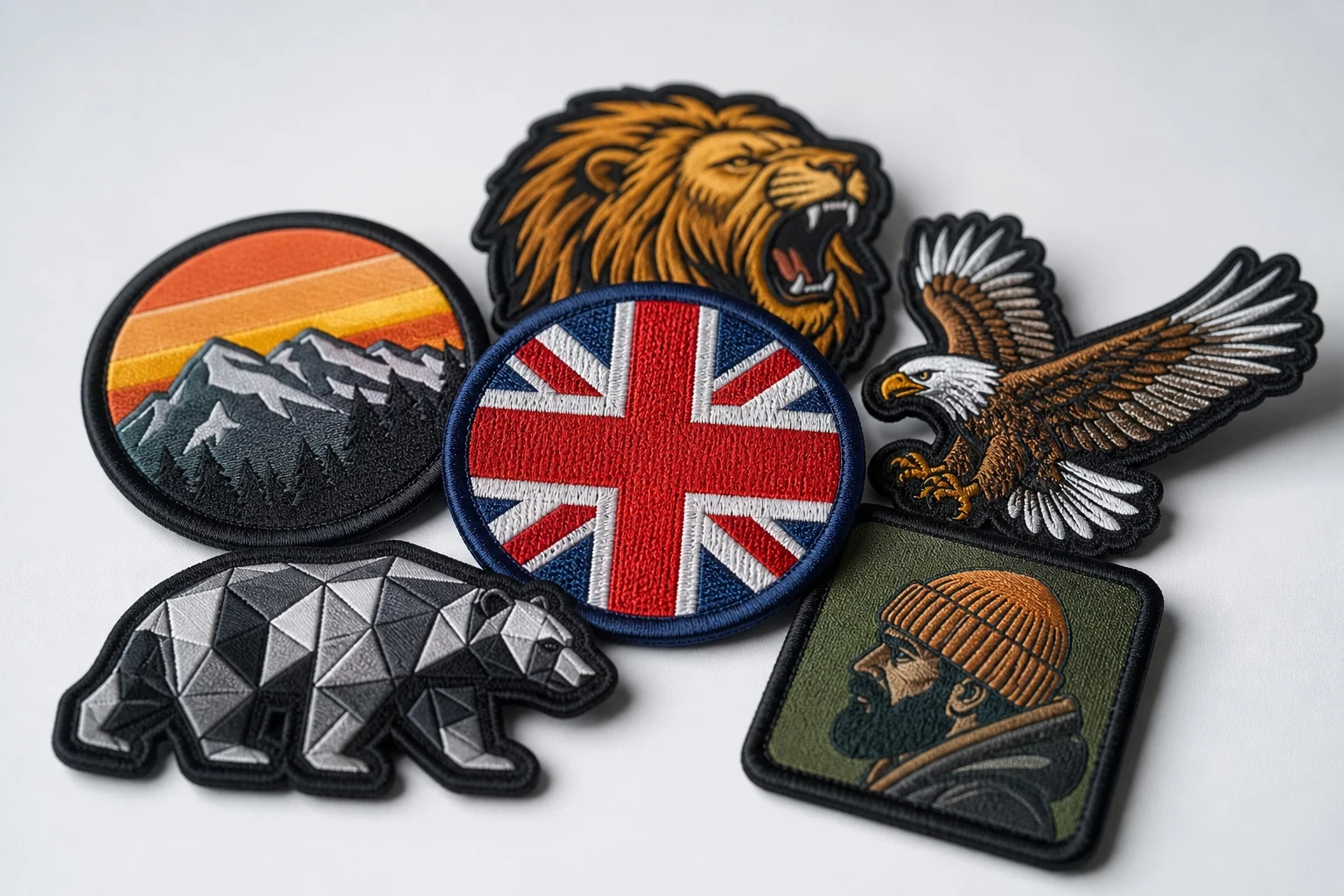
Printed patches in 2026 are becoming more detailed, flatter, lighter, and more closely matched to digital brand artwork. UK teams and businesses are using them for photorealistic graphics, short runs, uniform branding, and Velcro panels. The Customized Patches offers a 5-piece minimum, with a free digital mockup usually supplied within 12 hours before production.
Key takeaways
- Printed patches suit gradients, photographs, fine shading, and artwork that would lose detail in thread.
- The 2026 preference is for flatter, lighter patches that sit neatly on polos, jackets, bags, uniforms, and Velcro panels.
- A printed patch is only as useful as its backing: sew-on, iron-on, adhesive, and Velcro each suit different garments and working conditions.
- The Customized Patches has a 5-piece minimum per design, supplies a free digital mockup usually within 12 hours, and produces only after approval.
Printed patches in 2026 are moving towards sharper detail, flatter finishes, lighter construction, and artwork that stays close to the original digital file. UK teams, brands, clubs, and businesses are choosing them for photographs, gradients, sponsor marks, staff uniforms, and short-run tests where thread would simplify the design.
The practical answer is simple: choose printed patches if your priority is image detail and a smooth surface, not raised texture. The Customized Patches supplies a 5-piece minimum per design across the United Kingdom, sends a free digital mockup usually within 12 hours, and produces only after you approve the artwork.
The biggest printed patches trends for 2026
Practical ordering needs tell you more than any colour forecast. Football clubs are asking for photographic anniversary badges. Hospitality groups want small, clean marks on black polos. Cadet units and schools still need legible identity patches, but they are also asking for names, dates, and detailed crests that must remain readable at a modest size.
Printed patches are not replacing every other patch type. They are becoming the sensible option for a particular job: reproducing artwork with tonal changes, tiny visual details, or a flat face. If a design depends on raised thread, a 3D embroidered patch may be a better fit. If it needs a soft, high-pile sports look, chenille patches deserve a look.
- Photorealistic and shaded artwork rather than only flat-colour logos.
- Flatter patch faces for modern workwear, hospitality clothing, and retail merchandise.
- More use of removable Velcro panels for teams, events, security clothing, and clubs.
- Small quantities used to test a new badge before a larger repeat order.
- Clearer separation between decorative patches and patches intended for hard daily wear.
- Artwork prepared for both digital screens and physical fabric, with fewer tiny details that disappear at patch size.
One point is worth stating plainly: printed is flatter; that is the point. A printed patch does not try to imitate a heavily stitched crest. It gives you a smooth image surface, which can be more suitable for a detailed illustration, a tonal gradient, or a restrained corporate mark.
Why flatter, more detailed patches are gaining ground
Many current brand files are designed on screens first. They contain soft shadows, photographic textures, thin outlines, and several shades of one colour. Embroidery can handle plenty of detail, but thread has physical limits. A line that looks clear on a laptop may need widening, and a gradient may become a few thread colours rather than a gradual transition.
Printed patches can preserve more of that original artwork on the face of the patch. This is useful for a brewery illustration, a mountain scene on an outdoor club badge, a hospitality emblem with fine lettering, or a football tournament mark with several colours. It does not mean every fine line will remain readable at any size. A 2-inch patch still has less working room than a 4-inch patch.
Photorealistic graphics and controlled shading
Photorealistic does not have to mean a literal photograph. It may be a painted animal, a detailed vehicle, a landscape illustration, or a portrait-style mascot. The benefit is the ability to retain changes in tone that would otherwise be reduced to blocks of thread or simplified shapes.
For artwork like this, start with the clearest source file available. A high-resolution PNG, PDF, SVG, or vector file gives the artwork team more to work with than a screenshot copied from social media. Our guide to printed patches best practices for brands with photorealistic designs covers the decisions that affect the final face.
Flat does not mean plain
A flat surface can still carry strong contrast and a carefully chosen border. It often works well on nylon shells, cotton twill jackets, football training tops, aprons, caps, kit bags, and retail garments. A business may prefer it because the patch looks closer to its digital identity than a visibly textured embroidered version.
There is a trade-off. Printed faces can show wear, rubbing, and fading differently from embroidered faces. A biker vest that is exposed to rain, road dirt, and repeated abrasion may need a different construction from a staff polo worn indoors. The garment, washing routine, and placement should be discussed before the quote is final.
Printed patches versus embroidered, woven, and PVC options
The right patch is determined by the design and the garment, not by a general claim that one method is best. A football club crest may look excellent embroidered, while a sponsor graphic with a photograph may be clearer printed. A narrow piece of small lettering may suit woven construction, and a wet-weather kit may call for PVC.
| Patch type | Best suited to | Main visual feature | Point to check before ordering |
|---|---|---|---|
| Printed patches | Photographs, gradients, illustrations, fine shading, and detailed brand artwork | Smooth, flat image face | Artwork size, colour contrast, wash use, and suitable backing |
| Embroidered patches | Traditional crests, bold logos, uniforms, clubs, and high-contrast lettering | Raised thread and visible stitch texture | Very small text and tightly packed detail may need simplifying |
| Woven patches | Fine lettering, narrow lines, compact logos, and a flatter textile appearance | Dense woven surface with controlled detail | Very fine artwork still needs enough physical size to read |
| PVC patches | Outdoor kit, workwear, tactical clothing, and wet conditions | Raised rubber-like surface | Shape, colour, flexibility, and the chosen attachment method |
| Leather patches | Heritage branding, denim, bags, caps, and premium casual garments | Natural or stamped leather appearance | Leather character, edge finish, and whether the design suits embossing |
If you are comparing a smooth printed face with stitched texture, our guide to printed patches vs embroidered patches sets out the usual trade-offs. For a more compact woven surface, see woven patches and consider how the design will be viewed from normal standing distance rather than only on a screen.
Backing makes just as much difference as the face. Sew-on is dependable for many jackets and bags. Iron-on can be convenient, but it is not the answer for every nylon shell or heavily washed garment; iron-on patches can peel after a dryer cycle when the surface and heat were wrong. Velcro is useful for removable identifiers, but the hook-and-loop panel must be planned into the garment or uniform.
2026 backing and garment choices
The growth in removable kit is one of the most practical changes we expect to see. A football club may need one base badge with changeable tournament or sponsor panels. A security company may need staff identifiers that can be removed before laundering. A club jacket may use Velcro because members want to change event patches without replacing the garment.
Not sure whether thread or ink will hold your logo? Send the artwork and garment details for a free digital mockup usually within 12 hours. We compare the practical options before production, and we produce only after approval.
GET A FREE MOCKUP- Sew-on backing is a strong general choice for jackets, bags, wool coaches, denim, and garments that will be washed repeatedly.
- Iron-on backing is useful where a smooth compatible fabric and correct heat application are available, but test it on nylon, coated fabric, and garments that enter a tumble dryer.
- Velcro backing suits removable panels, tactical clothing, event uniforms, and kit that needs regular reconfiguration.
- Adhesive backing can suit short-term displays or samples, but it should not be treated as a universal replacement for sewing.
- A merrowed edge gives a traditional bordered appearance, while a clean-cut edge may suit a modern illustrated shape or a detailed printed design.
A wool coaches jacket, for example, often benefits from sewing because the fabric has body and the patch may be handled frequently. A nylon shell needs more care: heat can mark or distort the outer fabric, and a backing selected without checking the coating may fail. School blazers bring another consideration, as a crest must remain neat through repeated washing and everyday rubbing against desks and bags.
The size should be agreed in inches, not only described as small or large. A 2-inch badge may suit a chest placement, while a 3.5-inch back patch gives lettering more room. Measure the available panel, check the seam lines, and remember that a curved sleeve can make a rectangular patch appear narrower than it did on a flat proof.
Colour, contrast, and artwork rules that will matter
Printed patches can reproduce more colour variation than a basic thread design, but colour on fabric is still a physical result rather than a screen promise. Your phone, laptop, proof, and garment may all show a shade differently. Strong contrast usually matters more than chasing an exact appearance on an uncalibrated monitor.
Use contrast before adding more detail
A dark navy logo on black fabric may look sophisticated in a brand guide but disappear at two metres. A thin white outline or lighter border can solve the problem more effectively than adding extra decorative detail. For clubs, the badge should be readable from the touchline. For hospitality teams, the name or company mark should still be clear across a counter.
- Keep the smallest lettering large enough to read at the finished patch size.
- Avoid relying on two near-identical shades to separate important shapes.
- Show the complete artwork, including borders, dates, sponsor marks, and intended text.
- Tell us if a colour must be matched closely to an existing uniform or brand guide.
- Check the proof at its intended physical dimensions, not only enlarged on screen.
Artwork supplied as a low-resolution image may still be usable, but it can limit the result. We may need to redraw, simplify, or ask for a better file. That is preferable to quietly producing a patch where the small writing has turned into a dark line. Our guide on how to choose the right printed patches for your brand covers logo structure, placement, and material decisions.
Who is likely to use printed patches in the UK in 2026?
The audience is broader than fashion labels. We quote for football clubs, cadet units, schools, hospitality businesses, breweries, gyms, outdoor groups, motorcycle clubs, event teams, workwear suppliers, and small brands launching a first run. Their requirements differ, but most want a patch that represents the supplied artwork without unnecessary alteration.
- Football and rugby clubs can use detailed tournament badges, sponsor panels, player or staff identifiers, and anniversary marks.
- Cadet units and youth organisations can use clear unit insignia, activity badges, and removable event panels.
- Schools can order blazer crests, house identifiers, club badges, and replacement patches for uniform stock.
- Hospitality businesses can place a flat brand mark on aprons, polos, overshirts, and caps without adding a bulky raised face.
- Small businesses can test a 5-piece minimum before committing to a larger merchandise or uniform order.
- Biker and motorcycle groups can use printed artwork for scenes, graphics, and colour-rich back panels, while checking the effect of abrasion and weather.
- Retail and event brands can create limited design variations without ordering several hundred units before demand is known.
Motorcycle clothing needs a careful conversation about placement and backing. A printed patch may reproduce a complex graphic well, but the back of a leather or textile vest can experience more rubbing than a display garment. Our biker and motorcycle club patches hub is a useful starting point for shape, scale, and attachment questions.
UK-wide delivery also affects planning. A club in Manchester, a school in Cardiff, a brand in London, and a business in Belfast may all have different event dates and garment suppliers. Put the required date, quantity, finished size, backing, and delivery postcode into the first enquiry so the production discussion starts with useful information.
Quantities, pricing, and what affects a 2026 quote
The Customized Patches has a 5-piece minimum per design. That makes small tests possible, but the price per patch may not match a larger run because artwork preparation, setup, finishing, and packing are spread across fewer pieces. Ordering five patches is not simply the same production process divided by five.
The main quote variables are finished size, quantity, shape, artwork complexity, edge treatment, backing, and any special packaging or delivery requirement. A 2-inch circular logo and a 4-inch shaped back patch should not be compared as if they use the same amount of material or finishing time.
| Quote detail | Why it affects the price or result | Information to send |
|---|---|---|
| Finished size | Larger patches use more face material and give detailed artwork more room | Width and height in inches, or the diameter for a circle |
| Quantity per design | Larger runs spread preparation across more pieces | Exact number of each artwork, including any variations |
| Backing | Sew-on, iron-on, adhesive, and Velcro need different finishing | The garment, washing routine, and whether removal is required |
| Shape and edge | A shaped cut or bordered edge changes the finishing work | Artwork outline and preferred edge appearance |
| Artwork | Fine detail, colour changes, and low-resolution files may require preparation | Vector, PDF, PNG, or the clearest available original file |
| Deadline and postcode | Delivery planning depends on the required date and destination | Event date, approval date, and UK delivery postcode |
For a fuller explanation of the figures behind a UK order, read How Much Do printed patches Cost in the UK?. The useful habit is to ask for a quote based on the finished specification, not a vague request for the cheapest patch. That prevents a low initial figure from becoming unsuitable once size, backing, and artwork changes are added.
Name sew-on, iron-on, or Velcro on the quote and tell us the garment. We show the correct back on a free digital mockup usually within 12 hours, then produce only after you approve the specification.
GET A FREE MOCKUPHow to order printed patches without avoidable delays
Start with the garment and the job. Tell us if the patch is going on a football shirt, a nylon shell, a wool coaches jacket, a school blazer, a canvas bag, a leather vest, or a Velcro panel. The same printed face can need a different backing or edge depending on that information.
- Send the artwork and explain where the patch will be used.
- Confirm the finished width and height in inches, plus the shape and edge preference.
- Choose the attachment method: sew-on, iron-on, adhesive, or Velcro.
- State the quantity for each design, remembering the 5-piece minimum per design.
- Give the delivery postcode and any event, launch, match, or uniform date.
- Review the free digital mockup, usually supplied within 12 hours.
- Check the wording, dimensions, colours, backing, and placement before approval.
- Production begins only after approval, so corrections can be made before materials and finishing are committed.
The mockup is not a decorative extra. It is where a club spots a misspelt year, a brand sees that its pale logo disappears on a dark jacket, or a school confirms that the crest has enough room around the edge. It also gives everyone a shared reference for the physical size rather than relying on a file preview.
Lead time depends on the specification, quantity, approval date, and delivery requirements. A small straightforward order may move differently from a large batch with several designs and individual backing choices. If the patches are needed for a match, launch, graduation, trade show, or event, say so at the start rather than after approval.
Mistakes to avoid before approving a patch order
Most problems are not mysterious manufacturing failures. They begin with an unclear file, an untested backing, an unmeasured garment panel, or an assumption that a screen image is the same as a finished patch. A few minutes spent checking the specification can prevent a whole batch from being wrong for its intended use.
- Do not approve a patch without checking the actual finished dimensions in inches.
- Do not put a heat-sensitive nylon shell straight into an iron-on plan without checking compatibility.
- Do not assume a dryer cycle is harmless for every iron-on application.
- Do not use tiny text simply because it is readable in a large artwork file.
- Do not compare a printed face, a merrowed crest, and a raised embroidered badge as if they have the same visual purpose.
- Do not send several artwork versions without clearly naming the approved one.
- Do not leave the delivery date until the final message.
- Do not skip the mockup if the patch includes dates, names, sponsor marks, or detailed lettering.
Our guide to Common Mistakes to Avoid When Ordering printed patches goes into the checks in more detail. If you are weighing a flatter textile alternative, Fine-detail woven patches UK Sizing and Backing Options Explained may also help before you settle on the production method.
The practical outlook for printed patches in 2026
The strongest trend is not a novelty finish. It is better matching between the artwork, garment, and use. Brands want their supplied design to remain recognisable. Clubs want practical identifiers. Businesses want uniforms that look considered without adding an unnecessarily heavy or raised badge.
That means printed patches will continue to suit detailed, flat, colour-rich artwork, particularly for short runs and test orders. Embroidery, woven construction, PVC, leather, and chenille will remain useful where texture, structure, weather resistance, or heritage appearance matters more. A good supplier should tell you that honestly.
For UK buyers, the safest route is straightforward: provide the real artwork, name the garment, specify the size and backing, ask for the mockup, and approve the final version before production. The Customized Patches can ship across the United Kingdom, with a 5-piece minimum per design and a free digital mockup usually within 12 hours.
Frequently asked questions
What are the main printed patches trends for 2026?
The main trends are photorealistic and shaded artwork, flatter surfaces, lighter patches for modern garments, removable Velcro panels, and smaller test runs. UK brands and clubs are also paying closer attention to contrast, physical size, and the difference between screen artwork and a finished fabric patch.
Are printed patches better than embroidered patches?
Neither is automatically better. Printed patches usually suit photographs, gradients, fine shading, and a flat image face. Embroidered patches suit raised thread texture, bold crests, traditional uniforms, and designs that benefit from visible stitching. The garment, artwork, washing routine, and intended appearance should decide.
What is the minimum order for printed patches from The Customized Patches?
The minimum order is 5 pieces per design. Different artwork versions count as different designs, so five pieces of one badge and five pieces of a second badge would normally be treated as two separate designs for minimum-order purposes.
How quickly can I see a printed patches mockup?
The Customized Patches usually supplies a free digital mockup within 12 hours. The timing can depend on receiving usable artwork and clear instructions. Production starts only after the customer approves the mockup and specification.
Which backing should I choose for printed patches?
Sew-on backing suits many jackets, bags, denim, wool coaches jackets, and repeatedly washed garments. Iron-on can work on compatible fabrics when applied correctly, but needs care on nylon and items that use a tumble dryer. Velcro suits removable panels and changing identifiers. The garment should be named before the backing is confirmed.
Can printed patches be used on nylon jackets, school blazers, and biker vests?
They can be suitable for all three, but the backing and attachment method may differ. Nylon shells can be sensitive to heat, school blazers need a neat finish through repeated wear, and biker vests may face rain and abrasion. Send the garment details, intended size, washing routine, and placement so the specification can be reviewed properly.
Ready to produce custom patches for your UK team or brand?
GET A FREE MOCKUP